Adding caviar to a hotel menu takes careful planning. Poor planning can lead to wasted stock, higher costs and missed sales.
This guide How to Use Caviar in Hotels Guide will take hotel F&B and kitchen teams through serving caviar, reducing waste and offering guests something special without breaking the budget.
Where to Use Caviar in Hotels
Hotels can serve caviar in restaurants, bars, guest rooms, private villas and at special events.
Fine-Dining Restaurants
A hotel restaurant can add caviar in the following ways:
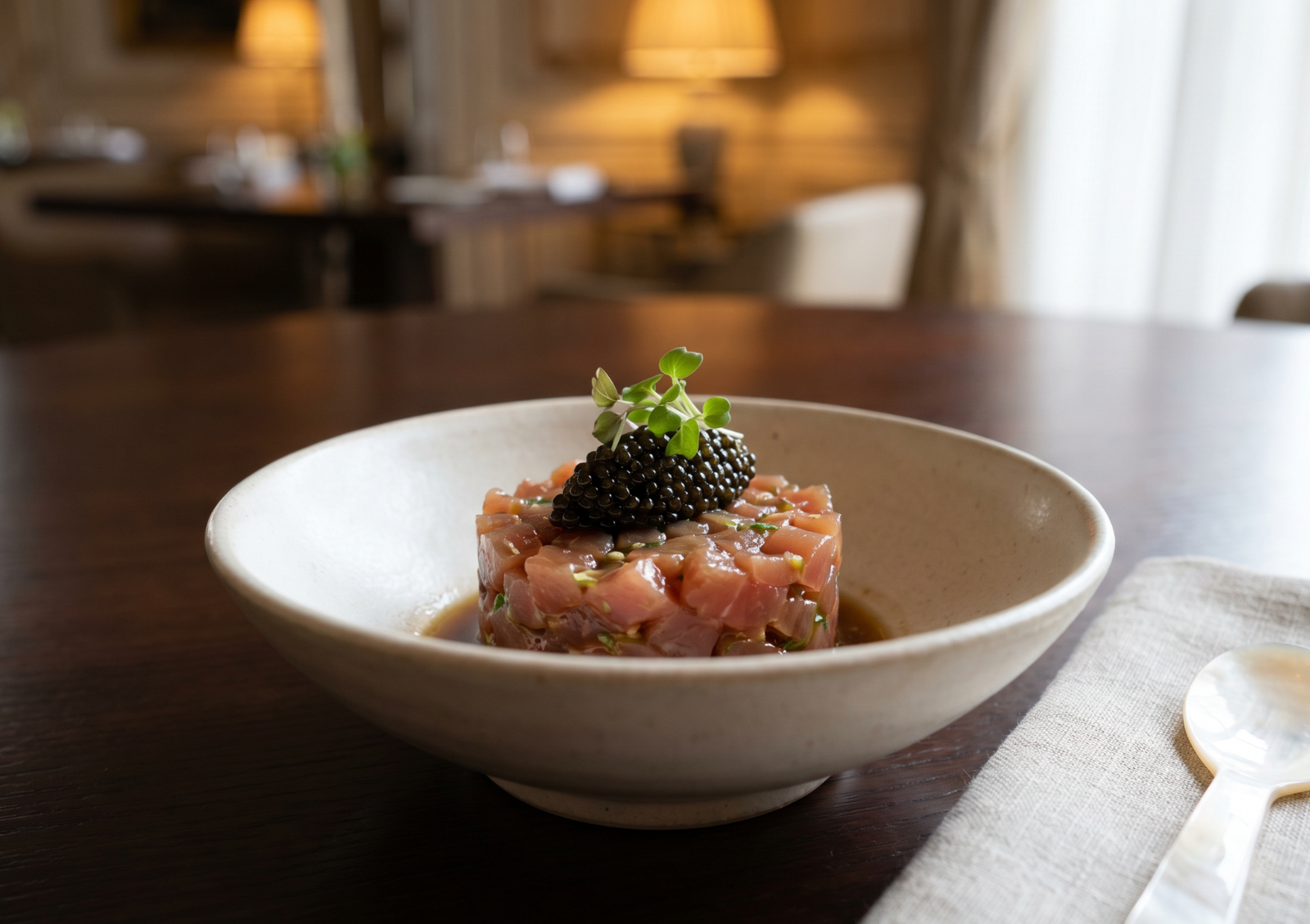
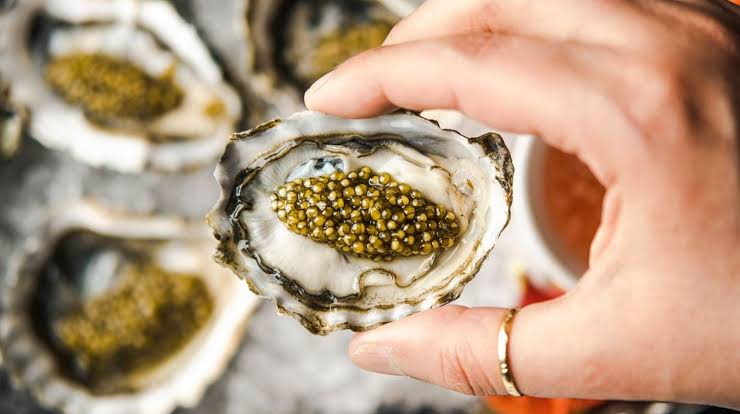
Signature dishes: Add caviar to chilled oysters, scallop crudo or seafood tartare.
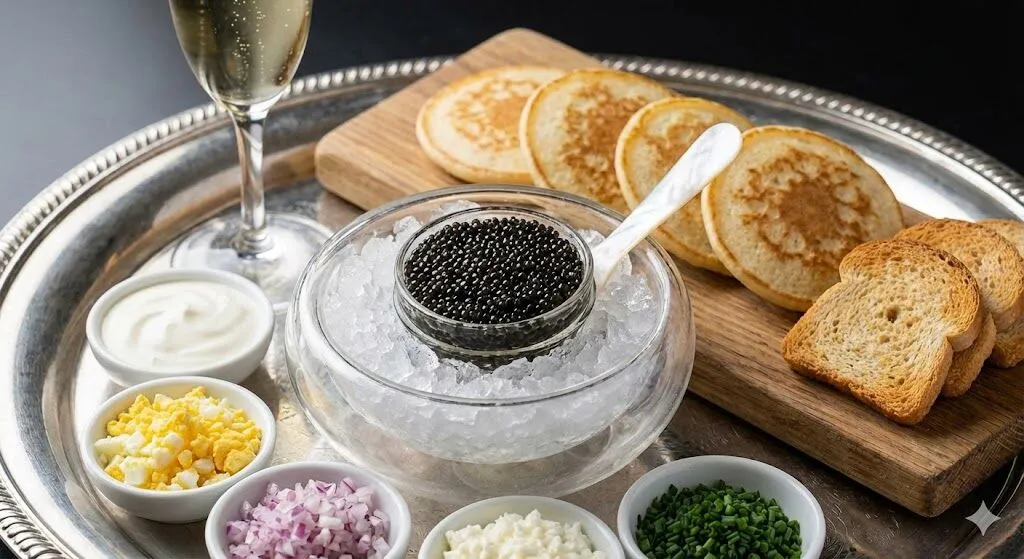
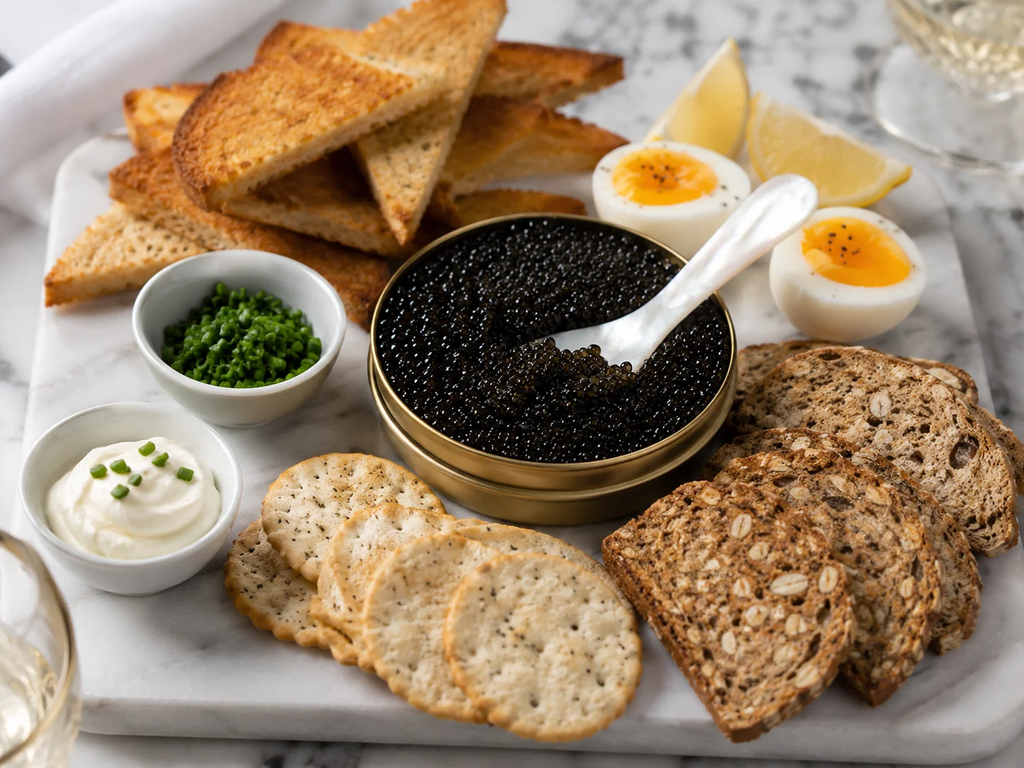
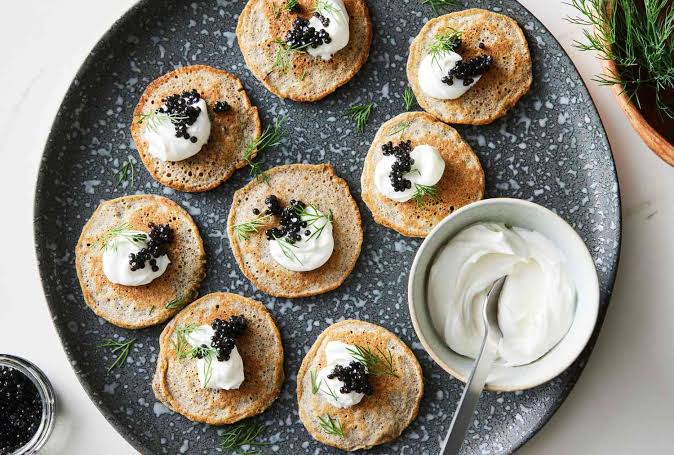
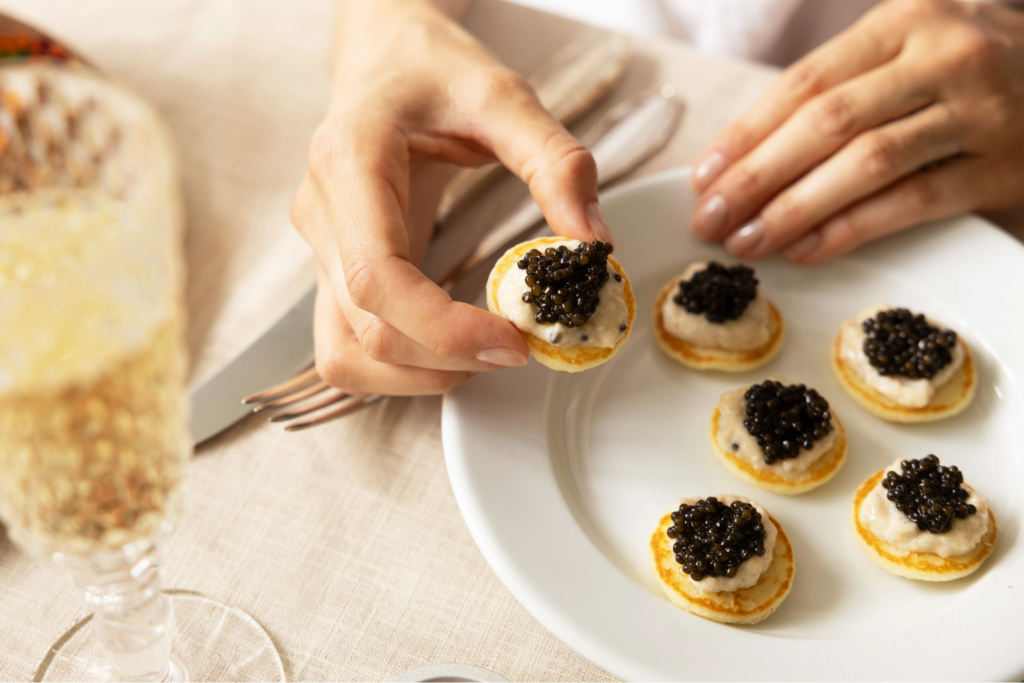
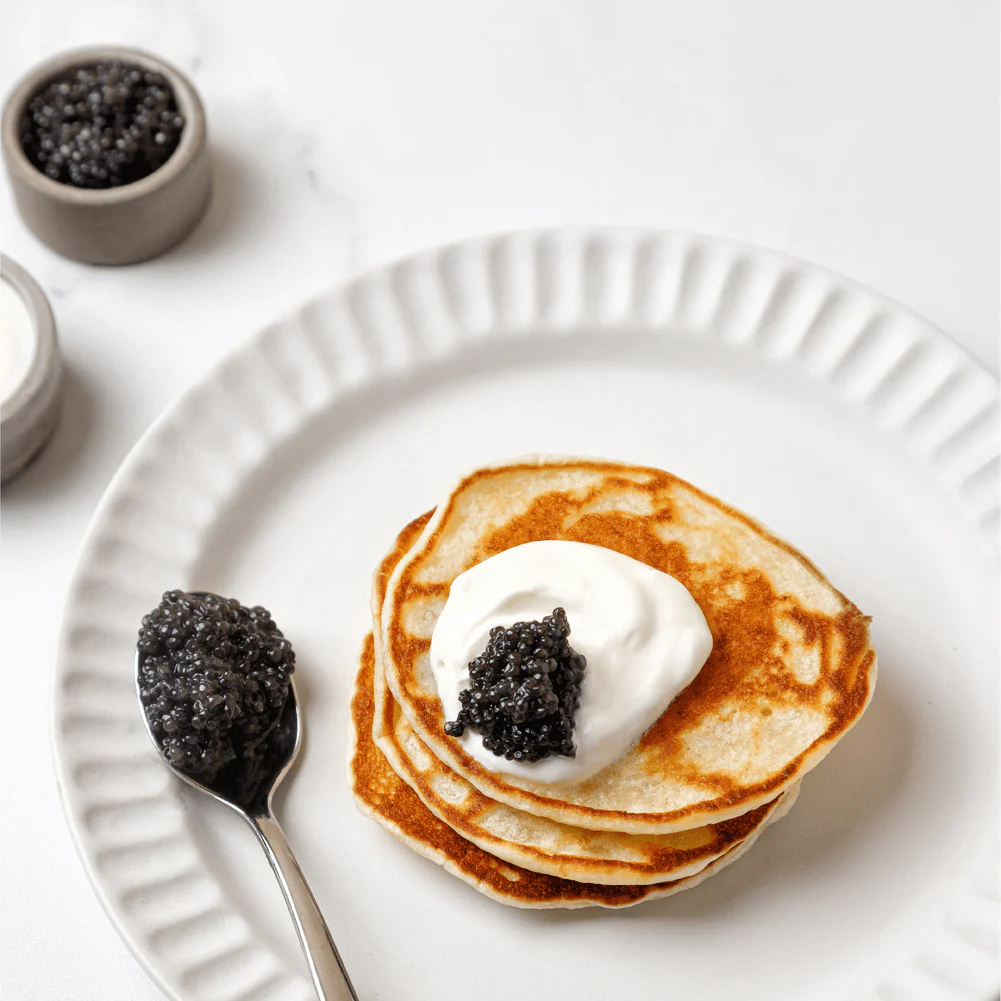
Separate course: Serve it with blinis and crème fraîche. These go well with caviar without hiding its taste.
Caviar tastings: Serve two or three varieties of caviar in small portions so that guests can taste the difference.
Breakfast and Brunch
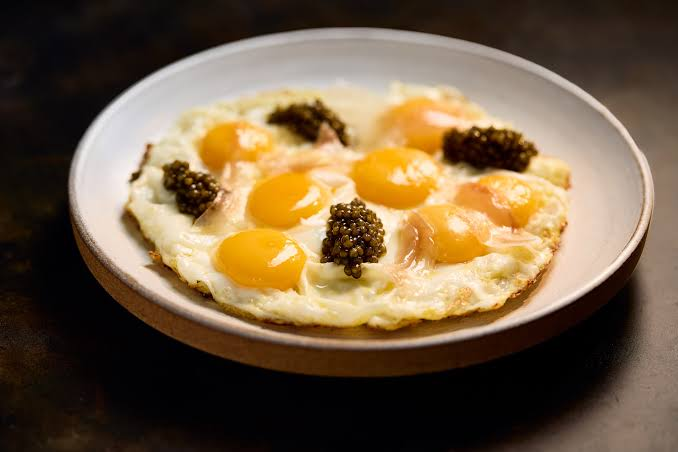
Hotels may serve caviar as an additional garnish for Eggs Benedict or scrambled eggs. The kitchen should prepare the dish as usual, then add the chilled caviar just before it leaves the kitchen. To preserve the delicate pearls’ texture, place it over the eggs away from hot pans and direct heat.
Caviar can also be sold in addition to select breakfast items. Guests can try caviar without ordering a separate course.
In-Room Dining and Private Villa Service
Hotels can offer caviar in rooms and villas for honeymoons, anniversaries and other celebrations. They can include this service in celebration packages or in-room dining menus.
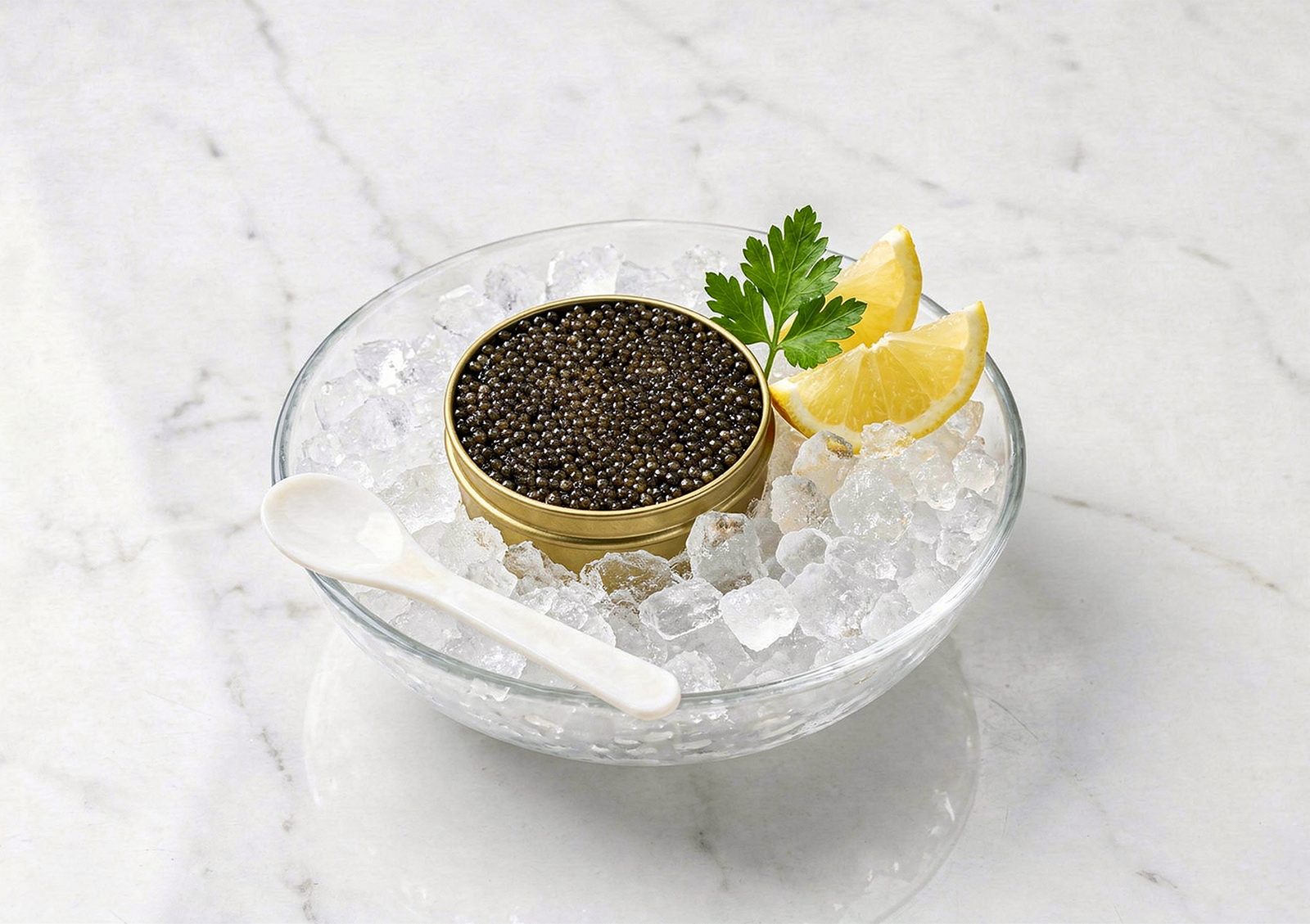
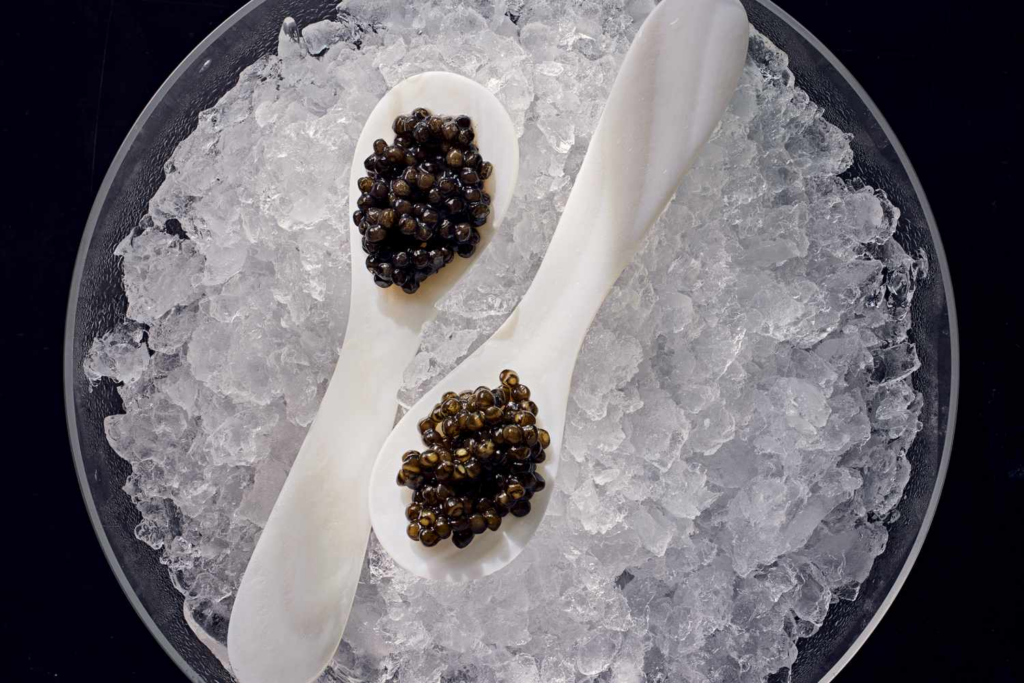
Offer small tins for one guest or larger tins for sharing. Include blinis, crème fraîche and a suitable serving spoon. Keep caviar chilled during delivery and serve the tin over ice.
Lounges and Bars
Guests can have caviar with drinks or snacks instead of a full meal.
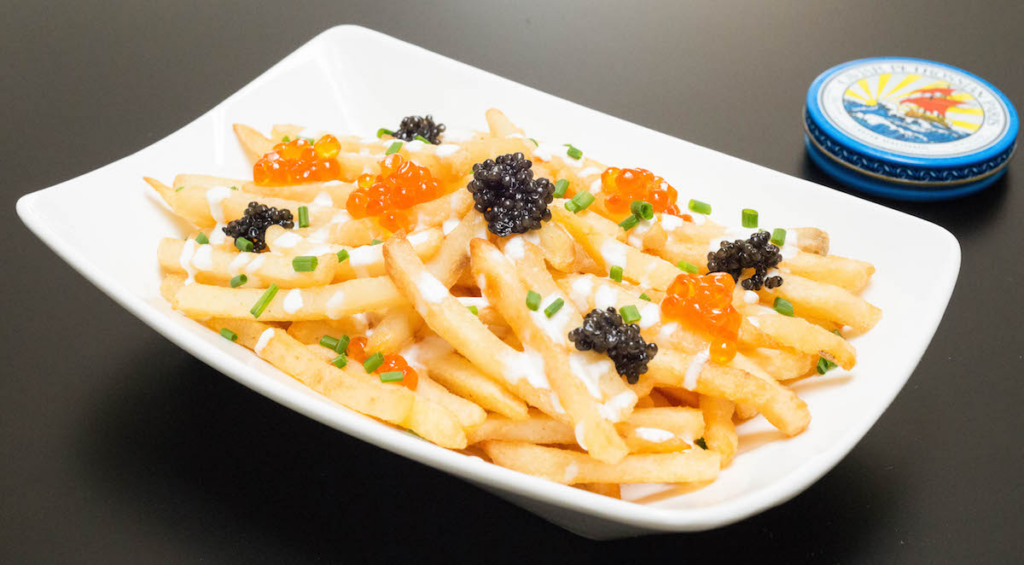
Add caviar to oysters, blinis or potato crisps. Serve caviar with Champagne or chilled sparkling water.
Or guests can order small plates of caviar or a plate to share. Smaller portions mean they can get a taste of caviar for less.
Weddings, Banquets and Private Events
Hotels can offer caviar at weddings, banquets and private events. Here are a few ways to serve it.
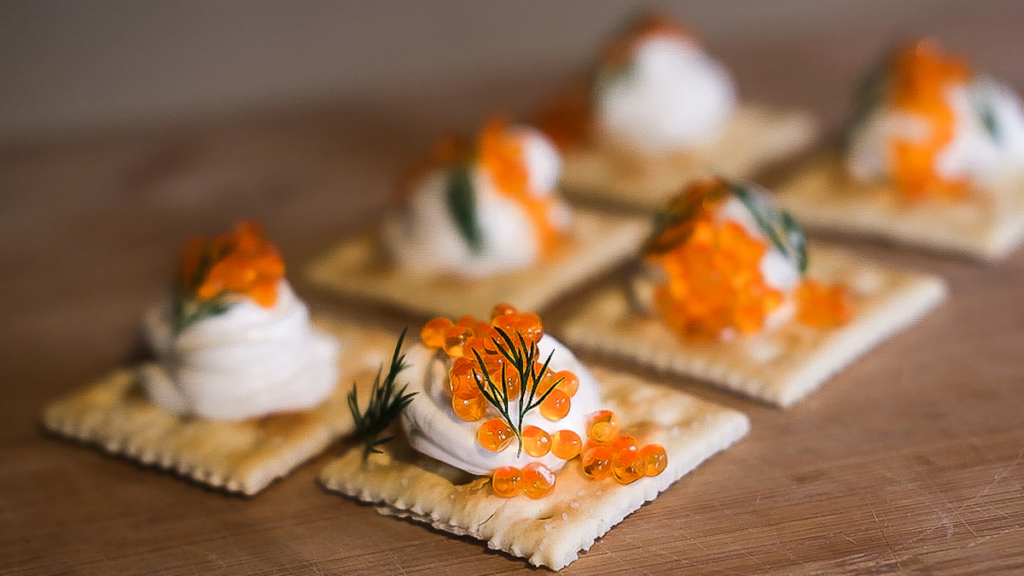
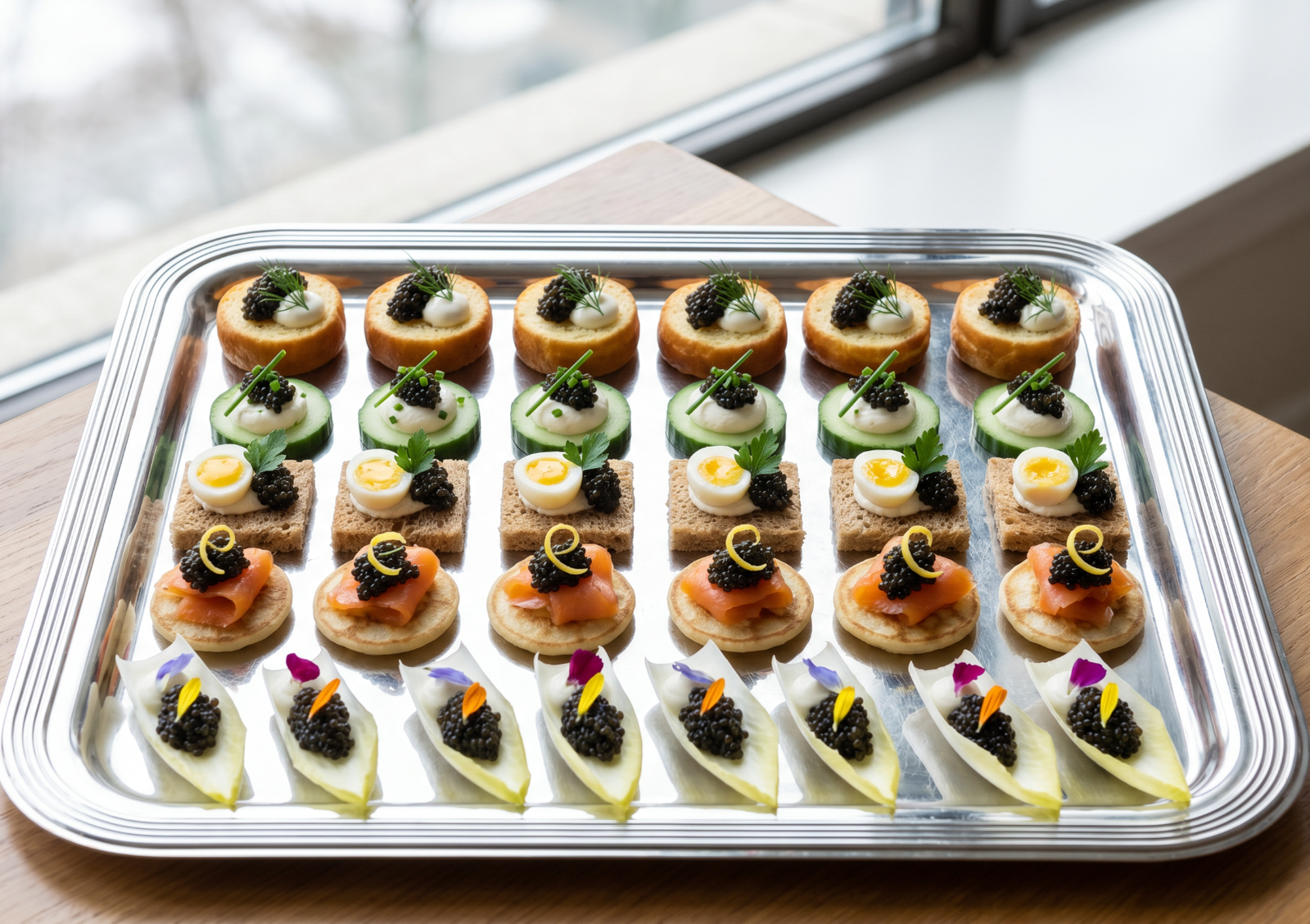
Offer canapés topped with caviar when guests arrive.
Add caviar to starters.
Create a tasting counter. Serve chilled caviar on blini with crème fraîche. Staff can explain the different types and give each guest a set portion.
Offer caviar as part of event packages.
The banqueting team should first check how many guests will have caviar. They should also decide how much each guest will get. The kitchen will then know how much caviar to order and how much it will cost.
VIP Welcome Amenities
Hotels can offer caviar as a welcome gift for VIP guests or special occasions.
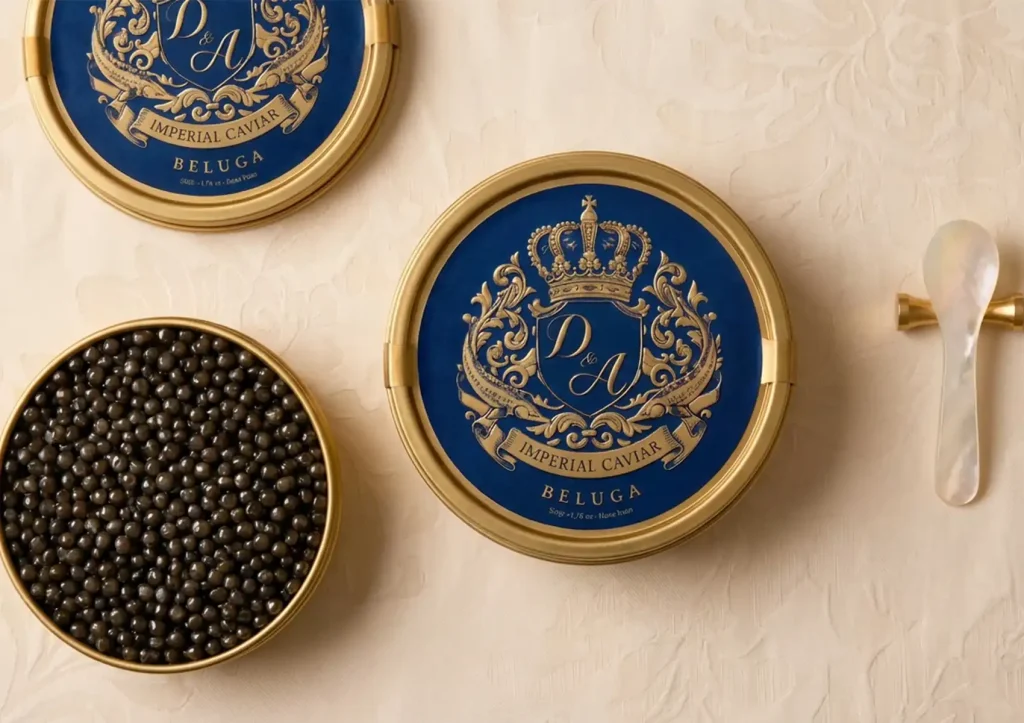
Include a sealed tin of caviar with blinis, crème fraîche and a suitable spoon.
Deliver the caviar when guests are in their rooms. Avoid minibars that cannot keep it at the right temperature.
Add a little card explaining the type of caviar and how to serve it.
Insert a personal note for guests celebrating birthdays, honeymoons or anniversaries.
Choosing the Right Caviar and Planning Portions
Hotels can pick and choose caviar varieties according to their menus, guests and budgets.
Understanding Caviar Varieties
Variety
Flavour and texture
Where hotels can use it
Siberian
Medium-sized pearls with a rich flavour
Breakfast, canapés, events
Kaluga Hybrid
Often large, firm pearls with a mild, buttery taste
Fine dining, starters, in-room dining
Oscietra
Nutty, buttery flavour; pearl size varies
Signature dishes, tastings
Beluga
Large, delicate pearls with a mild, buttery taste
Separate caviar courses, VIP gifts
How Much Caviar to Serve
Serving style
Suggested amount
Small canapé
1–2 g per piece
Garnish
3–5 g per plate
Caviar tasting
20–30 g per guest in total
Starter
10–20 g per guest
Standalone caviar service
20–30 g per guest
These are suggested amounts. Hotels can modify them based on the dish and guest preferences.
Tips for Managing Caviar in Hotels
Find out the cost of each caviar serving before you price it on the menu.
Estimate the caviar’s quantity based on bookings.
Track how much caviar restaurants, room service and events use. This helps avoid ordering too much.
Check that tins arrive cold, sealed and undamaged. Check the expiry dates too.
Caviar often needs to be stored at a lower temperature than a regular fridge. Follow the temperature instructions on the label or from the supplier.
Use clean utensils. Keep opened tins chilled and use them within the time given by the supplier.
Use ice or chilled serving trays during room service, banquets and outdoor events.
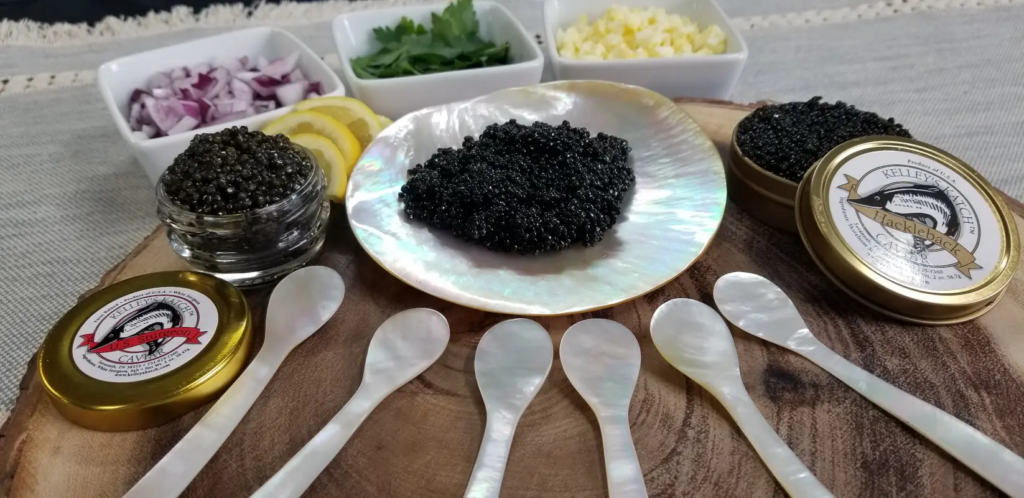
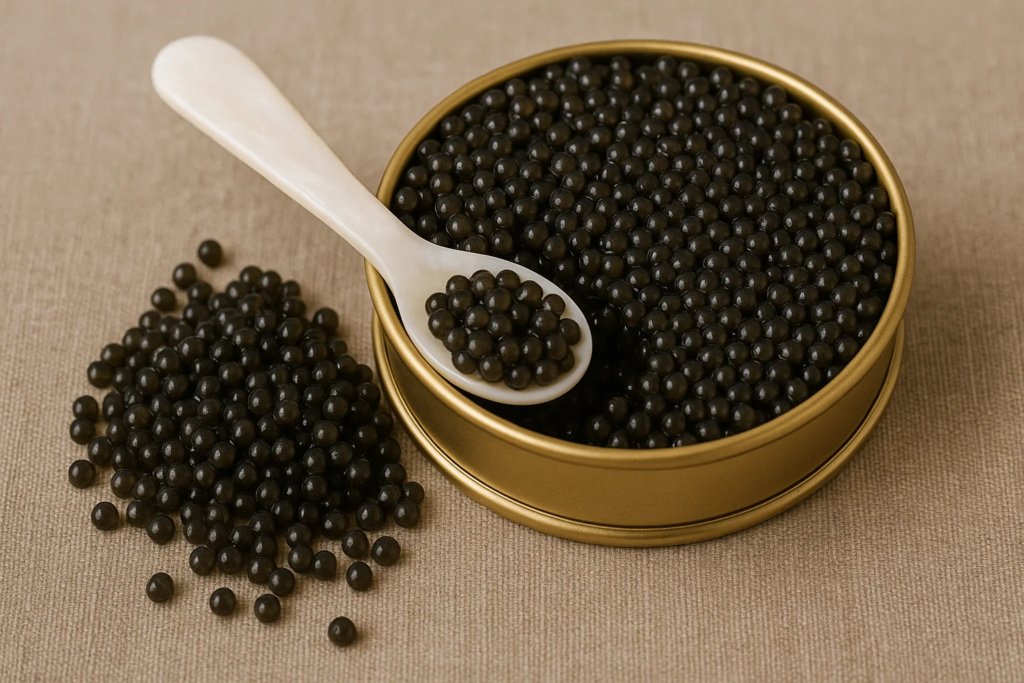
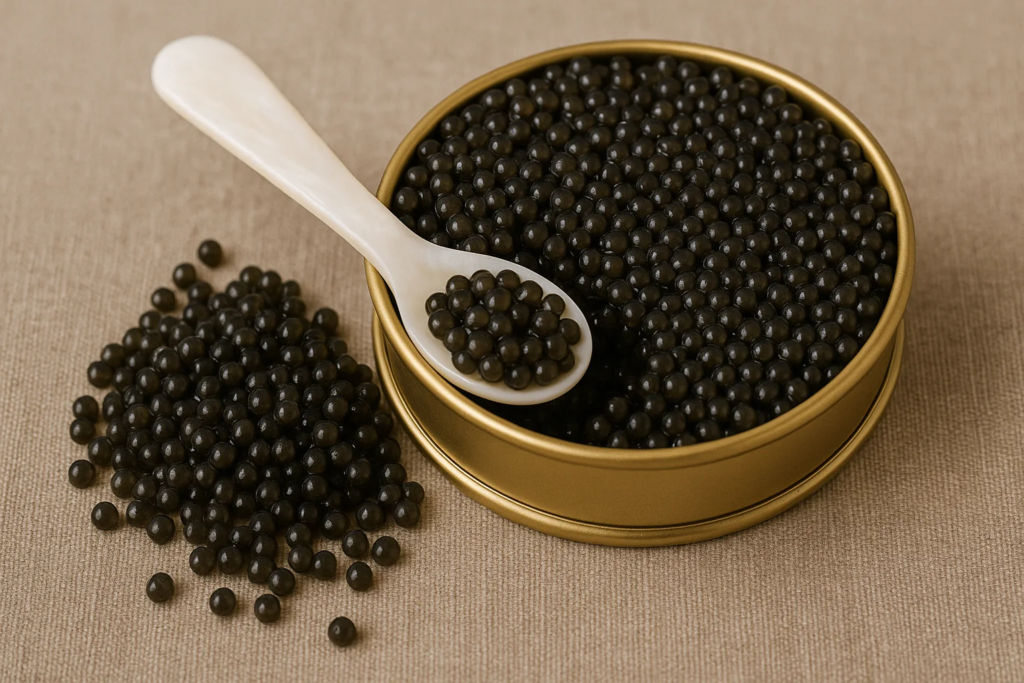
Use mother-of-pearl or other food-safe spoons that will not react with the caviar.
Source Caviar for Your Hotel from Caviar Indonesia
Caviar Indonesia offers authentic sturgeon caviar, including Beluga, Royal Oscietra, Kaluga Hybrid and Siberian varieties, delivered across Indonesia.
Contact Caviar Indonesia to find the right varieties for your hotel’s menus, events and guest experiences.
Kaluga Caviar Gives Beluga a Serious Rival
For most of the twentieth century, Beluga caviar occupied a category of its own. Its name was shorthand for the pinnacle of luxury, its pearls the largest and most coveted in the world, its flavour a benchmark against which everything else was measured. That conversation has not ended. But it now has a compelling companion.
Kaluga caviar, produced from one of the largest sturgeon species on earth, has earned a place at the same table. Not by imitation, but by offering something genuinely comparable in size, texture, and depth of flavour, while doing so through aquaculture practices that are among the most transparent and rigorously certified in the industry. At caviar.id, both Beluga and Kaluga are in the same curated portfolio, so the choice between them is not a matter of access. It is about preference. This article helps you make it.
The Sturgeon Behind the Roe
Kaluga sturgeon (Huso dauricus) is native to the Amur River basin, the vast waterway that runs along the natural border between Russia and China. It is one of the largest freshwater fish on earth, capable of exceeding 1,000 kilograms in the wild and reaching lengths of over five metres. Its closest evolutionary relfaative is the Beluga (Huso huso) of the Caspian Sea, and this shared lineage is the key to understanding why their roe is so remarkably similar in character.
The Amur River and its tributaries provide cold, clean, oxygen-rich water that shapes the quality of everything living within it. The Kaluga sturgeon is a slow-maturing species, taking between eight and twenty years to produce roe of the quality required for premium caviar. That patience is not incidental. It is what gives Kaluga caviar its depth.
The Hybrid Question, Answered Honestly
Many Kaluga caviars available today, including those produced by Kaluga Queen, come from a hybrid of the Kaluga sturgeon (Huso dauricus) and the Amur Sturgeon (Acipenser schrenckii). This hybrid was deliberately developed for aquaculture, combining the flavour profile and pearl size of Kaluga with the slightly faster maturation rate of Amur Sturgeon.
It is worth being clear about what this means and what it does not mean. The hybrid was not created to cut corners. It was developed to make consistent, high-quality production possible at scale without sacrificing the characteristics that define Kaluga caviar. The flavour, pearl size, texture, and finish all remain true to the Kaluga profile. What changes is the timeline, making it possible to bring caviar of this calibre to the market with greater reliability than pure Kaluga alone would allow.
The result is a caviar that stands fully on its own merit. Its hybrid origin is a production detail, not a quality disclaimer.
Tasting Notes in Detail
Kaluga caviar is defined above all by its size and its creaminess. The pearls are large, typically between 3.0 and 3.6 millimetres, with a firm, glossy surface ranging from dark grey to near-black. They are among the largest pearls produced by any farmed sturgeon species and make an immediate visual impression that prepares the palate for what follows.
On the nose, a well-handled tin of Kaluga caviar delivers a clean, mild oceanic aroma with no sharpness or fishiness. The first impression is entirely inviting.
On the palate, the opening is rich and creamy with an immediate buttery quality that coats gently and evenly. The texture is firm enough to hold its shape briefly before releasing a flavour that develops in layers. First, the clean brine, then a nutty warmth that deepens through the mid-palate into something reminiscent of toasted walnut or fresh cream. The finish is long, smooth, and rounded with a gentle sweetness at the very end that lingers without demanding attention.
What distinguishes Kaluga from Siberian Sturgeon caviar, whose vivid mineral brine profile is explored in detail in our Siberian Sturgeon flavour guide, is its rounder, more enveloping character. Where Siberian delivers precision and sharpness, Kaluga offers depth and warmth. Both are exceptional expressions of the sturgeon world. They simply speak in different registers.
Kaluga Caviar and Beluga, Side by Side
This is the comparison most people eventually arrive at, and it deserves a straightforward treatment.
Beluga caviar comes from Huso huso, native to the Caspian Sea basin. Its pearls are large, ranging from pale grey to dark grey, with a pronounced mineral depth and a long, complex finish that has made it the benchmark of luxury caviar for centuries. Wild Beluga is among the most strictly regulated foods in the world, with international trade controls that significantly limit its availability.
Kaluga is a species of Huso, the Amur River equivalent of the same genus. Its pearls are comparable in size, its texture similarly velvety, and its flavour profile builds toward the same category of richness and depth. Where Beluga tends toward a more pronounced mineral intensity, Kaluga is rounder and creamier, slightly more approachable on the first encounter and equally rewarding on deeper exploration.
The honest conclusion is that they are not the same caviar. They are two distinct expressions of the same level of quality, produced by closely related species from different river systems. Choosing between them is a matter of palate preference, not hierarchy. Those who find Beluga’s mineral depth thrilling will appreciate it for exactly that reason. Those who find Kaluga’s creamy warmth more compelling are not choosing lesser caviar. They are choosing differently. The good news for those in Indonesia is that both expressions are available through caviar.id, making the comparison a question worth exploring at the table rather than on the page.
The Farm That Changed the Conversation
Kaluga Queen, the producer of Kaluga caviar available through caviar.id, is the world’s largest caviar producer. Founded in 2003 at Qiandao Lake, also known as Thousand Island Lake, in Zhejiang Province, China, the company produces over 60 tonnes of caviar annually and supplies 21 of the 26 three-Michelin-starred restaurants in Paris.
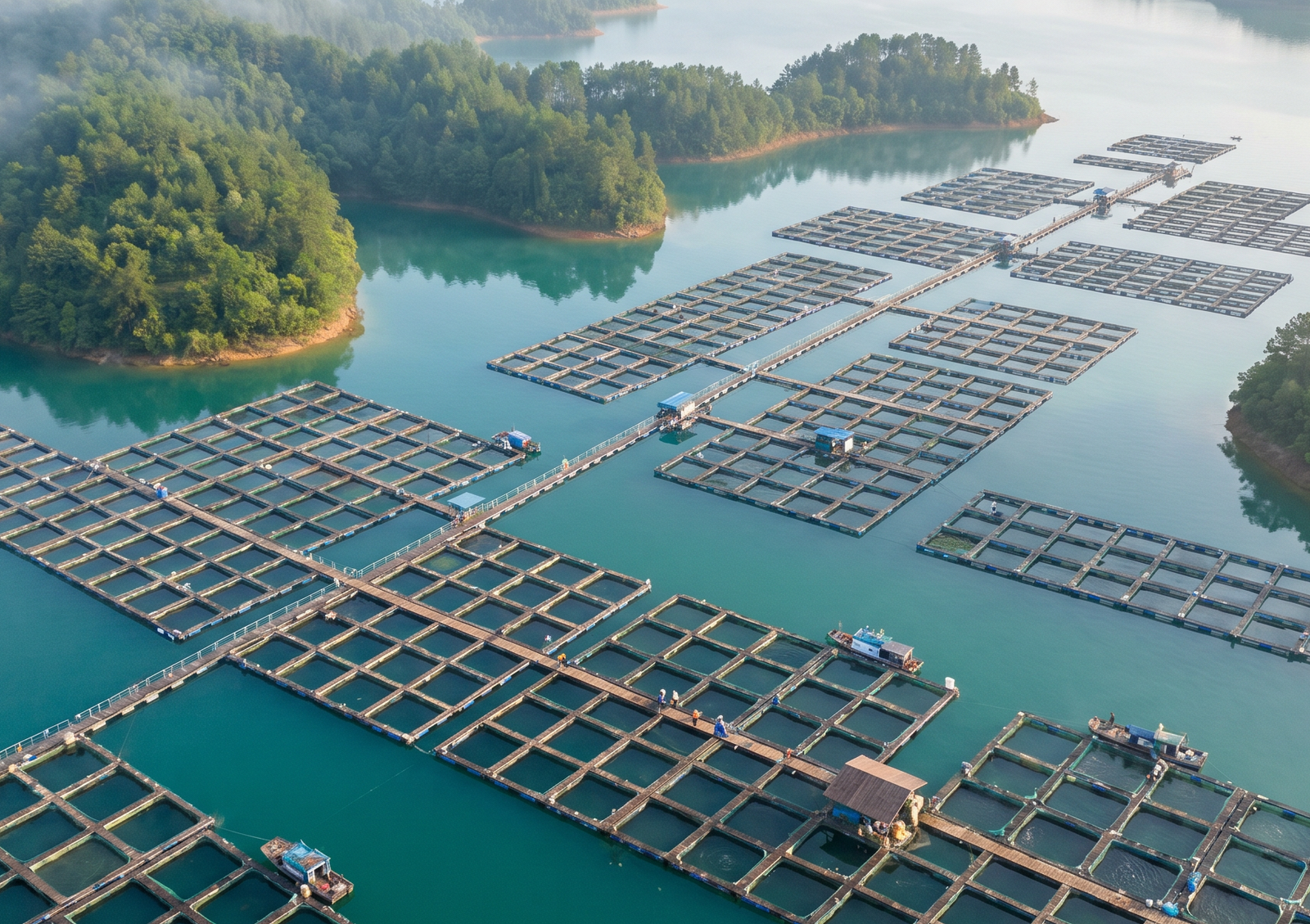
Qiandao Lake is a government-designated natural reserve with exceptionally clean, oxygen-rich water fed by mountain springs. The conditions closely replicate the cold, pristine environment of the Amur River, and the farm has built its entire production model around replicating those conditions as precisely as possible. Sturgeon are raised in near-wild cage systems, fed carefully managed diets, and harvested non-lethally. This means the fish are not killed during roe extraction, allowing them to continue producing in subsequent seasons.
Kaluga Queen operates under full CITES certification, the international framework governing trade in endangered species, and maintains complete traceability across the supply chain from egg to tin. The fact that 21 of Paris’s most critically scrutinised kitchens have chosen to serve it is not a marketing claim. It is a documented reality that reflects the standard of what is inside every tin.
Kaluga Queen Caviar in Indonesia
At caviar.id, the Kaluga Queen range is available across three expressions, each representing a different facet of the producer’s range.
Kaluga Queen Kaluga is the flagship expression, the pure Kaluga hybrid that delivers the full buttery, nutty profile described above. It is the right starting point for anyone encountering Kaluga caviar for the first time and the reference point for those who already know it well.
Kaluga Queen Beluga brings the Beluga profile into Kaluga Queen’s aquaculture framework, producing a caviar that carries the mineral depth and pronounced richness associated with the Beluga species while adhering to the same rigorous production and sustainability standards that define the brand.
Kaluga Queen Oscietra offers a slightly smaller pearl with a nuttier, more complex mid-palate, with the Oscietra profile expressed through Kaluga Queen’s characteristic precision and consistency.
All three have been distributed to fine-dining establishments and five-star hotel kitchens across Jakarta and Bali, where the demand for provenance-assured, internationally certified caviar continues to grow. The full Kaluga Queen range is available through this page.
A Closing Thought
Beluga caviar earned its reputation over centuries. Kaluga caviar has built its case over decades through rigorous farming, transparent certification, and a flavour profile that has convinced the world’s most discerning palates without relying on history alone. That is a different kind of achievement, and arguably a more relevant one for anyone approaching premium caviar today.
Both are available through caviar.id. The most honest way to settle the comparison is to taste them.
Luxury Appetiser Ideas Using Fish Roe
The first course sets the tone for everything that follows. A well-chosen starter does not simply satisfy hunger. It signals to every guest at the table that what comes next will be worth their full attention. For those who take that moment seriously, premium fish roe and sturgeon caviar remain the most reliable way to open a meal with genuine distinction.
Caviar.id, Indonesia’s foremost curated caviar destination, offers a range of premium roe, enabling the creation of fancy appetizers that are both visually striking and deeply considered in flavour. Here is how to do it well.
Why Fish Roe Belongs on a Luxury Starter
Fish roe earns its place on a serious appetiser menu for reasons that go beyond prestige. It delivers a precise combination of visual impact, textural contrast, and layered flavour that few other single ingredients can match.
A small portion of well-sourced sturgeon caviar, served on a warm blini, introduces salinity, creaminess, and mineral depth, preparing the palate for a multi-course meal. It does not overwhelm. It opens. That restraint is precisely what makes it so effective as a starter ingredient, and precisely why the world’s finest dining establishments have built their opening courses around it for centuries.
Premium sturgeon varieties such as Antonius Caviar Oscietra and Antonius Caviar Siberian are particularly well-suited to appetiser presentations because of their consistent pearl size, balanced salinity, and reliable flavour profile across every tin.
Classic Blinis with Premium Caviar
There is a reason the blini remains the defining vehicle for premium caviar. Its warmth, its gentle chew, and its mild flavour provide the ideal neutral canvas for the caviar to speak without interference.
To prepare this properly, lightly warm small buckwheat or plain blinis without toasting them until crisp. Spread a thin, even layer of unsalted, full-fat, cold crème fraîche across the surface. Place a measured portion of chilled caviar on top using a mother-of-pearl spoon, never a metal spoon. Garnish with restraint. A single small herb is all that is needed.
The result is a starter that requires no explanation and leaves no guest indifferent.
Roe-Topped Canapés for Cocktail Events and Private Dinners
For occasions where guests are standing rather than seated, canapés offer the same elegance in a more accessible format. The key is choosing bases that are structurally sound, flavour-neutral, and sized for a single, unhurried bite.
Lightly buttered brioche rounds, thin cucumber discs, and small toasted sourdough squares all work well. Pair these with smoked salmon, a soft quail egg, or a small curl of butter as the base layer, then finish with a small portion of roe placed just before serving. The roe should always be the final element, never buried beneath other ingredients, always visible and intentional.
For cocktail events where volume matters, Antonius Caviar Siberian offers a vivid, briny character that carries well even in a single small bite.
Seafood Tartare with a Caviar Finish
Tartare is one of the most elegant contexts for premium caviar because the dish is already built around freshness, precision, and restraint. A small spoonful of sturgeon roe, placed on top just before serving, adds visual contrast and a mineral complexity that elevates the entire composition.
Finely diced tuna or salmon, seasoned lightly with good olive oil, a few drops of citrus, and minimal salt, provides the right base. The caviar should not be mixed in. It should sit on the surface, visible and intact, dissolving into the tartare as the guest eats rather than disappearing into the preparation beforehand.
The contrast between the soft, yielding texture of the fish and the firm, mineral pearl of the caviar is precisely what makes this presentation so effective.
Occasions Where These Appetizers Make the Strongest Impression
Fancy appetizers built around premium roe are not limited to restaurant menus. In Indonesia, caviar.id supplies to private dining settings, corporate hospitality events, five-star hotel kitchens, and celebration dinners across Jakarta and Bali, occasions where the opening course is expected to reflect the calibre of everything that follows.
For corporate gifting dinners and formal celebration meals, the blini and canapé formats are the most practical and elegant without requiring specialist kitchen equipment. For intimate private dinners where the host wishes to demonstrate genuine culinary knowledge, the tartare with caviar finish is the stronger statement.
Serving Principles That Protect the Investment
Premium roe is only as good as the care taken in its final moments before service. A few principles are non-negotiable.
Keep the caviar refrigerated between -2 and 2 degrees Celsius until it is needed. Never use metal spoons, as they react with the delicate compounds in the roe, altering the taste. Serve in small, considered portions. Caviar is not a garnish to be scattered generously, but a centrepiece to be placed with intention. And always open the tin as close to service as possible, as exposure to air immediately diminishes the flavour.
These details separate a genuinely impressive appetiser course from one that simply looks the part.
Sourcing Premium Roe in Indonesia
The quality of any fancy appetizer built around fish roe begins with the source. Because roe is highly sensitive to temperature at every stage of handling, from farm to tin to table, sourcing from a supplier with documented cold-chain integrity is not optional. It is the foundation on which everything else depends.
Through caviar.id, premium sturgeon caviar is available with nationwide cold-chain delivery across Indonesia. Every label in the portfolio, including Antonius Caviar, Aquatir, Kaluga Queen, and N25 Caviar, is sourced directly from internationally accredited producers and handled under strict temperature controls from fulfilment to doorstep.
Explore the full collection at caviar.id or contact the team directly for guidance on which selection is right for your occasion.
Frequently Asked Questions
What makes fish roe ideal for fancy appetizers?
Premium sturgeon roe combines visual elegance, textural contrast, and layered flavour in a single ingredient. It elevates any starter without requiring complex preparation, making it one of the most efficient luxury ingredients available to a host or chef.
Which caviar works best for canapés and blinis?
Siberian Sturgeon caviar is particularly well-suited to appetizer formats. Its briny, mineral character carries well in small portions and pairs cleanly with creamy or neutral bases. Oscietra works beautifully for seated dinners where guests have more time to appreciate its nutty complexity.
Can premium caviar appetizers be prepared for large events?
Yes. Caviar.id supplies to corporate hospitality events and hotel F&B teams across Jakarta and Bali. For high-volume requirements, the team can advise on quantities, storage, and presentation logistics.
Where can I buy premium caviar for appetizers in Indonesia?
Premium imported selections with full cold-chain handling are available through caviar.id, with nationwide delivery across Indonesia.
The Nutrition and Proven Health Benefits of Caviar
Most people think of caviar as a treat, something special, indulgent, and purely about pleasure. What surprises many is that caviar is also genuinely good for you. Not in a vague, marketing kind of way, but in a measurable, research-backed kind of way.
A small 28-gram serving, about the size of a generous tablespoon, delivers more Vitamin B12 than you need in an entire day. More omega-3s than most fish oil capsules, and a complete set of proteins your body cannot make on its own. Backed by scientific publications, they have all confirmed what generations of coastal cultures have known intuitively: fish eggs are extraordinarily nourishing.
Here is what the science actually shows, explained plainly.
What Is Actually Inside a Serving of Caviar
Think of a single tablespoon of sturgeon caviar as a very concentrated package of things your body needs but rarely gets in one place at the same time.
In that one serving, you get healthy fats that protect your heart and brain (omega-3s, specifically around 800mg of EPA and 1,080mg of DHA, more than double what the American Heart Association recommends daily), more than twice your daily requirement of Vitamin B12. They contain minerals such as selenium that act like a natural shield for your cells, iron that helps your blood carry oxygen, calcium for your bones, choline that your brain and liver depend on, and a complete set of proteins containing all nine amino acids your body cannot produce on its own.
What makes this particularly interesting is that the omega-3s in caviar are in a form called phospholipids, which research suggests the body absorbs more readily than the triglyceride form found in most supplements. You are essentially getting more from less. These good fats accumulate in sturgeon eggs naturally, regardless of whether the fish is wild or farmed. So quality aquaculture-produced caviar is just as nutritionally reliable as its wild counterpart.
Caviar and Heart Health
Omega-3 fatty acids are among the most well-researched nutrients in cardiovascular science. Multiple large-scale reviews have shown that regular omega-3 intake reduces blood triglyceride levels, lowers blood pressure, and helps maintain healthier cholesterol levels. A major analysis published in the Journal of the American Medical Association found a meaningful link between omega-3 consumption and a lower risk of coronary heart disease.
Caviar delivers these omega-3s in a single whole food rather than a supplement, which matters because whole foods carry additional nutrients that work together in ways that isolated supplements cannot replicate.
Beluga caviar in particular stands out here. Research published in ACG Publications (2024) found that Beluga has the highest oleic acid content of any sturgeon species, at 42.9% of its fat composition. Oleic acid is the same heart-healthy fat found in olive oil, and it has been shown to reduce harmful LDL cholesterol, ease inflammation, and lower oxidative stress on blood vessels.
Caviar and Brain Health
Your brain is mostly fat. About 60% of it, by dry weight, is made of fatty acids, and the most important of these is DHA, one of the two main omega-3s found in caviar. Keeping DHA levels up as you age is one of the most practical steps you can take to protect your cognitive health.
Caviar contains choline, a nutrient that most people do not get enough of. Choline helps your brain form memories, keeps your nerve signals firing correctly, and supports the health of cell membranes throughout your body. Low choline intake has been linked to faster cognitive decline as people age.
Caviar and Vitamin B12
B12 is one of those vitamins that quietly does an enormous amount of work. It helps your body make red blood cells, keeps your nervous system functioning properly, helps convert food into energy, and supports DNA production. When levels drop, the signs include fatigue, difficulty concentrating, and a general feeling of weakness that is easy to mistake for stress or poor sleep.
B12 deficiency is more common than most people realise. The National Institutes of Health estimates it affects about 6% of adults under 60, and nearly one in five adults over 60. People who eat mostly plant-based diets are especially at risk, since B12 is found almost entirely in animal foods.
A single serving of caviar covers more than twice your recommended daily intake of B12. That is a meaningful contribution from a very small amount of food.
Caviar and Skin Health
The connection between caviar and skin has long been marketed by luxury beauty brands, but the underlying science is more interesting than the packaging suggests.
DHA, one of the key omega-3s in caviar, has been shown in laboratory studies to trigger fat cells to produce a compound called adiponectin. This compound helps the skin build and preserve collagen, supports the healing of damaged skin, and reduces inflammation (Healthline, citing published dermatological research). Less inflammation and more collagen mean firmer, smoother, better-hydrated skin over time.
Many skincare serums containing caviar extract showed visible improvements in skin smoothness, firmness, and the appearance of fine lines. While this study used a topical product rather than dietary caviar alone, the biological mechanisms are the same as those activated by eating caviar. EPA, the other main omega-3 in caviar, has also been shown to protect skin from UV-related damage by reducing oxidative stress and supporting collagen production.
Caviar and Immunity, Bones and Energy
Selenium, calcium, and iron are three minerals in caviar that quietly support systems most people only notice when something goes wrong.
Selenium helps your immune system function at a high level. It activates one of the body’s most powerful natural antioxidant systems, which protects cells from the kind of chronic low-level damage linked to inflammation and disease. Most people get adequate selenium, but it is worth knowing that caviar is a reliable source.
Calcium is more straightforward. It keeps bones dense and strong. This is particularly relevant for people who avoid dairy, since caviar offers a non-dairy source of bioavailable calcium. Getting enough calcium early and consistently reduces the long-term risk of osteoporosis and arthritis.
Iron helps your blood carry oxygen to every cell in your body. Low iron is one of the most common nutritional shortfalls globally, and even a small serving of caviar contributes meaningfully to daily requirements.
Which Caviar Species Has the Most Nutritional Value
All sturgeon caviar shares the same core nutritional profile, but research has found real differences between species. If you are thinking about caviar with a specific health goal in mind, this matters.
Beluga Caviar (Huso huso)
Beluga has the highest oleic acid content of any sturgeon species (42.9%), making it the strongest choice for heart health. It is also rich in Vitamins A and E, which support immune function and skin protection, and its protein content of around 18 grams per serving is among the highest in the sturgeon family.
Russian Sturgeon caviar has the highest EPA concentration of the three main farmed species. EPA is the omega-3 most linked to mood support, anti-inflammatory effects, and heart protection. It is also a well-rounded source of protein, B12, and selenium.
Siberian Sturgeon Caviar (Acipenser baerii)
Siberian Sturgeon caviar contains the highest concentration of DHA, at 15.7% of its fatty acid profile. DHA is the omega-3 most directly associated with brain health, memory, and visual function. If brain health is your primary reason for interest, Siberian caviar has the strongest nutritional case among the sturgeon species.
Sterlet Caviar (Acipenser ruthenus)
Sterlet is a small freshwater sturgeon, and its nutritional profile reflects that. It delivers the same core benefits of omega-3s, complete protein, B12, and selenium, but with a slightly lighter mineral intensity than the larger Caspian species. It is the most approachable caviar nutritionally and in terms of flavour, making it a good starting point for those new to the category.
One Thing Worth Knowing About Sodium
Caviar is cured with salt, and this means it is relatively high in sodium. A standard serving contains between 240 and 500mg, depending on the producer and curing method, which is worth keeping in mind if you are managing blood pressure or watching your overall sodium intake.
Caviar is not an everyday food, nor does it need to be. Think of it as a nutritionally rich addition to an already balanced diet, something to enjoy in considered portions rather than a daily supplement.
Where to Find Quality Caviar in Indonesia
The nutritional value of caviar depends not only on the species but on how it has been handled from the moment it was produced. Omega-3 fats break down when exposed to heat, light, or air for too long, which is why cold-chain handling from farm to delivery is not just a quality measure but a nutritional one.
At caviar.id, every species covered in this article is available through internationally certified producers with full cold-chain delivery across Indonesia. The Beluga, Russian Sturgeon, Siberian Sturgeon, and Sterlet selections are sourced from farms with verified production standards in Europe, the Middle East, and Asia.
Yes, genuinely so. A small serving delivers meaningful amounts of omega-3 fatty acids, Vitamin B12, selenium, iron, calcium, choline, and complete protein. The research supporting its cardiovascular, cognitive, and metabolic benefits comes from reputable institutions and peer-reviewed journals.
Does the type of caviar change the health benefits?
Yes, in measurable ways. Siberian Sturgeon has the highest DHA content, which is most important for brain health. Russian Sturgeon has the most EPA, which is most relevant for mood and inflammation. Beluga has the highest oleic acid content, which is best for heart health. The differences are real but subtle. All sturgeon caviar is nutritionally excellent.
How much do you need to eat to get these benefits?
A single 28 to 30-gram serving already exceeds the American Heart Association’s daily omega-3 recommendation and provides more than twice your daily B12. The benefits are accessible within a very small portion.
Is farmed caviar as nutritious as wild caviar?
Yes. Research published in peer-reviewed journals confirms that the key omega-3 fatty acids in caviar accumulate in sturgeon eggs regardless of whether the fish was farmed or wild-caught. Responsible aquaculture produces caviar that is nutritionally comparable to wild roe.
Sterlet Caviar and the History in Every Pearl
There are caviars that are celebrated for their size. Others for their rarity. And then there is sterlet caviar, a roe so deeply woven into the history of European royalty that its reputation was shaped not by markets or trends, but by the tables of tsars, emperors, and aristocrats who prized it above all others.
To taste sterlet caviar today is to encounter something that has survived centuries of reverence. Understanding the history behind each pearl makes that encounter far more profound.
The Smallest Sturgeon with the Longest Story
Sterlet (Acipenser ruthenus) is the smallest member of the sturgeon family. It rarely grows beyond 1.2 metres in length and reaches maturity earlier than its larger relatives, beginning to produce roe from around five years of age. What it lacks in scale, it more than compensates for in character.
Native to the river systems flowing into the Black Sea, the Caspian Sea, and the rivers of Siberia, the sterlet has inhabited European and Asian waterways for millions of years. Its small, delicate pearls, ranging from beige and grey to the prized pale gold of the albino variant, have been gathered and consumed since antiquity.
The sterlet is also unique among its family in one important respect: it lives exclusively in freshwater. Unlike Beluga or Siberian Sturgeon, which migrate between freshwater and saltwater, the sterlet spends its entire life in rivers and lakes. This freshwater origin shapes everything about the flavour of its roe, producing a taste that is softer, cleaner, and more delicate than the oceanic profiles found in other sturgeon species.
A Roe Fit for Tsars
The history of sterlet caviar and the Russian imperial court is not merely anecdotal. It is documented, deliberate, and centuries deep.
From the reign of Ivan the Terrible in the sixteenth century through to the final years of the Romanov dynasty, sterlet was the designated fish of the Russian tsar. It was served at coronation banquets, state dinners, and royal celebrations as a matter of protocol rather than preference. The tsar’s table was not considered properly set without it.
The reasons for this preference were not purely gastronomic. Sterlet was difficult to transport alive, sensitive to water quality, and impossible to farm at scale using the methods of the time. Its presence on a table was therefore a direct signal of access, wealth, and proximity to the empire’s finest river sources. Serving sterlet caviar was a statement that required no explanation.
This tradition extended beyond Russia. Sterlet caviar was delivered to the royal courts of several European nations, where its reputation preceded it. Its pale, delicate pearls and uniquely soft flavour distinguished it immediately from the darker, bolder caviars that were more commonly available.
The Flavour That Earned the Crown
To understand why sterlet caviar commanded such enduring loyalty from the world’s most discerning tables, the taste itself must be examined.
Sterlet caviar is defined above all by its softness. The pearls are small, typically between one and two millimetres, and thin-skinned. They do not burst with the assertiveness of Siberian caviar or deliver the rich nuttiness of Russian Sturgeon. Instead, they dissolve almost immediately on the palate, releasing a flavour that is exceptionally clean, mildly briny, and remarkably creamy for a roe of such small size.
The aftertaste is where sterlet caviar makes its lasting impression. It lingers as a gentle, buttery warmth with a faintly sweet, mineral note unlike any other sturgeon species. Those who have tasted it often describe the experience as fleeting but unforgettable: a flavour that does not demand attention but is impossible to forget once encountered.
That is the foundation of all sterlet caviar. At its rarest, however, the species produces something even more extraordinary.
The golden sterlet, this exceptionally rare expression is most often associated with albino sterlet sturgeon and prized for pearls that shimmer in shades of ivory, champagne, and pale gold. Its flavour carries the species’ signature delicacy further still, with a creaminess that borders on the ethereal and a finish so clean it seems almost to belong to a different category of luxury altogether. For centuries, it has stood among the most coveted delicacies to grace imperial tables.
It is worth clarifying where the name “golden” comes from, as it is often misunderstood. Standard sterlet caviar produces pearls in shades of beige, grey, and near-black. Golden sterlet caviar is produced exclusively by albino sterlet sturgeon: fish carrying a rare genetic condition that prevents the production of melanin entirely.
The absence of this pigment causes the roe to develop in tones of pale gold, ivory, and platinum rather than the dark hues typical of most sturgeon species. The name is therefore not a grading term or a marketing distinction. It is a literal description of what the pearls look like: luminous, pale, and unlike anything else on a caviar menu. This genetic rarity is also what makes golden sterlet caviar among the most sought-after expressions of the species, both historically and today.
What Is the Difference Between Golden Sterlet and Regular Sterlet?
Both golden and regular sterlet come from the same species, Acipenser ruthenus, and share the same foundational flavour character: soft, clean, mildly briny, and creamy with a lingering buttery finish. The distinction between them is not one of quality but of origin, appearance, and rarity.
Regular sterlet caviar, sometimes called classic or black sterlet, is produced by pigmented sterlet sturgeon. Its pearls range in colour from dark grey to near-black, occasionally with a brownish hue depending on the fish’s diet and water source. The flavour is the hallmark sterlet profile: delicate, clean, and noticeably softer than the more assertive Siberian or Ossetra varieties. This is the sterlet that stocked the imperial kitchens of Russia for centuries and remains the most widely available expression of the species today.
Golden sterlet caviar, by contrast, is produced exclusively by albino sterlet sturgeon. Albinism in sturgeon is a rare genetic condition that suppresses melanin production entirely, resulting in pearls that develop in shades of pale gold, ivory, and platinum. Beyond the visual distinction, the flavour of golden sterlet carries an added layer of creaminess and a slightly more pronounced sweetness on the finish, subtle differences that experienced tasters consistently identify.
The practical difference for buyers comes down to two things: availability and price. Because albino sterlet are significantly rarer than their pigmented counterparts, golden sterlet caviar is produced in far smaller quantities and commands a considerably higher price. Regular sterlet, while still a refined and historically significant caviar, is the more accessible entry point to the species and, for most occasions, the more appropriate one.
For those new to sterlet, classic black sterlet is the natural starting point. For those who have already encountered the species and wish to explore its rarest expression, golden sterlet represents one of the most singular experiences the caviar world has to offer.
From the Rivers of Russia to Responsible Aquaculture
Like all wild sturgeon species, sterlet populations declined significantly throughout the twentieth century due to overfishing, river pollution, and habitat loss. The wild sterlet that once supplied the imperial courts of Europe became increasingly scarce, and with it, the availability of its roe.
The response from the world’s finest aquaculture producers has been both rigorous and respectful. Today, premium sterlet sturgeon caviar is produced through controlled freshwater farming that replicates the clean, cold-river conditions the species requires. The finest producers maintain strict water quality standards, manage fish populations with care, and process the roe to the Malossol standard to preserve its characteristic delicacy.
This commitment to responsible production has not diminished the quality of the caviar. If anything, the precision of modern aquaculture has made it possible to deliver consistency in flavour and texture that wild harvesting could never achieve. The history in every pearl is now matched by the science behind it.
Sterlet Caviar in Indonesia
The appreciation for sterlet sturgeon caviar in Indonesia reflects the broader growth of premium caviar culture across the archipelago. Among Jakarta’s private dining scene and Bali’s most refined hospitality establishments, sterlet has found an audience that understands its significance and values its distinction from the better-known Beluga and Oscietra varieties.
At caviar.id, Indonesia’s foremost curated caviar destination, sterlet caviar is available through one of the world’s most respected producers in this category.
Aquatir Caviar – Sterlet, the Moldovan aquaculture house with a long record of sustainable freshwater sturgeon farming, produces a selection of sterlet that honours the species’ heritage without compromise. Raised in clean, cold freshwater systems that closely mirror the sterlet’s natural habitat, Aquatir’s sterlet caviar is the classic expression of the species: dark, lustrous pearls with the clean, creamy finish that has defined sterlet roe for centuries. The Malossol processing preserves every nuance of the flavour, from the soft opening to the long, gently sweet aftertaste.
It is worth noting that Aquatir’s offering available through caviar.id is classic black sterlet caviar, not the golden albino variant. The golden sterlet remains one of the rarest and most historically celebrated expressions of the species, but what caviar.id brings to Indonesia through Aquatir the authentic, traditional sterlet roe: the same dark-pearled caviar that graced the tables of Russian tsars for centuries.
Aquatir’s sterlet has been distributed to a number of Indonesia’s most distinguished fine-dining establishments and five-star hotel kitchens across Jakarta and Bali, where it appears on tasting menus designed for guests who look beyond the familiar names and seek something with genuine depth of character.
For those wishing to explore the sterlet available in Indonesia, the complete sterlet collection is available at the caviar.id sterlet product page. To understand how sterlet sits within the broader landscape of caviar labels available in Indonesia, the complete caviar brand comparison guide offers a thorough overview of every label in the portfolio.
A Closing Reflection
Every tin of sterlet caviar carries more than flavour. It carries the memory of river courts and coronation tables, of a fish so prized that its presence once signalled the highest form of hospitality a host could offer. That history does not make the taste better. But it makes the experience of tasting it something richer and more layered than the palate alone can account for.
For those ready to experience that in Indonesia, the sterlet collection at caviar.id is the place to start.
Siberian Sturgeon caviar has long occupied a revered position in the world of fine dining. Yet for many first-time explorers and seasoned connoisseurs alike, the question of what truly defines its taste remains one of the most compelling topics of conversation in luxury gastronomy. The answer, it turns out, is rooted in science as much as it is in sensory experience.
What Siberian Sturgeon Caviar Actually Is
Siberian Sturgeon, known scientifically as Acipenser baerii, is a species native to the cold, fast-flowing river systems of Siberia. Its roe has been prized for centuries, not merely for its rarity, but for the singular character it carries in every pearl.
Today, premium Siberian Sturgeon caviar is produced through responsible aquaculture, with the finest farms maintaining strict environmental controls to replicate the cold, mineral-rich conditions of the fish’s natural habitat. This is not incidental. The conditions in which a sturgeon is raised directly shape the biochemical composition of its roe and, by extension, everything you taste.
The Science Behind the Taste
Flavour in caviar is not arbitrary. It is the result of a precise combination of fatty acids, amino acids, minerals, and volatile compounds present in the roe. Understanding these components helps explain why premium Siberian Sturgeon caviar tastes the way it does.
Omega-3 Fatty Acids and the Oceanic Note
Siberian Sturgeon roe is particularly rich in omega-3 polyunsaturated fatty acids, specifically DHA (docosahexaenoic acid) and EPA (eicosapentaenoic acid). These compounds are responsible for the clean, briny, oceanic quality that distinguishes Siberian caviar from other species. When these fatty acids are fresh and handled correctly under cold-chain conditions, they deliver a vivid flavour without being overwhelming.
Umami from Free Amino Acids
The roe contains a high concentration of free amino acids, including glutamic acid, the natural compound responsible for umami. This is the source of the satisfying, savoury depth that lingers on the palate long after the initial taste. It is not a flavour that announces itself loudly; rather, it builds quietly and stays.
Mineral Content and the Terroir Effect
Much like fine wine reflects the soil in which the grape is grown, caviar reflects the water in which the sturgeon was raised. Siberian Sturgeon from mineral-rich, cold-water sources tend to produce roe with a clean, slightly earthy mineral finish. Calcium, phosphorus, and trace elements found in the water contribute to this effect, which connoisseurs often describe as a “clean earth” or “dried nori” note at the end of the tasting.
Salt and the Malossol Standard
The finest Siberian Sturgeon caviar is processed to the Malossol standard, a Russian term meaning “little salt”. This curing method uses no more than three to five per cent salt by weight, preserving the natural flavour compounds rather than masking them. At caviar.id, every Siberian Sturgeon selection in our portfolio adheres to this benchmark.
Tasting Notes in Detail
For those encountering premium Siberian Sturgeon caviar for the first time, or refining their understanding of it, here is what to expect across the full tasting sequence.
On Sight
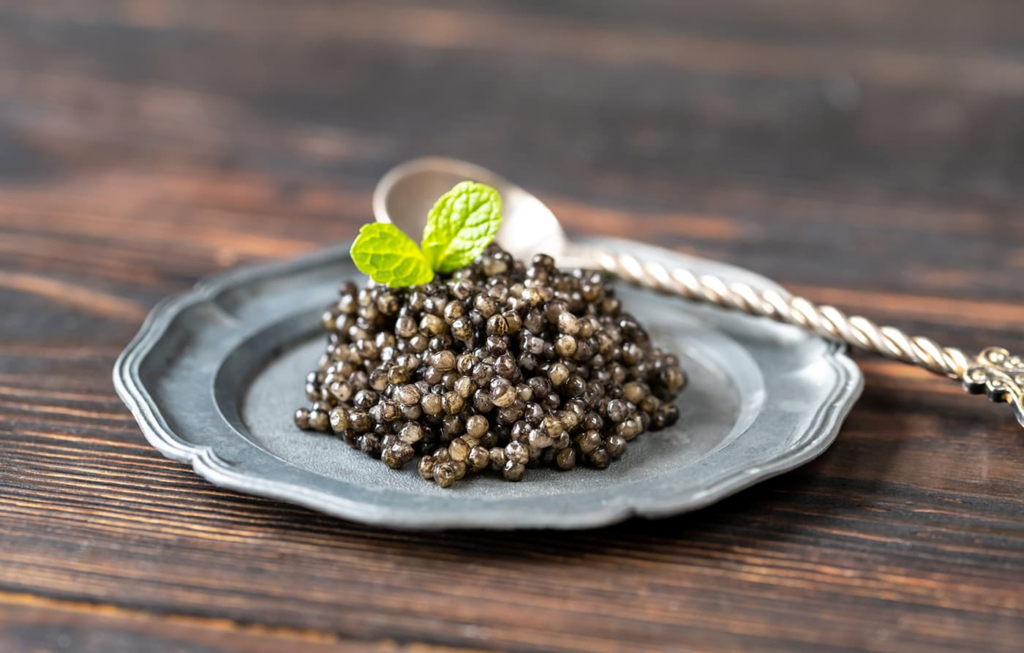
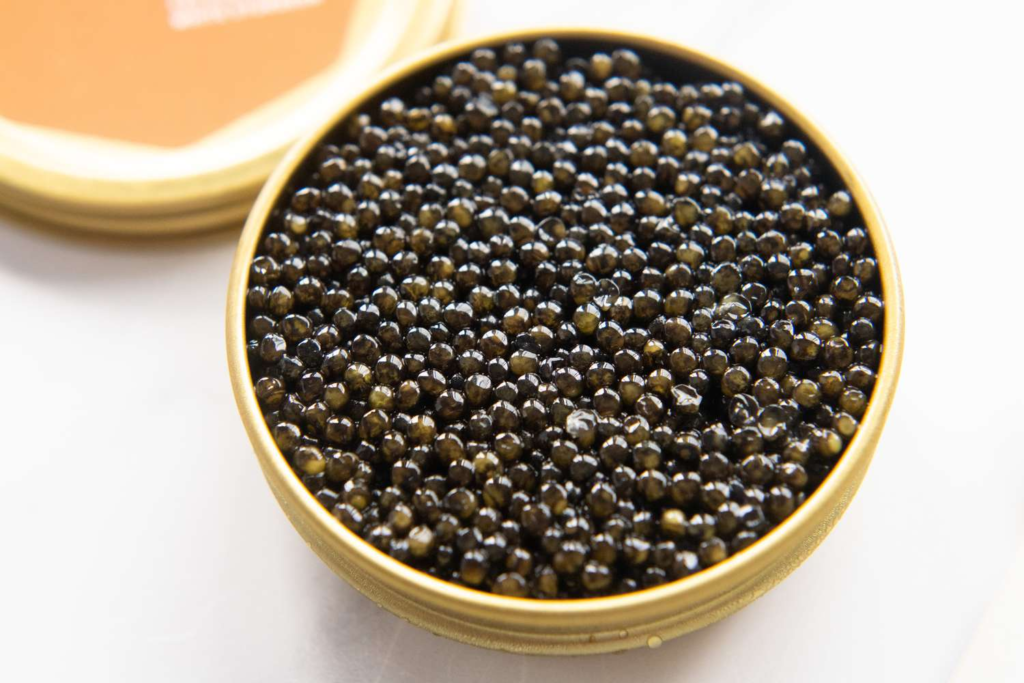
The pearls are small to medium in size, typically ranging from two to three millimetres. The colour ranges from deep charcoal to jet black, with a high-gloss surface that reflects the concentration of oils within. This glossiness is itself an indicator of quality.
On the Nose
A well-aged, properly stored tin will offer a clean oceanic aroma with faint mineral undertones. There should be no sharpness, no fishiness, and no ammonia smell. A sharp or pungent smell is a sign of suboptimal handling or age.
On the Palate
The first impression is a gentle, briny opening followed by the characteristic umami depth. The texture is velvety rather than firm, with the pearls releasing their flavour gradually rather than bursting abruptly. Mid-palate, a subtle earthiness develops alongside hints of dried seaweed or toasted grain. The finish is long, mineral, and clean.
The Aftertaste
This is where premium Siberian caviar distinguishes itself most clearly. The finish does not fade quickly. It lingers as a gentle salinity with a faintly nutty warmth, inviting the next taste rather than demanding it. For those curious about how this compares to Russian Sturgeon on the palate, our earlier piece on the taste differences between Siberian and Russian Sturgeon explores that contrast in depth.
How Preparation Affects Flavour
Even the finest caviar can be compromised by improper preparation. To experience the full flavour profile of premium Siberian Sturgeon caviar, a few principles are essential.
Temperature matters profoundly. Caviar should be served between -2°C and 4 °C. Serving it too warm causes the fats to break down, muting the oceanic notes and introducing an unpleasant heaviness. If it is too cold, the flavour compounds are suppressed entirely.
The choice of serving implement also plays a role. Metal spoons react with the delicate compounds in the roe, introducing a metallic interference that alters the taste. Mother-of-pearl spoons remain the standard for a reason: they are inert, allowing the caviar’s natural profile to speak without interference.
Finally, restraint with accompaniments allows the flavour to be fully appreciated. A plain blini, a modest amount of unsalted butter, or a small dollop of crème fraîche are all that is needed. These accompaniments serve as a neutral canvas, not a distraction.
Siberian Sturgeon Caviar in Indonesia
The appreciation of Siberian Sturgeon caviar in Indonesia has grown significantly, driven by a generation of discerning diners who approach food as a form of cultural and sensory exploration. At caviar.id, Indonesia’s foremost curated caviar destination, Siberian Sturgeon caviar is available across a carefully selected range of internationally acclaimed brands.
For those seeking their first encounter with this species or deepening an existing appreciation, caviar.id distributes Siberian Sturgeon selections from two exceptional producers (available on the Siberian Sturgeon product page).
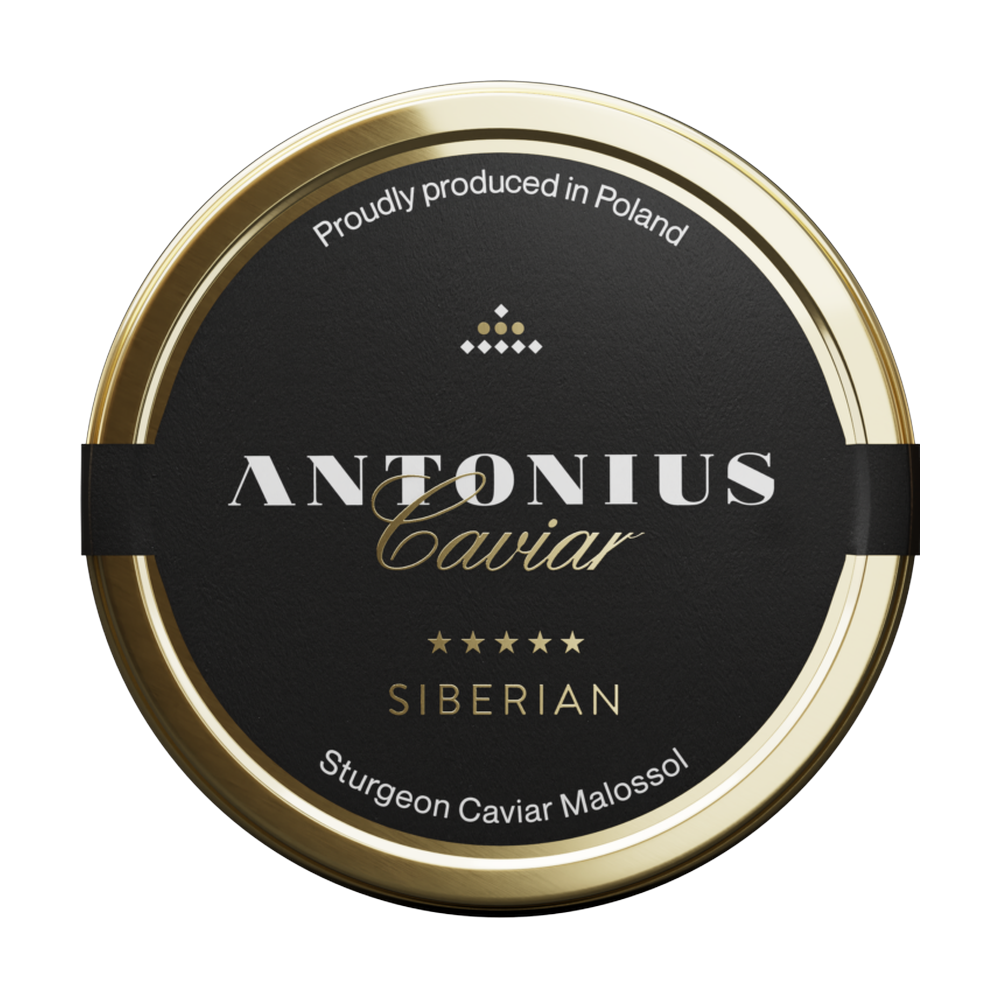
Antonius Caviar brings decades of European precision to its Siberian line, with the Siberian 6-Star expression representing one of the finest Malossol preparations available in the market. The flavour profile is vivid, briny, and deeply mineral, making it an ideal introduction to the species.
Aquatir, a respected producer from Moldova, offers Siberian sturgeon roe of exceptional purity. The pearls are consistently glossy, the flavour profile is clean and oceanic, and the finish reflects the mineral character of its source water with remarkable clarity.
Both labels are available through caviar.id and have been distributed to a number of Indonesia’s most distinguished fine-dining establishments and five-star hotel kitchens, including venues in Jakarta and Bali where the demand for provenance-assured, internationally certified caviar continues to grow.
The Verdict
Siberian Sturgeon caviar rewards those who approach it with patience and attention. Its flavour does not reveal itself all at once. It opens gradually, layer by layer, from the oceanic first note to the long mineral finish. Understanding the science behind that experience does not diminish its pleasure. If anything, it deepens it.
For those ready to explore the full range of Siberian Sturgeon caviar available in Indonesia, the collection at caviar.id offers a guided entry into one of the world’s most extraordinary sensory traditions.
Caviar is a tricky thing to pair with food. You need to pick foods that will complement the caviar’s flavour and texture without overshadowing it.
In this guide, you will discover what foods go well with caviar, why they work and how to serve them at home.
Best Foods to Pair with Caviar
Classic Caviar Bases
Blinis
These small pancakes are soft but sturdy enough to hold toppings. Warm ready-made blinis in a dry pan for a minute. Add a little crème fraîche and top with caviar.
Toast Points
Crisp toast adds crunch, while butter helps balance caviar’s salty taste. Lightly toast white bread and cut it into small triangles. Spread with unsalted butter and add caviar.
Potatoes
Potatoes have a mild, earthy flavour that goes well with caviar’s saltiness. The warm potatoes also contrast with the cold caviar. Boil or bake small potatoes, let them cool slightly and cut them in half. Add a little butter and top with caviar just before serving.
Cucumber
Cucumber is cool, fresh and crunchy. It makes a good base for a light snack. Cut it into thick rounds, add a little crème fraîche and top with caviar.
Crackers
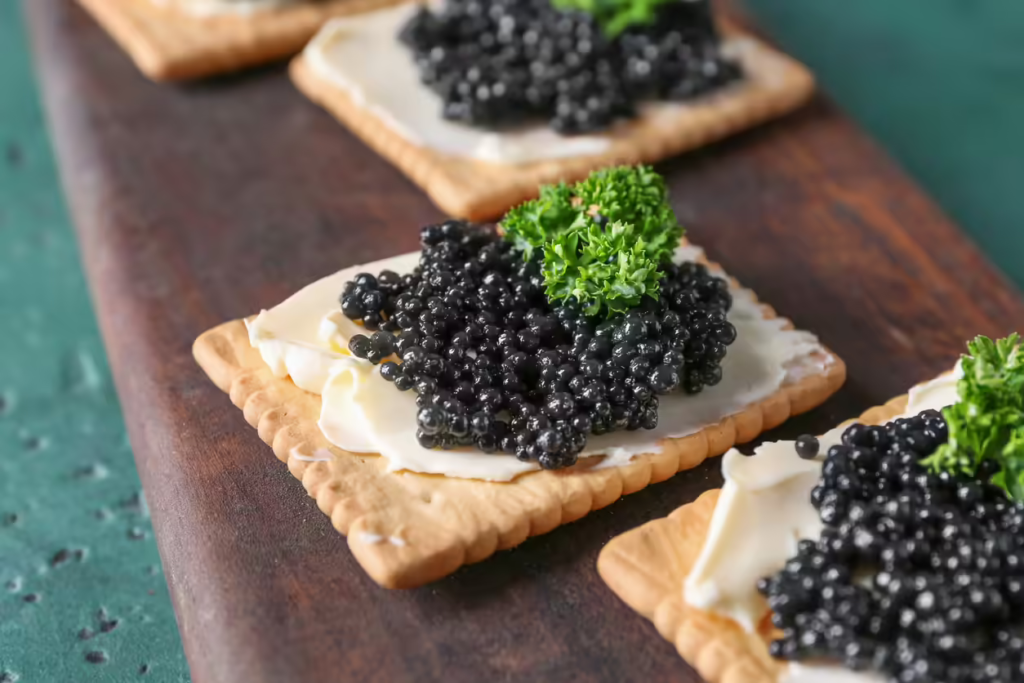
Plain crackers have a mild taste that lets you enjoy the caviar’s flavour. They also add a nice crunch. Choose unsalted or lightly salted crackers and top each with a little caviar.
Creamy Caviar Pairings
Crème Fraîche or Sour Cream
Crème fraîche and sour cream have a slightly sour taste that balances caviar’s saltiness. Add a small spoonful to blinis, toast or potatoes before topping with caviar.
Eggs
Scrambled eggs: Make soft, buttery scrambled eggs. Add a small spoonful of caviar just before serving.
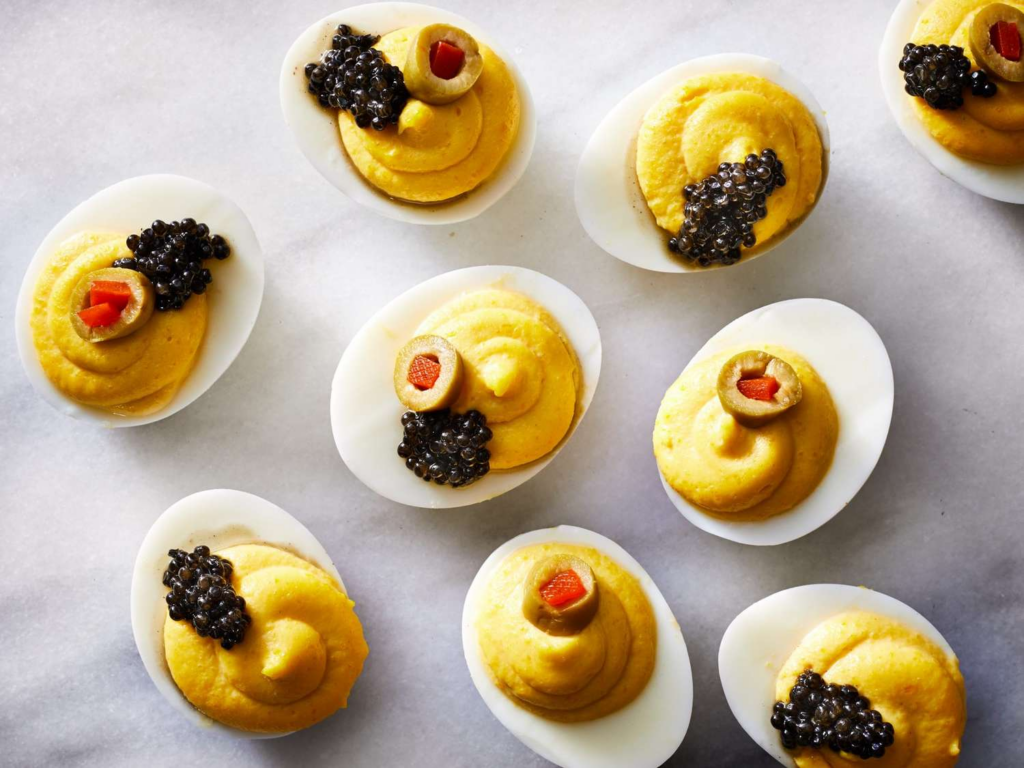
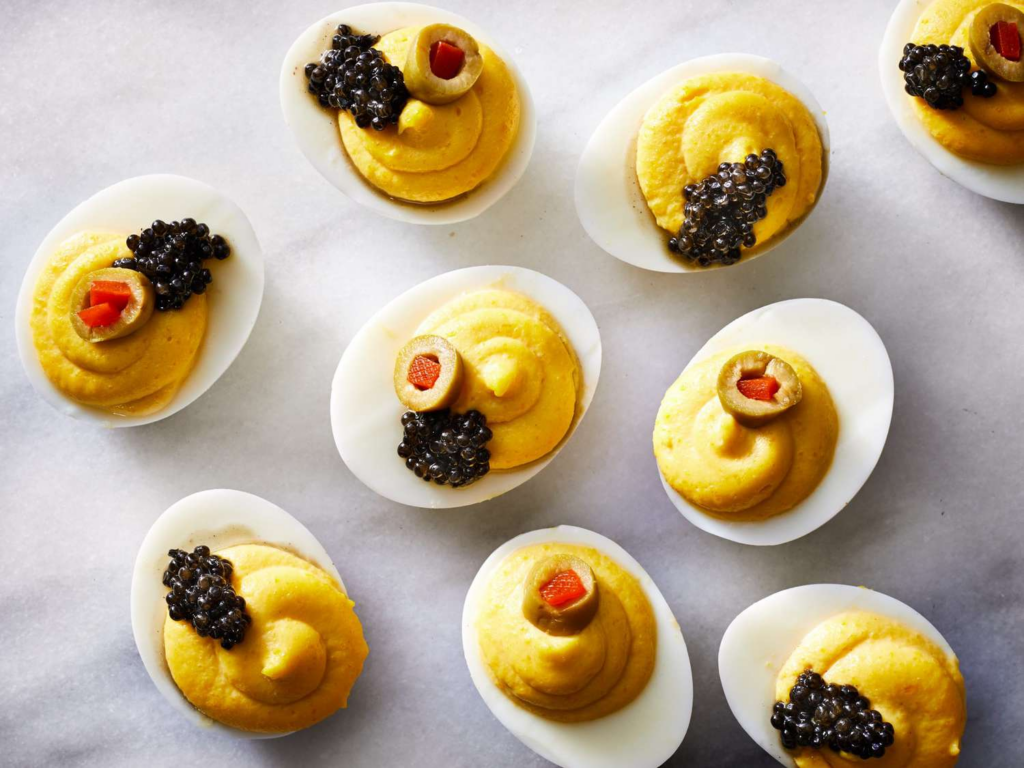
Hard-boiled eggs: Cut the eggs in half and add a little crème fraîche and caviar. The firm whites and creamy yolks offer different textures.
Devilled eggs: Keep the filling mild and add a few caviar pearls on top just before serving.
Avocado
Ripe avocado (alpukat) has a soft, creamy texture that goes well with caviar. Mash it or cut it into thin slices. Spread it on toast and top with caviar.
Caviar and Seafood
Oysters
Oysters and caviar are both briny, so the flavours build on each other. Serve fresh oysters chilled, with a little caviar on top. Choose oysters that are not too salty, so you can enjoy both flavours.
Sushi and Sashimi
The mild taste of fresh fish goes well with caviar. Add a little caviar to salmon or tuna sashimi, or use it as a topping for sushi.
Scallops
Scallops have a slightly sweet taste that goes well with salty caviar. Cook them briefly in butter and add a little caviar just before serving.
Smoked Salmon
The soft texture and mild smoky taste of salmon go well with caviar’s salty flavour. Serve lightly smoked salmon on toast or blinis with a little caviar on top.
Caviar with Pasta and Risotto
Pasta
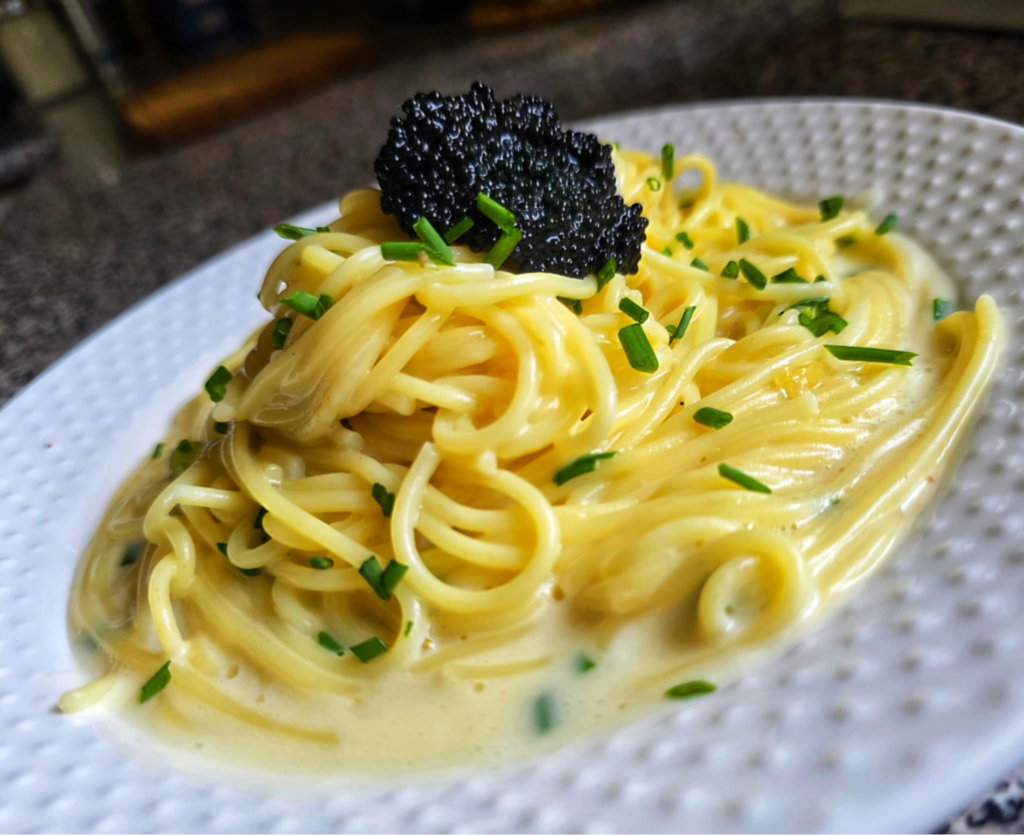
Mix freshly cooked pasta with butter or a light cream sauce to soften the caviar’s salt. Wait a minute, then add a little caviar on top.
Risotto
The soft, creamy texture of risotto goes well with caviar. Cook it with a mild stock and add a little caviar just before serving.
Modern Caviar Pairings
Potato Chips
Choose plain, lightly salted potato chips. Add a little crème fraîche and a few caviar pearls on top. The crunchy chips and creamy topping taste great together.
French Fries
Hot, crispy fries go well with cold caviar. Use freshly cooked fries with very little salt. Add a little caviar just before serving. Avoid dipping the fries into the caviar tin.
Dumplings
Dumplings with mild fillings, like chicken and cabbage, let the caviar’s flavour stand out. Their soft texture also goes well with caviar. Steam the dumplings and let them cool slightly. Add a little caviar just before serving.
Foods to Use Sparingly with Caviar
Avoid serving caviar with too much chilli, onion, garlic, strong cheese, salt, lemon juice or vinegar. Heat, sourness and strong flavours can all overpower or hide its delicate taste.
You do not have to avoid these ingredients completely. Just use small amounts so you can still enjoy the caviar.
Find Your Favourite Caviar Pairing
If you are new to caviar, start with blinis, eggs or potatoes. For a dinner party, try seafood appetisers,potato chips and of course vodka and champagne. Pasta and risotto are good choices for a special meal.
For delicate caviar, keep the pairing simple so you can enjoy its flavour.
Beluga and Kaluga have a delicate, buttery taste. Try them on plain blinis or just eat them as they are. The Oscietra has a nutty taste. Serve with potatoes and eggs. Siberian caviar is full of flavour. It is great with potato chips or boiled potatoes. Serve Sterlet caviar with cucumber or blinis.
Discover the variety of real sturgeon caviar at Caviar Indonesia. Shop caviar now.
Luxury Food Trends in Indonesia
This Luxury Food Trends in Indonesia Guide covers the top luxury foods gaining attention in Indonesia. It explains what makes each one special, why it is trending and what to check so you get what you pay for.
Caviar
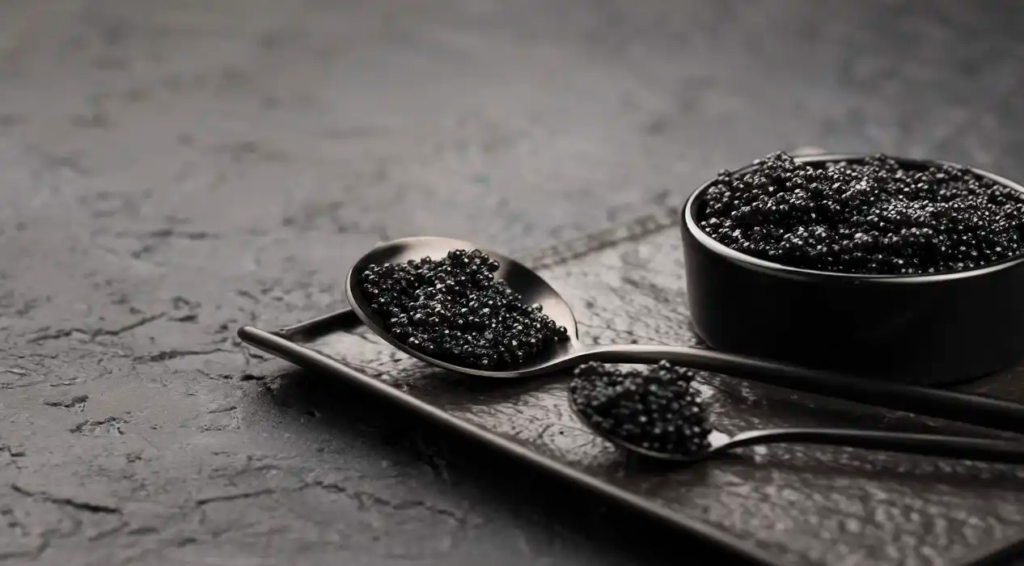
Caviar is one of the world’s most prized foods and it is gaining popularity in Indonesia. It is the salted eggs (roe) of sturgeon, a large fish found in rivers and seas across Europe and Asia. Sturgeon can take a decade or more to produce eggs, leading to high costs.
Why caviar is trending in Indonesia
It is becoming easier to try. InterContinental Jakarta Pondok Indah holds a monthly Caviar Edition dinner in its all-day restaurant. It is a popular luxury food to offer guests at upscale hotels and for corporate events.
It is becoming the star of the meal. In Bali, Mozaic hosts six-course dinners built around caviar.
Chefs are pairing it with Indonesian flavours. At Apéritif Restaurant in Ubud, caviar has been served with cuttlefish and kemangi (lemon basil). It shows caviar doesn’t have to be served the classic Western way.
If you want to try caviar:
Check the species. Different sturgeon produce different caviar. Beluga has large, soft pearls and a buttery flavour, while Oscietra has firmer pearls and a nuttier taste. Do not choose by price alone.
Check the producer and origin. The same species can be farmed in different countries, and quality varies by producer.
Keep it cold. Caviar is perishable. Refrigerate it and open the tin only when you are ready to serve it.
Keep the pairing simple. Caviar can be eaten on its own or with simple foods like plain or lightly salted potato chips.
Indonesian Craft Chocolate
Indonesian cacao is being turned into premium craft chocolate. Local makers produce single-origin and bean-to-bar chocolate using cacao from regions across the country.
Its appeal is the flavour. Cacao from different regions can taste different. Pipiltin Cocoa, for example, describes its Aceh cacao as nutty, Bali as fruity and creamy, and Flores cacao as having hints of clove and orange.
Why craft chocolate is trending in Indonesia
There is more focus on cacao origin. Makers offer bars from Aceh, Bali, East Java, Kalimantan and Papua, so you can choose by region.
More chocolate lovers are paying attention to cocoa percentages and subtle flavours.
If you want to try Indonesian craft chocolate:
Look for ‘single-origin’ and the region. Single-origin chocolate uses cacao from one place, so you can taste how regions differ.
Look for ‘bean-to-bar’. It means the maker produces the chocolate from cacao beans rather than starting with ready-made chocolate. The producer has more control over the flavour.
Premium Seafood
Premium seafood is prized for its freshness, flavour and texture. At its best, it can taste clean and sweet, with delicate or firm flesh depending on the variety. Some seafood is harder to find because it comes from specific waters or is available only at certain times of the year. Sustainable seafood in Indonesia has become a rising trend and key talking point, with buyers demanding ethically sourced seafood especially in tourist hot spots like Bali.
Why premium seafood is trending in Indonesia
Some top Indonesian restaurants are treating selected local seafood as a luxury just like imported seafood. They name where their local seafood comes from, making its origin part of its value. At Rumari, Raffles Bali, the menu has featured crayfish from Sibang and mud crab from West Sumatra.
Some restaurants fly seafood in from Japan. OKU at Hotel Indonesia Kempinski receives seafood twice a week from Tokyo’s Toyosu Market.
If you want to try premium seafood:
Ask where it comes from. The source, freshness and handling matter.
Ask what is in season. The best choice changes through the year, and it is not always the most expensive item on the menu.
Choose simpler preparations when trying something special. Heavy sauces or strong seasoning can hide the flavour and texture you are paying for.
Japanese Wagyu
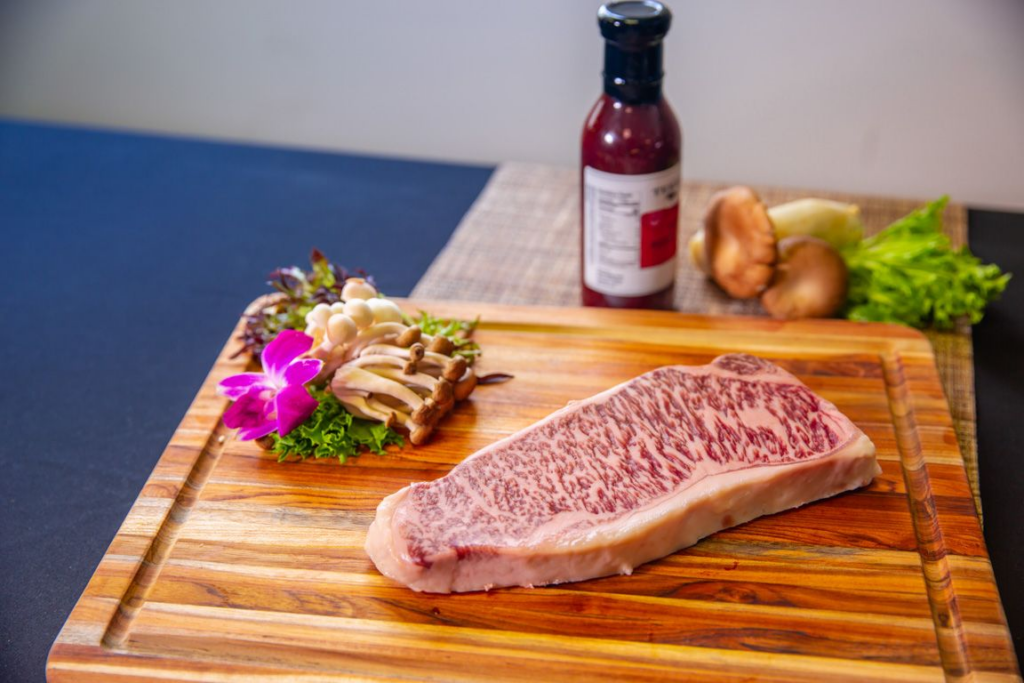
Wagyu beef is one of the most expensive types of beef worldwide. Its fine streaks of fat, called marbling, melt as the meat cooks. This gives it a rich flavour and soft, buttery texture.
Why Japanese Wagyu is trending in Indonesia
More yakiniku (Japanese grill) restaurants are opening in Jakarta. Yakiniku Futago opened its first Jakarta outlet in 2025. Tokyo’s Yakiniku Jumbo followed in 2026. It serves Shiga’s Omi Wagyu.
Halal-certified Japanese Wagyu is easier to find. Some Jakarta restaurants serve it, and exports from Japan to Indonesia are rising.
You can check the origin of your Japanese Wagyu. Some restaurants offer certificates that trace their beef back to the farm in Japan.
If you want to try Japanese Wagyu:
Check its origin. Look for Japan or regions like Kagoshima, Miyazaki or Omi.
Check the grade. A5 is the top grade in Japan’s grading system.
Check the halal certification if you need it. Do not assume all Wagyu is halal.
Discover Authentic Caviar in Indonesia
Caviar Indonesia specialises in authentic sturgeon caviar from established international aquaculture producers. Its range includes Beluga, Royal Oscietra, Sevruga, Kaluga Hybrid, Siberian and White Sturgeon, with delivery across Indonesia. Explore the range to find the species that suits your taste.
How Much Caviar to Serve Guests
This How Much Caviar to Serve Guests Guide gives you practical quantities for different guest counts and serving styles.
The right amount of caviar depends on the serving style and your guest count. You will need less caviar for a few bites than for an appetiser or tasting, and more if caviar is the main feature.
It can be tricky to order caviar for guests. You do not want to run out. But caviar is expensive, so you do not want to order too much either. And if you do not serve caviar often, it can be hard to know how much is adequate.
How Much Caviar to Order for Guests
The amount depends mainly on how you plan to serve the caviar. As a planning guide, use 5–10g per person for a few bites, 15–30g for an appetiser or tasting, and 30–50g when caviar is the main feature.
Here is how much you may need for different numbers of guests.
How Much Caviar for Two People
Serve 10–20g for a few bites, 30–60g for an appetiser or tasting, or 60–100g if caviar is the main feature. If you are trying caviar for the first time, a 30g tin may be enough for two people.
How Much Caviar for 10 Guests
You will need 50–100g for a few bites, 150–300g for an appetiser or tasting, or 300–500g if caviar is the main feature.
How Much Caviar for 50 Guests
Plan for 250–500g for a few bites, 750g–1.5kg for an appetiser or tasting, or 1.5–2.5kg if caviar is the main feature.
How Much Caviar for 100 Guests
Use 500g–1kg for a few bites, 1.5–3kg for an appetiser or tasting, or 3–5kg if caviar is the main feature.
For a different guest count, multiply the number of guests by the amount per person for your serving style. If you are serving caviar in more than one way, calculate each serving separately and add the amounts together.
Caviar Serving Style
A few details about how you serve the caviar can help you narrow down the amount.
Number of bites: With canapés, it helps to count how many each guest will get. Depending on the size, allow around 2–5g of caviar for each one. Three canapés with 2.5g each, for instance, come to 7.5g per guest. Serve five and that goes up to 12.5g.
Serving method: Ready-made bites make portions easier to control. With self-service, some guests may take more than others. In that case, use the higher end of the suggested range.
Accompaniments: Blinis, potato, crème fraîche and other accompaniments can make the serving more substantial. But there is no fixed amount to deduct when serving caviar with them.
Caviar variety: There is no reliable reason to change the amount depending on the type.
How Much Caviar To Buy: Tips
Order your tin sizes to match: Say you want 80g of caviar, but the tins on offer do not quite make up 80g. Instead of automatically adding another 10% or 15% as a safety buffer, look at the tin sizes available and buy the closest practical amount that covers what you need.
Decide between large and small tins: A larger tin may work out cheaper per gram. With smaller tins, you can open another only when you need it. So you can control how much more you use.
Order by weight: Avoid spoonfuls. The size of a spoonful can vary. It can be difficult to tally up for a group.
Check availability for large orders: If you are serving 50 or 100 guests and have a specific caviar in mind, check in advance about your quantity with the supplier.
Order Caviar for Your Guests from Caviar Indonesia
Choose from 17 caviar varieties at Caviar Indonesia, including Beluga, Royal Oscietra, Sevruga, Siberian and Kaluga Hybrid. We source our caviar from renowned aquaculture producers worldwide.
We have tins of different sizes depending on the caviar. So, you can buy an amount that suits your guest count.
Caviar Indonesia delivers nationwide using cold-chain packaging. Explore the caviar online or contact the team for help with your order.
FAQs
How much caviar should I order if some guests will not eat it?
Do not calculate for the full guest list. Use the number of guests you expect to serve.
How many people does a 30g tin of caviar serve?
It depends on how you serve it. A 30g tin can serve about three to six people for a few bites, one or two for an appetiser or tasting, or one person if caviar is the main feature.
What to do if my guest count changes after I order the caviar?
If you have fewer guests coming, do not open everything you ordered. For a larger guest number, estimate how much caviar you will need based on how you will be serving it and how many guests you will have.
Types of Caviar Explained – Varieties & Differences
Beluga, Kaluga Hybrid, Oscietra, Sterlet, Sevruga, Siberian and White Sturgeon are seven popular types of caviar.
Each differs in flavour, pearl size, texture and price. Understanding these differences can make it easier to choose a caviar that suits your taste, budget and occasion.
Caviar Indonesia specialises in sturgeon caviar from international producers. This guide draws on that experience to explain what distinguishes the seven types.
7 Popular Types of Caviar
Beluga Caviar
Beluga has large, soft pearls and a delicate, buttery flavour. The pearls range from light to dark grey and are less strongly briny than other varieties. Beluga takes many years to mature, which is one reason its caviar is rare and expensive.
Choose it if: You prefer large, soft pearls and a mild, buttery flavour.
Kaluga Hybrid Caviar
Kaluga Hybrid has large pearls and a mild, creamy flavour. Its pearls are generally firm, giving them a noticeable pop in the mouth. It is produced by crossing two sturgeon species and is often considered an alternative to Beluga.
Choose it if: You like large pearls and a mild flavour but a firmer texture.
Oscietra Caviar
Oscietra is known for its nutty flavour, often with a buttery finish. Its firm pearls range from grey and olive to brown and gold.
Choose it if: You prefer a nutty taste over a strongly briny one.
Choose it if: You want to try some offbeat caviar.
Sevruga Caviar
Sevruga has small, firm pearls and a bold, briny flavour.
Choose it if: You like a stronger, saltier caviar.
Siberian Caviar
Siberian caviar has medium-sized pearls in shades of black, grey and brown. It has a rich flavour, though the taste can differ by producer. Siberian sturgeon is widely farmed, so its caviar is generally more affordable than many luxury varieties.
Choose it if: You are trying caviar for the first time.
White Sturgeon Caviar
White Sturgeon has medium to large, dark pearls and a clean, mild flavour. The White Sturgeon is North America’s largest fresh water fish and its firm pearls have a noticeable pop, without the stronger taste of varieties, like Sevruga.
Choose it if: You want larger, firm pearls at a more affordable price.
Caviar Types at a Glance
Type
Flavour
Pearl Size
Texture
Price Position
Beluga
Buttery, delicate
Large
Soft, delicate
Ultra-luxury
Kaluga Hybrid
Creamy, mild
Large
Firm pop
Luxury
Oscietra
Nutty, buttery
Medium to large
Firm
Luxury
Sterlet
Mild, delicate
Small
Delicate
More accessible
Sevruga
Bold, briny
Small
Firm
Luxury
Siberian
Rich
Medium
Firm
More accessible
White Sturgeon
Clean, mild
Medium to large
Firm
More accessible
Note: Price positions are general comparisons rather than fixed price bands. Prices vary by producer, quality, pearl characteristics and availability.
Why Is Some Caviar More Expensive Than Others?
Maturation time: Different sturgeon take different periods of time to produce roe. During these years, the farm must feed and care for the fish. The longer this takes, the more it costs the farm – and that can make the caviar more expensive.
Pearl properties: The size, colour, firmness and consistency of caviar pearls make caviar valuable. Larger pearls or more uniform pearls may cost more.
Production: Producers raise the fish differently. Some of them may choose eggs for their caviar. The choices affect the quality and price of the caviar. A known producer can also sell at a premium because of its reputation.
Availability: Some caviar is produced in smaller amounts than other caviar. When demand is high, but supply is low, prices can go up.
Buy Caviar in Indonesia from Caviar Indonesia
Caviar Indonesia offers genuine sturgeon caviar from renowned aquaculture producers throughout the world. The collection includes Beluga, Russian Sturgeon, Siberian Sturgeon and Sterlet.
You can also choose from internationally respected brands, like Antonius Caviar, Kaluga Queen, Aquatir Caviar, D&A Imperial Caviar and Russian Caviar House, with nationwide delivery for home, restaurant and wholesale customers.
Shop the caviar collection or speak with the team for help choosing a caviar that suits your taste, occasion and budget.
FAQs
What is the difference between a caviar type and a caviar grade?
A caviar type refers to the sturgeon it comes from (for example, Beluga or Oscietra). A grade describes characteristics, like pearl size and colour, used to assess the caviar.
Is a larger caviar pearl of better quality?
No. Pearl size is one characteristic of caviar, but quality also depends on texture, consistency and flavour.
Does the colour of caviar indicate its quality?
Not by itself. Caviar naturally comes in black, grey, brown, olive, amber and gold. Colour can vary depending on the type of caviar.
Can the same type of caviar taste different?
Yes. That depends on the producer and the batch you get.
Is any type of caviar considered the best?
There is no single type that everyone will prefer. The best choice is up to your taste.
Luxury Food Gifts in Indonesia
If you are looking for a luxury food gift in Indonesia, great options include caviar, speciality coffee, artisan chocolate, celebratory baked goods, and curated hampers.
This guide explains when to choose each one and what to check before you buy.
Five Luxury Food Gifts in Indonesia
1] Caviar
Occasion:
Caviar is suitable for important clients, weddings, anniversaries and milestone celebrations. It is a special treat that many of the recipients would not buy for themselves. Trusted retailers like Caviar Indonesia have a generous selection of high quality caviar sourced from around the world which can be shipped to customers all over Indonesia.
Guidelines for Purchase:
Ask the seller for a recommendation based on your budget and occasion.
If the recipient is new to caviar, consider flavour and texture, too. Some varieties are milder and more delicate; others are richer in taste. This difference helps you choose something the recipient will enjoy.
Caviar must be kept cold during transit. Check how the seller keeps it cold during shipping.
Ask the seller if they have serving accessories.
Think about when you will be serving the caviar. If you are serving it at a dinner party or a celebration and want to share it, ask the retailer what size tin would be appropriate for the number of guests you will have. This way, you will buy the right amount and won’t end up with too much or too little.
Note:Beluga caviar is premium. Oscietra is another premium option that usually costs less.
2] Speciality Coffee
Occasion: Speciality coffee is a good gift for coffee lovers, important clients and corporate occasions.
Guidelines for Purchase:
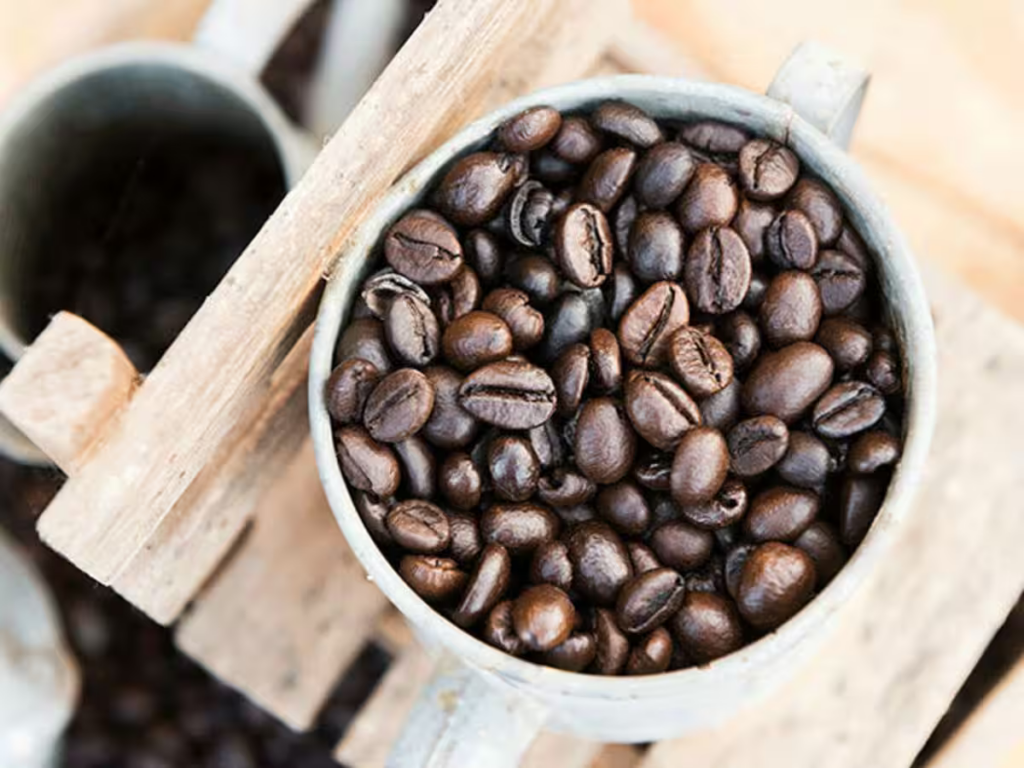
Look for coffee from recognised growing regions like Kintamani in Bali or Toraja in Sulawesi. The pack should ideally name the farm, estate, or producer rather than simply say ‘Indonesian coffee’. This tells you more specifically where the beans came from.
When buying Kopi Luwak, check how it was sourced. Its production involves coffee beans eaten and passed by civets. Many producers keep the animals in cages, which raises animal-welfare concerns. Look for genuinely wild-sourced coffee.
Choose whole beans if the recipient has a grinder. If not, go for freshly ground coffee.
Before you buy, check the roast date. This tells you how fresh the coffee is.
3] Bean-to-Bar Chocolate
Occasion:
Bean-to-bar chocolate is excellent for chocolate lovers, hosts, birthdays and thank-you gifts.
Guidelines for Purchase:
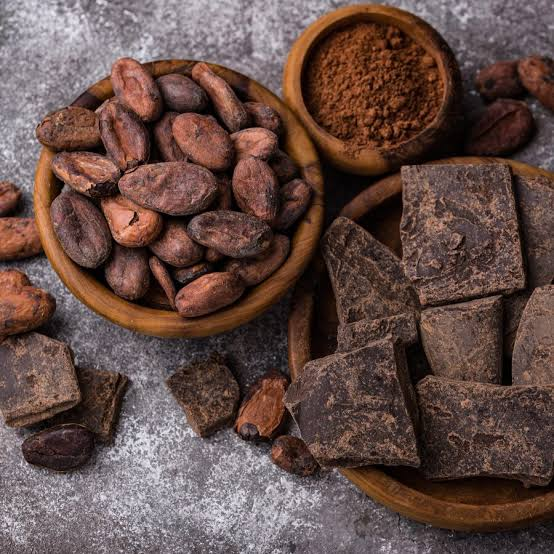
Check where the cacao comes from. Indonesian chocolate makers use cacao grown in Sumatra, Sulawesi, Kalimantan and Bali. A named origin tells you where the cacao used in the chocolate was grown.
Look for the term ‘bean-to-bar’. It means the chocolate maker handles the process from cacao beans to the finished chocolate bar, rather than simply using ready-made chocolate.
Choose the cocoa percentage based on the recipient’s taste. Milk chocolate is sweeter. Dark chocolate with a higher cocoa percentage has a stronger taste.
If you do not know what the recipient likes, choose a gift set with different flavours or cocoa percentages. This gives them a few options to try.
Note: Indonesian bean-to-bar maker Krakakoa has won awards at the UK’s Academy of Chocolate. Jungle Gold Bali is another regional favourite that makes an excellent gift.
4] Indonesian Celebratory Baked Goods
Occasion:
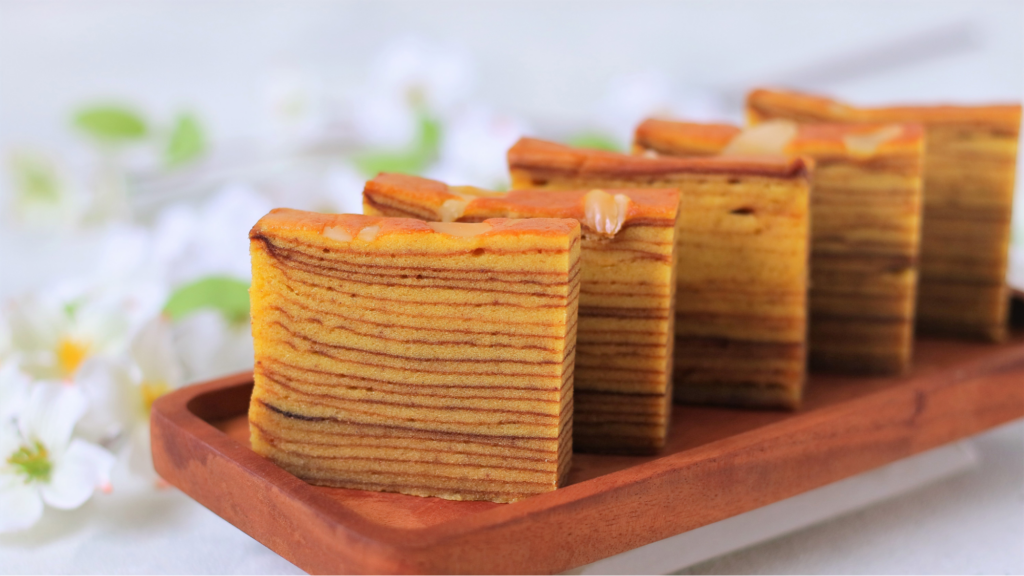
Lapis Legit and Nastar are good for Lebaran, Imlek (Chinese New Year), and Natal (Christmas).
Guidelines for Purchase:
Choose fresh products only. This way, you get more time to serve them.
When choosing Lapis Legit, look at the layers. This Indonesian cake is made by baking one thin layer at a time, so even layers are an important part of its appearance.
Ask what butter and spices are used in the Lapis Legit. These ingredients affect its flavour and richness.
For Nastar, ask if the pineapple filling is made in-house, and what kind of butter is used in the pastry. These details can help you weigh up the different bakeries.
Consider how the gift will be shared. A whole Lapis Legit works well as a centrepiece for a family gathering, while a box of individual Nastar is easier to pass around.
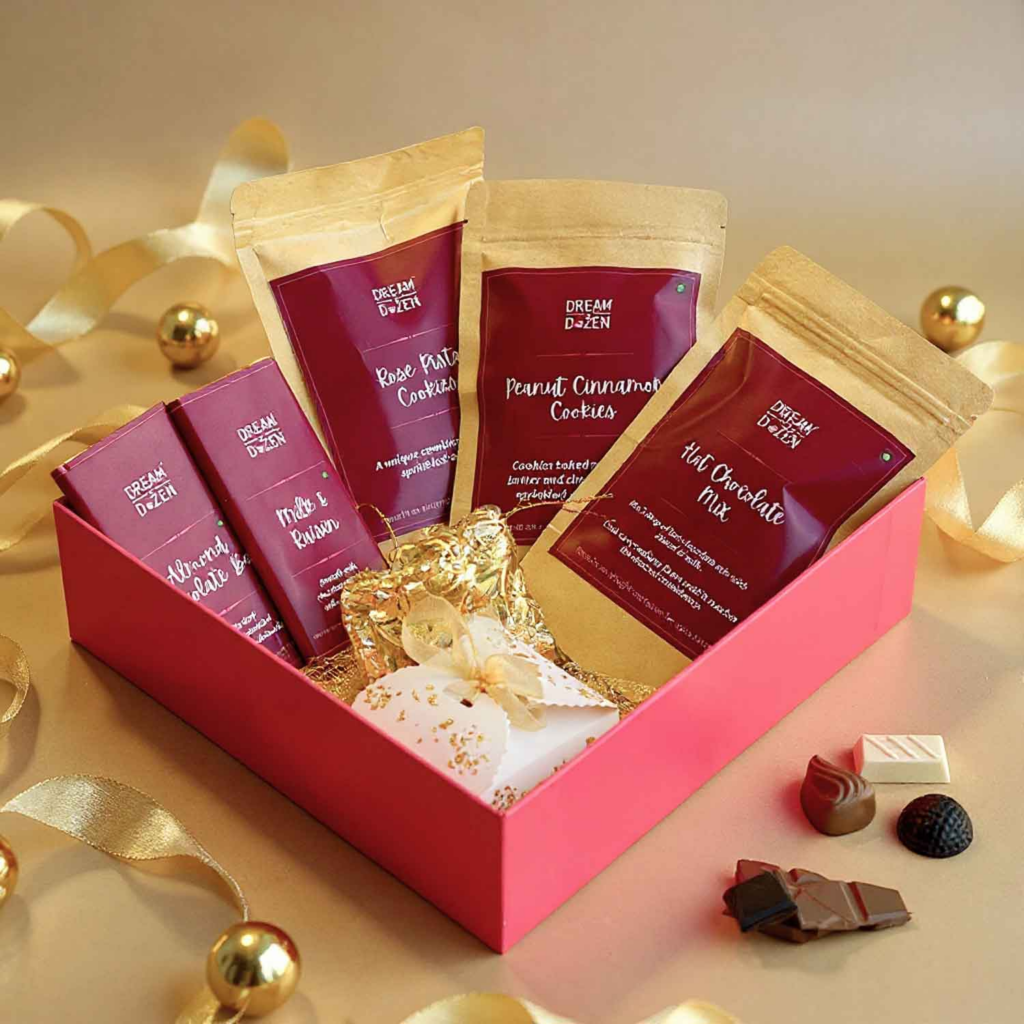
5] Bespoke Luxury Hampers
Occasion: Custom hampers suit corporate gifts,
family celebrations and holiday occasions.
Guidelines for Purchase:
See the brands, the sizes of products and how many items you get. That helps you know what you actually get for the price.
Choose products based on the recipient’s dietary preferences. This is especially important if the hamper has a variety of different foods.
Look at the arrangement of the hamper. Check the box layout and whether you can add a personalised card/message.
If you are ordering for a company, ask whether the seller can handle multiple hampers and add company branding or individual recipient messages.
Luxury Caviar Gifts in Indonesia
Caviar Indonesia brings together caviar from established producers from all over the world to offer the highest quality caviar to Indonesian customers. Its range is sourced from sustainable farms, with every tin traceable to its source.
You do not need to know caviar to find the right one. Caviar Indonesia’s sommeliers can help you choose the right caviar for your budget, the occasion and the recipient’s tastes. They can also help you understand the differences between types of caviar before you buy.
Caviar is expensive, and getting it wrong can cost you twice. If your first tin is too intense, too salty, or not suited to an untrained palate, you may think caviar is not for you. The differences are not always clear.
This Best Caviar for Beginners Guide removes the guesswork. It covers all the basics that can help a beginner purchase caviar confidently.
Caviar also comes in several types, each has its own flavour, texture, and price. At Caviar Indonesia, we offer the best caviar from around the world, shipped Indonesia-wide.
Tips for Beginners: How to Choose the Right Caviar
When buying your first tin, look for these factors.
Flavour
Choose a mild, buttery caviar for your first tin, not a strong or salty one.
A strong, salty caviar can overwhelm you. All you will remember is salt. A mild, buttery caviar lets you actually taste the roe itself. You will notice its creaminess, its faint nuttiness, and the light pop of the pearls.
You can try either of the two caviar types, Siberian sturgeon (Acipenser baerii) and Oscietra (Acipenser gueldenstaedtii). Both are named after the fish they come from and have a milder taste.
Price
Buy a small tin first, not a large one.
A 30-gram tin is enough to try the caviar properly. You can taste it plain, then again with blini or crème fraîche.
A good entry-level caviar, like Siberian sturgeon, starts from around IDR 900,000 for this size. Prices climb from there depending on grade and brand, so treat this as a starting point, not your full budget.
Texture
Look for firm pearls, not soft or mushy ones.
If the pearls feel soft or mushy instead, the caviar is past its best. This is usually the first thing people notice, even before they register the flavour.
Malossol
Look for the word ‘Malossol‘ on the tin. It is a mark of quality.
Malossol is Russian for ‘little salt’. It means the roe was lightly cured, usually with less than 5% salt. That light cure lets the caviar’s natural flavour come through, instead of being masked by salt. Most good tins carry this label.
Every legal tin carries this code. It is a short string of letters and numbers that shows the species, country, and harvest year. It exists because sturgeon have been protected since 1998, after overfishing nearly wiped out wild populations.
Antonius Caviar, the brand we stock, uses sustainably farmed sturgeon rather than wild-caught fish. A valid CITES code confirms this.
The Best Caviar Types to Try First
There are several types of caviar, including Kaluga, Sevruga, and Sterlet. For a first tin, though, two stand out as the easiest to start with.
Siberian Sturgeon
Start here. Of the common types, it has the mildest flavour and the most forgiving price.
Siberian sturgeon caviar has a mild, clean flavour with a faint earthy note. The pearls are small to medium, firm, and range in colour from black to grey to brown. A 30-gram tin starts from IDR 900,000.
Serve it with blini and a little crème fraîche, or eat it plain first to learn the flavour properly.We stock Antonius Caviar’s Siberian tin as our pick for first-time buyers.
Oscietra
Once Siberian feels familiar, move on to Oscietra. It is a step up in flavour and price.
Oscietra caviar has a nutty, buttery flavour with a longer finish than Siberian. The pearls are medium to large, firmer, and range in colour from grey to golden brown. A 30-gram tin starts from IDR 1,140,000.
Pair it with a dry Champagne or chilled vodka for a proper first tasting.We recommend Antonius Caviar’s Oscietra as the step up from Siberian.
Beluga
Save this one for later. It is not the right caviar to start with.
Beluga is the largest, rarest, and most expensive caviar in the world, with a soft, buttery pearl and a long, delicate finish. Without Siberian or Oscietra to compare it to, you will not have a reference point.
How to Serve Your First Caviar Tin
Serve caviar cold and taste it plain.
Take the tin straight from the fridge and place it on ice if you have it. Use a spoon made of mother of pearl, bone, or wood, never metal, since metal dulls the flavour. Taste your first spoonful plain, without blini or crème fraîche.
Scoop the pearls onto the back of your hand, between thumb and forefinger. Avoid eating straight from a spoon dipped repeatedly into the tin. This keeps the rest of the tin at a stable temperature.
Where to Buy Caviar in Indonesia?
Caviar Indonesia stocks a wide range of fine caviar from around the world, shipped cold across the country with a CITES code on every tin. Browse the full range, and we will help you pick the right first tin.