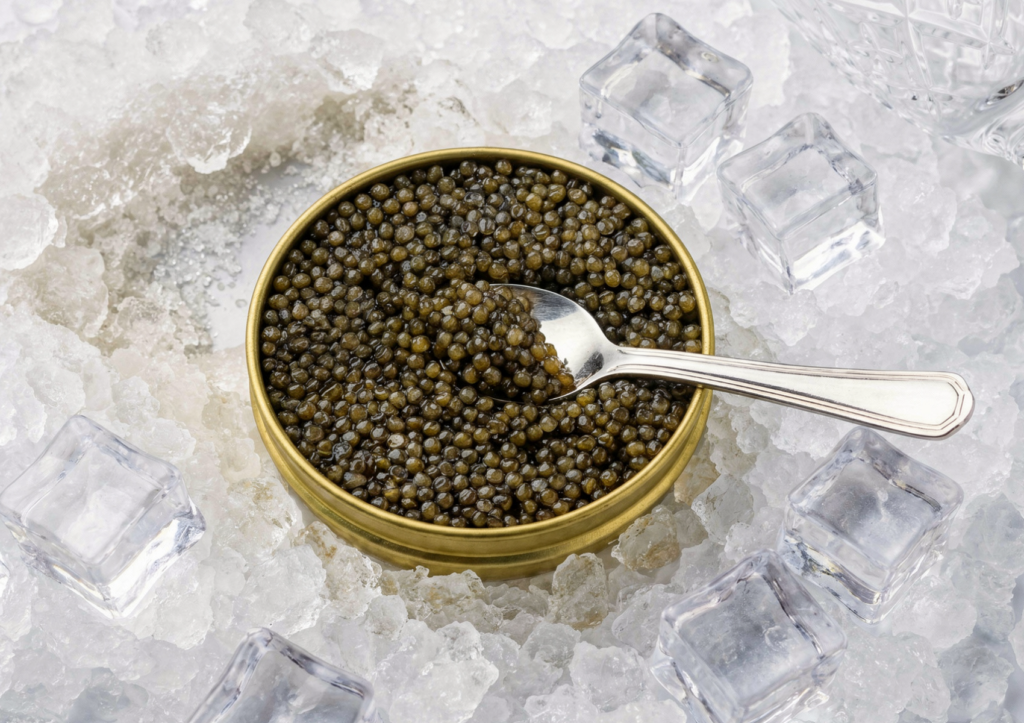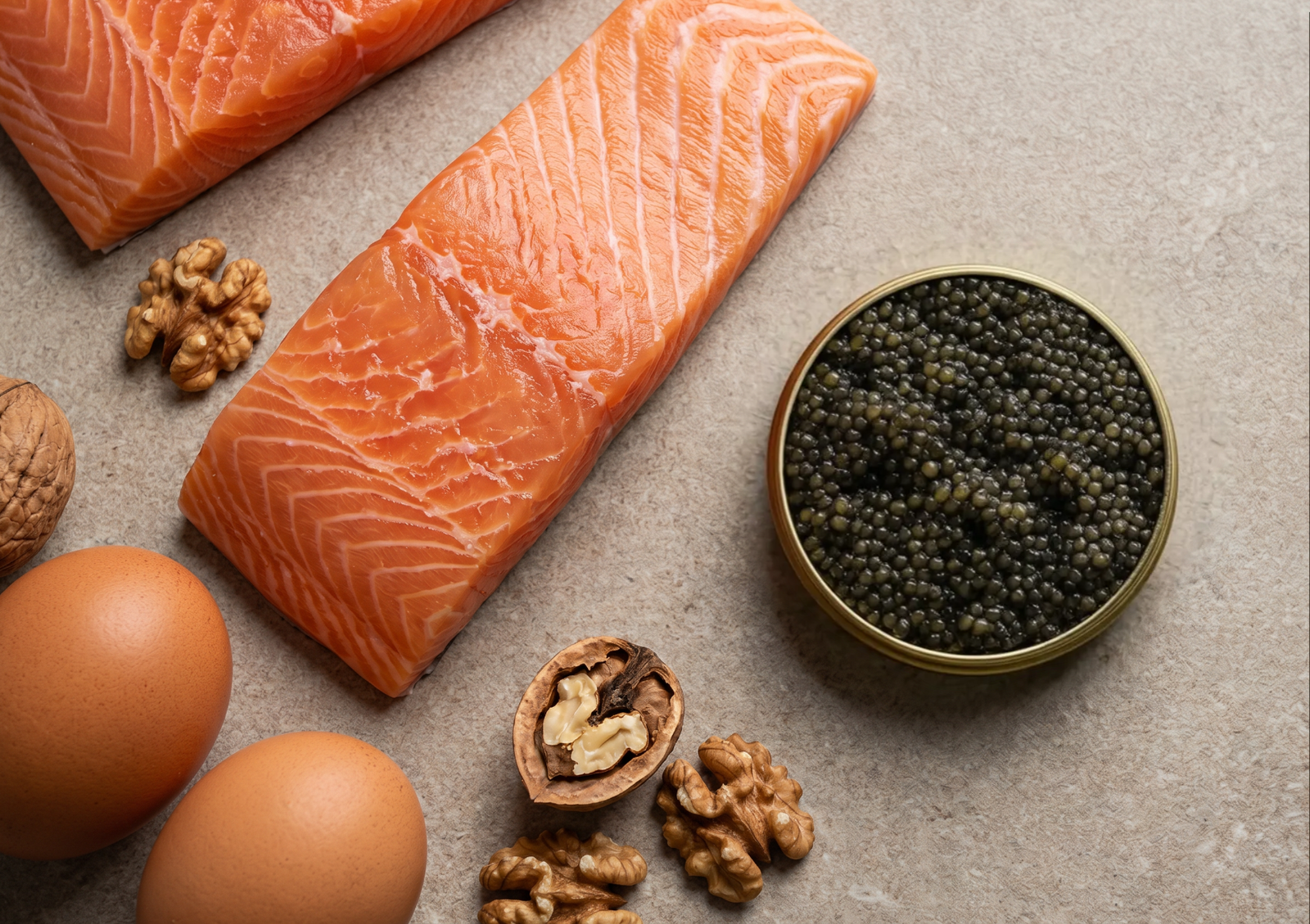
Most people think of caviar as a treat, something special, indulgent, and purely about pleasure. What surprises many is that caviar is also genuinely good for you. Not in a vague, marketing kind of way, but in a measurable, research-backed kind of way.
A small 28-gram serving, about the size of a generous tablespoon, delivers more Vitamin B12 than you need in an entire day. More omega-3s than most fish oil capsules, and a complete set of proteins your body cannot make on its own. Backed by scientific publications, they have all confirmed what generations of coastal cultures have known intuitively: fish eggs are extraordinarily nourishing.
Here is what the science actually shows, explained plainly.
What Is Actually Inside a Serving of Caviar
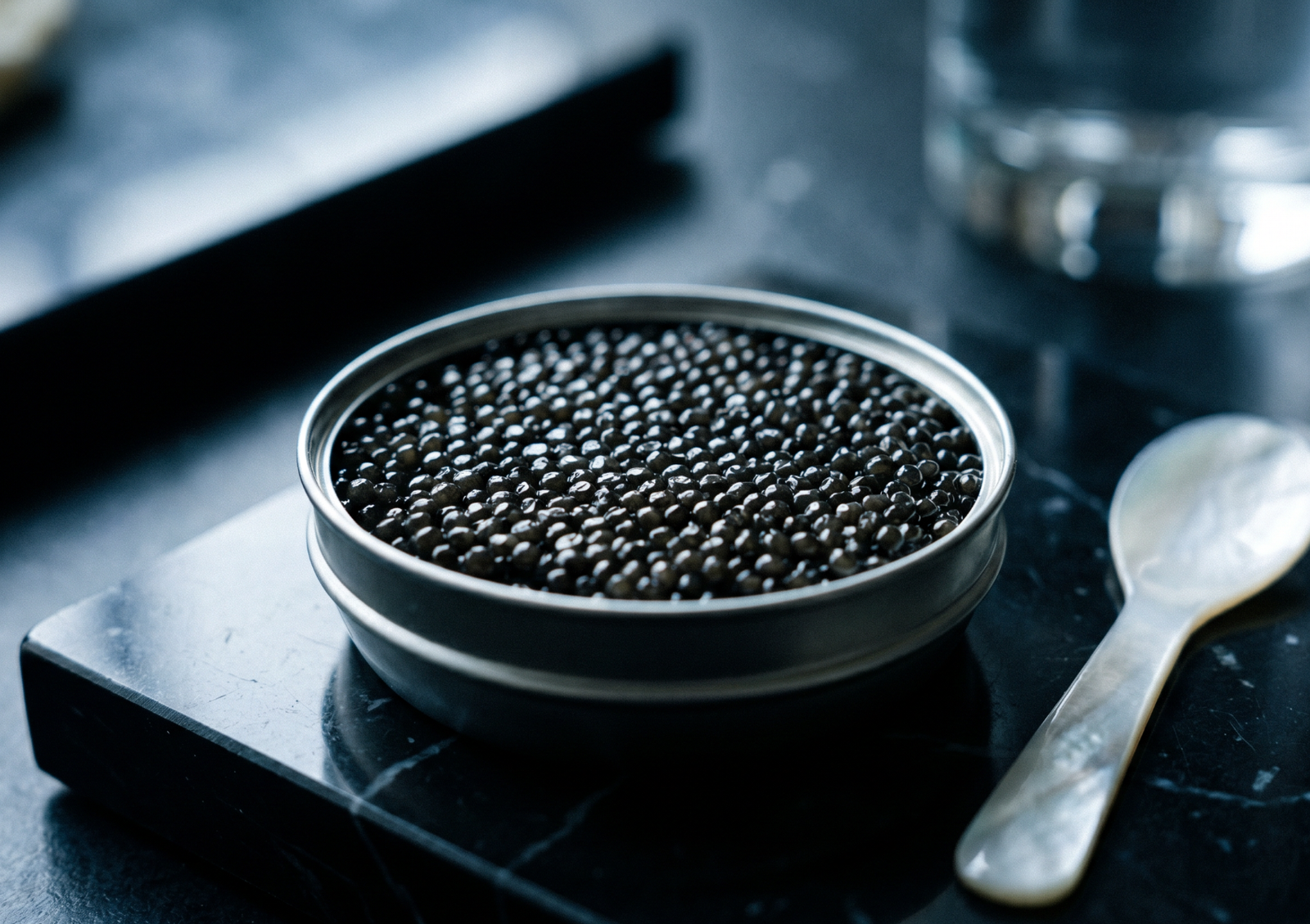
Think of a single tablespoon of sturgeon caviar as a very concentrated package of things your body needs but rarely gets in one place at the same time.
In that one serving, you get healthy fats that protect your heart and brain (omega-3s, specifically around 800mg of EPA and 1,080mg of DHA, more than double what the American Heart Association recommends daily), more than twice your daily requirement of Vitamin B12. They contain minerals such as selenium that act like a natural shield for your cells, iron that helps your blood carry oxygen, calcium for your bones, choline that your brain and liver depend on, and a complete set of proteins containing all nine amino acids your body cannot produce on its own.
What makes this particularly interesting is that the omega-3s in caviar are in a form called phospholipids, which research suggests the body absorbs more readily than the triglyceride form found in most supplements. You are essentially getting more from less. These good fats accumulate in sturgeon eggs naturally, regardless of whether the fish is wild or farmed. So quality aquaculture-produced caviar is just as nutritionally reliable as its wild counterpart.
Caviar and Heart Health
Omega-3 fatty acids are among the most well-researched nutrients in cardiovascular science. Multiple large-scale reviews have shown that regular omega-3 intake reduces blood triglyceride levels, lowers blood pressure, and helps maintain healthier cholesterol levels. A major analysis published in the Journal of the American Medical Association found a meaningful link between omega-3 consumption and a lower risk of coronary heart disease.
Caviar delivers these omega-3s in a single whole food rather than a supplement, which matters because whole foods carry additional nutrients that work together in ways that isolated supplements cannot replicate.
Beluga caviar in particular stands out here. Research published in ACG Publications (2024) found that Beluga has the highest oleic acid content of any sturgeon species, at 42.9% of its fat composition. Oleic acid is the same heart-healthy fat found in olive oil, and it has been shown to reduce harmful LDL cholesterol, ease inflammation, and lower oxidative stress on blood vessels.
Caviar and Brain Health
Your brain is mostly fat. About 60% of it, by dry weight, is made of fatty acids, and the most important of these is DHA, one of the two main omega-3s found in caviar. Keeping DHA levels up as you age is one of the most practical steps you can take to protect your cognitive health.
Caviar contains choline, a nutrient that most people do not get enough of. Choline helps your brain form memories, keeps your nerve signals firing correctly, and supports the health of cell membranes throughout your body. Low choline intake has been linked to faster cognitive decline as people age.
Caviar and Vitamin B12
B12 is one of those vitamins that quietly does an enormous amount of work. It helps your body make red blood cells, keeps your nervous system functioning properly, helps convert food into energy, and supports DNA production. When levels drop, the signs include fatigue, difficulty concentrating, and a general feeling of weakness that is easy to mistake for stress or poor sleep.
B12 deficiency is more common than most people realise. The National Institutes of Health estimates it affects about 6% of adults under 60, and nearly one in five adults over 60. People who eat mostly plant-based diets are especially at risk, since B12 is found almost entirely in animal foods.
A single serving of caviar covers more than twice your recommended daily intake of B12. That is a meaningful contribution from a very small amount of food.
Caviar and Skin Health
The connection between caviar and skin has long been marketed by luxury beauty brands, but the underlying science is more interesting than the packaging suggests.
DHA, one of the key omega-3s in caviar, has been shown in laboratory studies to trigger fat cells to produce a compound called adiponectin. This compound helps the skin build and preserve collagen, supports the healing of damaged skin, and reduces inflammation (Healthline, citing published dermatological research). Less inflammation and more collagen mean firmer, smoother, better-hydrated skin over time.
Many skincare serums containing caviar extract showed visible improvements in skin smoothness, firmness, and the appearance of fine lines. While this study used a topical product rather than dietary caviar alone, the biological mechanisms are the same as those activated by eating caviar. EPA, the other main omega-3 in caviar, has also been shown to protect skin from UV-related damage by reducing oxidative stress and supporting collagen production.
Caviar and Immunity, Bones and Energy
Selenium, calcium, and iron are three minerals in caviar that quietly support systems most people only notice when something goes wrong.
Selenium helps your immune system function at a high level. It activates one of the body’s most powerful natural antioxidant systems, which protects cells from the kind of chronic low-level damage linked to inflammation and disease. Most people get adequate selenium, but it is worth knowing that caviar is a reliable source.
Calcium is more straightforward. It keeps bones dense and strong. This is particularly relevant for people who avoid dairy, since caviar offers a non-dairy source of bioavailable calcium. Getting enough calcium early and consistently reduces the long-term risk of osteoporosis and arthritis.
Iron helps your blood carry oxygen to every cell in your body. Low iron is one of the most common nutritional shortfalls globally, and even a small serving of caviar contributes meaningfully to daily requirements.
Which Caviar Species Has the Most Nutritional Value
All sturgeon caviar shares the same core nutritional profile, but research has found real differences between species. If you are thinking about caviar with a specific health goal in mind, this matters.
Beluga Caviar (Huso huso)
Beluga has the highest oleic acid content of any sturgeon species (42.9%), making it the strongest choice for heart health. It is also rich in Vitamins A and E, which support immune function and skin protection, and its protein content of around 18 grams per serving is among the highest in the sturgeon family.
Russian Sturgeon Caviar / Oscietra (Acipenser gueldenstaedtii)
Russian Sturgeon caviar has the highest EPA concentration of the three main farmed species. EPA is the omega-3 most linked to mood support, anti-inflammatory effects, and heart protection. It is also a well-rounded source of protein, B12, and selenium.
Siberian Sturgeon Caviar (Acipenser baerii)
Siberian Sturgeon caviar contains the highest concentration of DHA, at 15.7% of its fatty acid profile. DHA is the omega-3 most directly associated with brain health, memory, and visual function. If brain health is your primary reason for interest, Siberian caviar has the strongest nutritional case among the sturgeon species.
Sterlet Caviar (Acipenser ruthenus)
Sterlet is a small freshwater sturgeon, and its nutritional profile reflects that. It delivers the same core benefits of omega-3s, complete protein, B12, and selenium, but with a slightly lighter mineral intensity than the larger Caspian species. It is the most approachable caviar nutritionally and in terms of flavour, making it a good starting point for those new to the category.
One Thing Worth Knowing About Sodium
Caviar is cured with salt, and this means it is relatively high in sodium. A standard serving contains between 240 and 500mg, depending on the producer and curing method, which is worth keeping in mind if you are managing blood pressure or watching your overall sodium intake.
Caviar is not an everyday food, nor does it need to be. Think of it as a nutritionally rich addition to an already balanced diet, something to enjoy in considered portions rather than a daily supplement.
Where to Find Quality Caviar in Indonesia
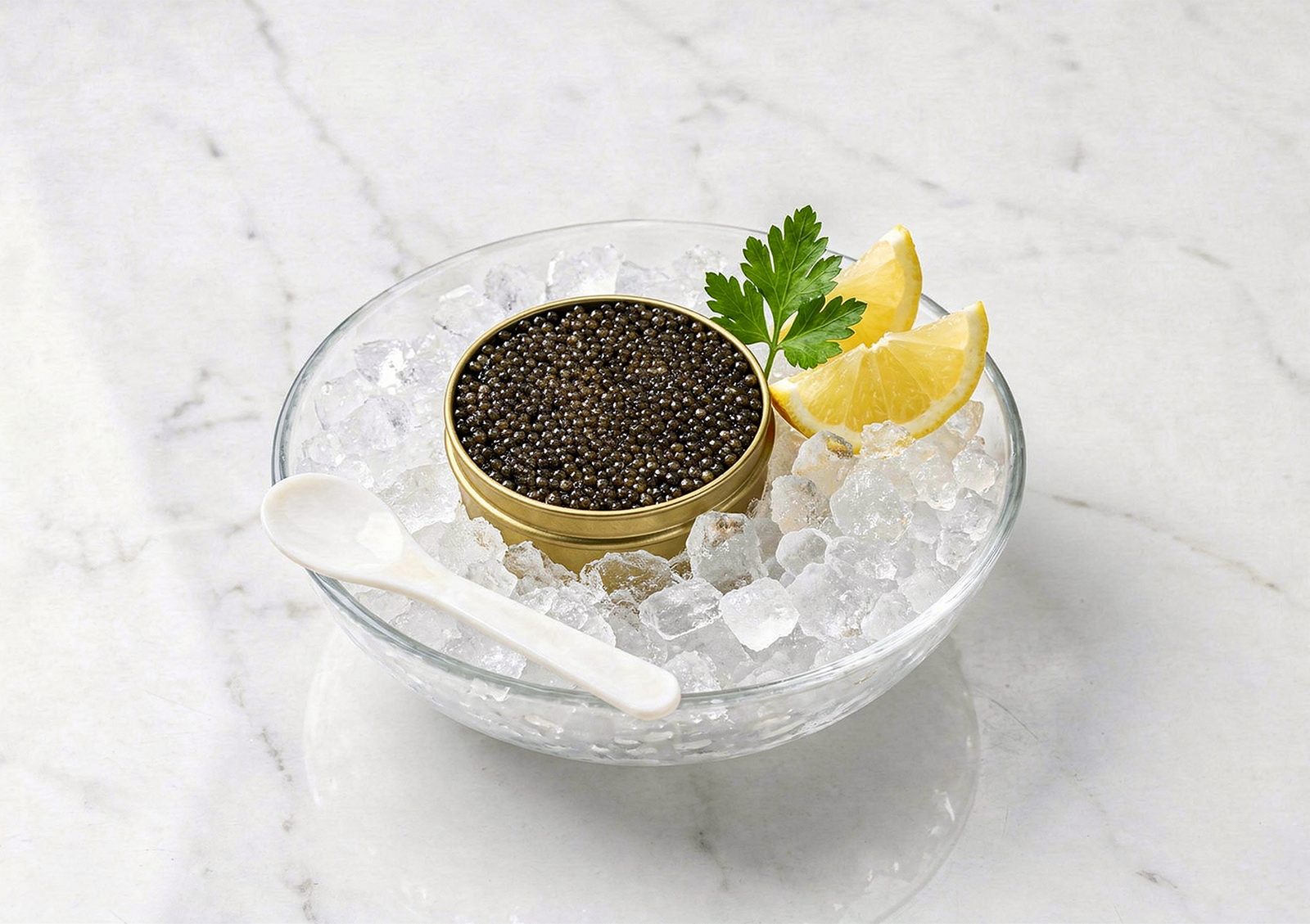
The nutritional value of caviar depends not only on the species but on how it has been handled from the moment it was produced. Omega-3 fats break down when exposed to heat, light, or air for too long, which is why cold-chain handling from farm to delivery is not just a quality measure but a nutritional one.
At caviar.id, every species covered in this article is available through internationally certified producers with full cold-chain delivery across Indonesia. The Beluga, Russian Sturgeon, Siberian Sturgeon, and Sterlet selections are sourced from farms with verified production standards in Europe, the Middle East, and Asia.
Explore the full collection at caviar.id.
Frequently Asked Questions
Is caviar actually healthy?
Yes, genuinely so. A small serving delivers meaningful amounts of omega-3 fatty acids, Vitamin B12, selenium, iron, calcium, choline, and complete protein. The research supporting its cardiovascular, cognitive, and metabolic benefits comes from reputable institutions and peer-reviewed journals.
Does the type of caviar change the health benefits?
Yes, in measurable ways. Siberian Sturgeon has the highest DHA content, which is most important for brain health. Russian Sturgeon has the most EPA, which is most relevant for mood and inflammation. Beluga has the highest oleic acid content, which is best for heart health. The differences are real but subtle. All sturgeon caviar is nutritionally excellent.
How much do you need to eat to get these benefits?
A single 28 to 30-gram serving already exceeds the American Heart Association’s daily omega-3 recommendation and provides more than twice your daily B12. The benefits are accessible within a very small portion.
Is farmed caviar as nutritious as wild caviar?
Yes. Research published in peer-reviewed journals confirms that the key omega-3 fatty acids in caviar accumulate in sturgeon eggs regardless of whether the fish was farmed or wild-caught. Responsible aquaculture produces caviar that is nutritionally comparable to wild roe.