In the world of fine dining, the terms roe and caviar are often used interchangeably, but for the discerning palate, there is a profound distinction. Understanding the nuances of fish roe vs caviar is not just about culinary knowledge. It is about ensuring you receive the true luxury experience you deserve.
What is Fish Roe?
Strictly speaking, roe is a collective term for all unfertilized fish eggs. It is the raw material from which many delicacies are made. Roe can be harvested from almost any marine animal, including:
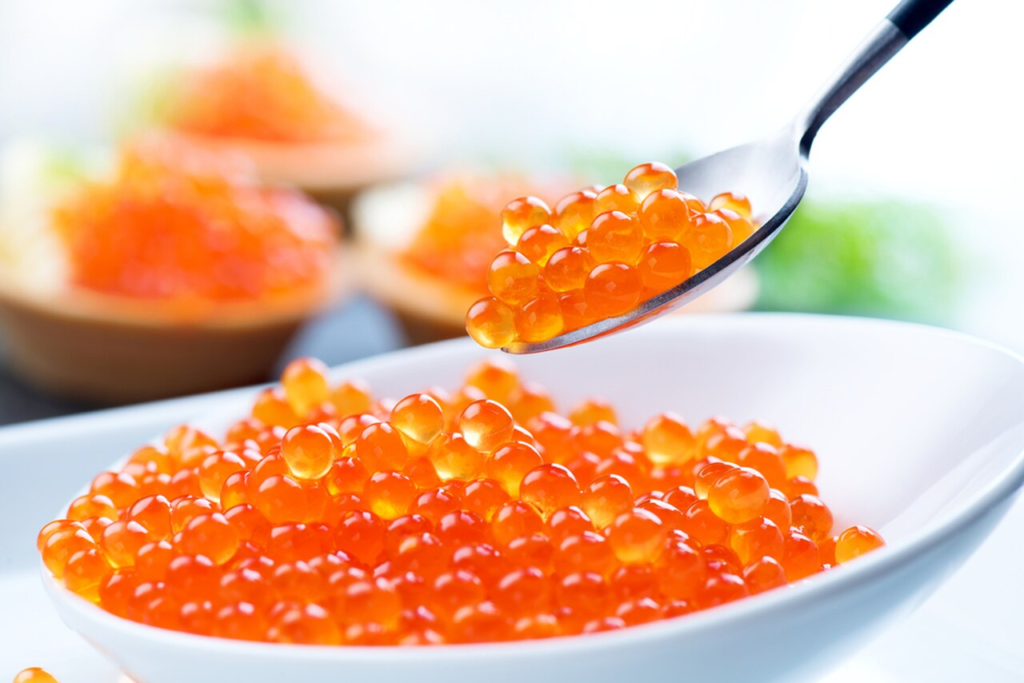
- Salmon (Ikura): Famous for its large, translucent orange pearls and bold pop.
- Tobiko (Flying Fish): A staple in Japanese cuisine, prized for its crunchy texture.
- Masago (Capelin): Smaller and subtler than Tobiko, often used as a garnish.
- Lumpfish: A common, more accessible alternative often dyed black or red.
In the industry, harvested fish eggs that have not yet been salted or processed are referred to as fresh roe or raw roe.
What is Caviar “The Black Gold”?
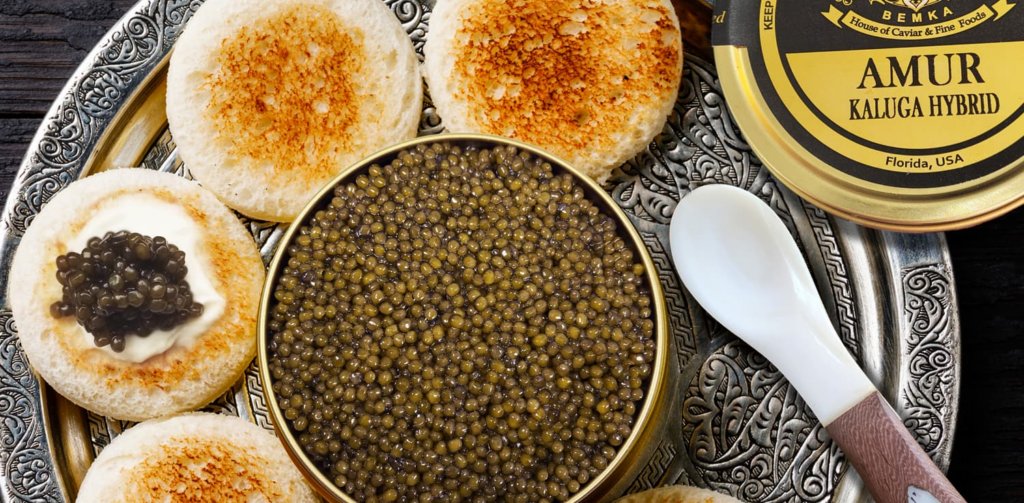
While all caviar is roe, not all roe is caviar. True caviar refers exclusively to the salt-cured eggs of the Sturgeon (Acipenseridae family).
At Caviar Indonesia, we take pride in sourcing only authentic sturgeon pearls. The transformation from sturgeon roe to caviar requires the traditional Malossol (little salt) method, which preserves the delicate, complex flavours of the egg.
Legendary varieties include:
- Beluga: The pinnacle of luxury with large, buttery, silver-grey pearls.
- Oscietra (Russian Sturgeon): Celebrated for its firm texture and distinct nutty, briny finish.
- Siberian Sturgeon: A favourite for its dark, glossy appearance and smooth, earthy flavour.
- Sterlet: A rare variety once reserved for Russian imperial families.
Technical Comparison Between Fish Roe vs Caviar
| Feature | Standard Fish Roe | Authentic Sturgeon Caviar |
| Origin | Any fish (Salmon, Trout, etc.) | Exclusively Sturgeon species |
| Color Palette | Vibrant (Red, Orange, Yellow) | Deep & Sophisticated (Black, Grey, Gold, Jade) |
| Flavour Profile | Simple, salty, and briny | Complex, buttery, nutty, and creamy |
| Maturity | Rapid (1 ke 3 years) | Slow (10 ke 20 years to produce eggs) |
| Exclusivity | Abundant and widely available | Rare and strictly regulated (CITES) |
Beyond the Basics of What You Need to Know
1. The Nutritional Profile
Both are nutritional powerhouses. Caviar is prized for its dense concentration of omega-3 fatty acids and protein, while salmon roe (ikura) is particularly rich in Vitamin D and antioxidants. Both provide excellent sources of Vitamin B12 and essential minerals like selenium.
2. The Art of Grading
Unlike standard fish roe, caviar undergoes a rigorous grading process. Experts evaluate the pearls based on size, colour, firmness, and lucidity. Grade 1 represents the finest selection; flawless, large grains with consistent colour and a clean, lingering finish. Lower grades may have variations in size, colour, or texture.
3. The Red Caviar Misconception
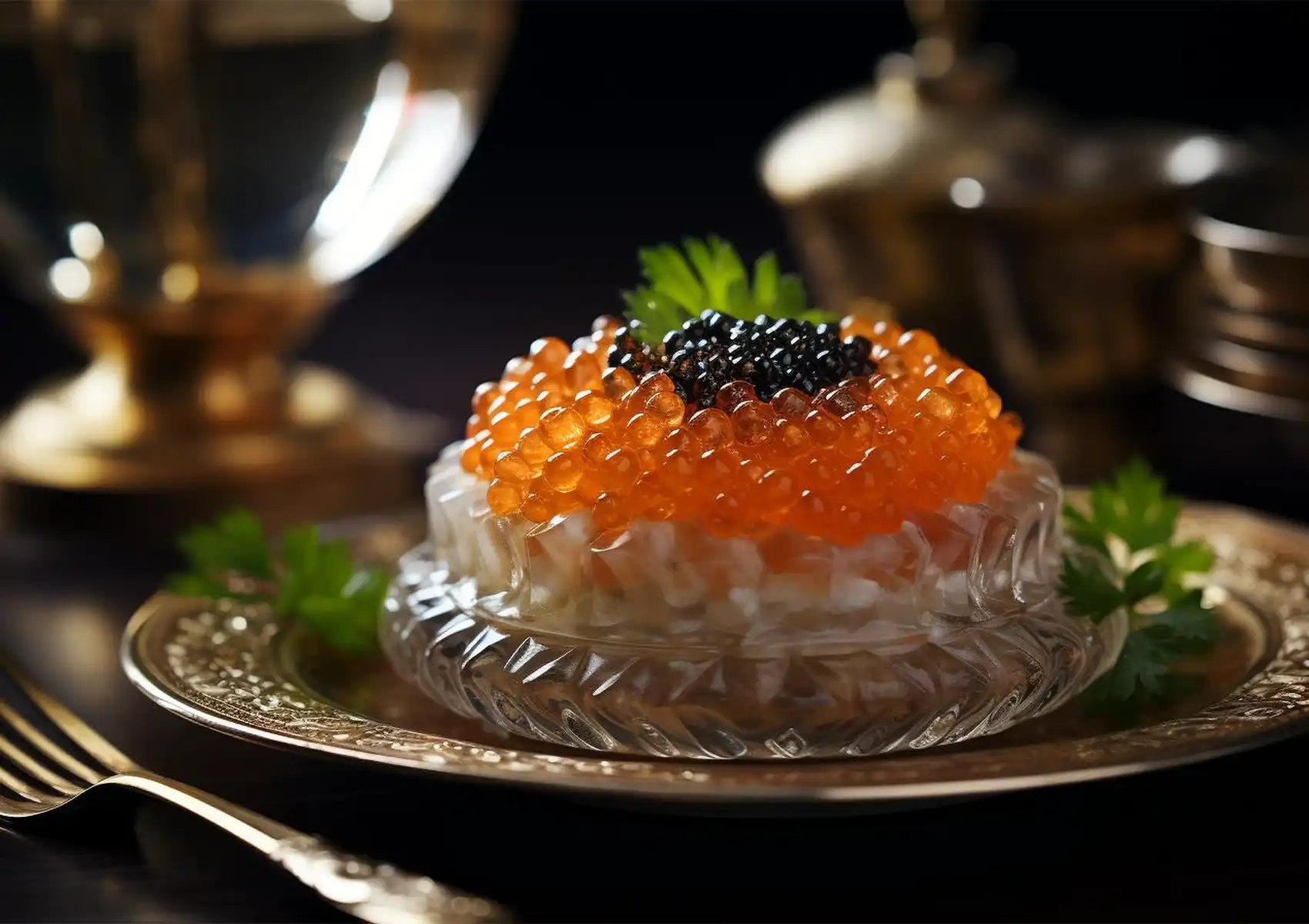
In some markets, salmon roe is labelled as “Red Caviar.” While this is a common culinary colloquialism, international standards, including those followed by Caviar Indonesia, reserve the term “caviar” exclusively for sturgeon. Red Caviar is delicious, but it does not carry the same gastronomic prestige as true black caviar from sturgeon.
The Golden Rule of Serving
To respect the integrity of these delicacies, never use a metal spoon. Metal, particularly silver or stainless steel, can react with the eggs and impart a bitter, metallic aftertaste.
Always opt for mother-of-pearl, bone, or glass utensils. Serve your caviar chilled on a bed of crushed ice to maintain its peak flavour profile.
Choosing Your Experience
If you are looking for a vibrant garnish or a crunchy sushi topping, fish roe is a delightful choice. However, when you seek an experience of unparalleled elegance and historical prestige, only authentic sturgeon caviar will suffice.
Ready to experience true sturgeon caviar? Caviar Indonesia delivers chilled, authentic caviar from Beluga to Sterlet straight to your door in Bali or Jakarta.
Explore the world’s finest selections at caviar.id and elevate your next gastronomic journey.
FAQ
1. What’s the main difference between fish roe and caviar?
Fish roe is eggs from any fish (salmon, flying fish, etc.). Caviar is specifically salt-cured eggs from sturgeon. All caviar is roe, but not all roe is caviar.
2. Is salmon roe real caviar?
No. Salmon roe is sometimes called “Red Caviar” in casual conversation, but true caviar comes only from sturgeon. Salmon roe is delicious, just different.
3. Why is caviar so expensive?
Sturgeon take 10 to 20 years to produce eggs, while other fish mature in just 1–3 years. Caviar is also rare and strictly regulated, which drives up the price.
4. Why can’t I use a metal spoon for caviar?
Metal spoons can react with the caviar and create a bitter, metallic taste. Always use mother-of-pearl, bone, or glass spoons to enjoy the pure flavour.