For most of the twentieth century, Beluga caviar occupied a category of its own. Its name was shorthand for the pinnacle of luxury, its pearls the largest and most coveted in the world, its flavour a benchmark against which everything else was measured. That conversation has not ended. But it now has a compelling companion.
Kaluga caviar, produced from one of the largest sturgeon species on earth, has earned a place at the same table. Not by imitation, but by offering something genuinely comparable in size, texture, and depth of flavour, while doing so through aquaculture practices that are among the most transparent and rigorously certified in the industry. At caviar.id, both Beluga and Kaluga are in the same curated portfolio, so the choice between them is not a matter of access. It is about preference. This article helps you make it.
The Sturgeon Behind the Roe
Kaluga sturgeon (Huso dauricus) is native to the Amur River basin, the vast waterway that runs along the natural border between Russia and China. It is one of the largest freshwater fish on earth, capable of exceeding 1,000 kilograms in the wild and reaching lengths of over five metres. Its closest evolutionary relfaative is the Beluga (Huso huso) of the Caspian Sea, and this shared lineage is the key to understanding why their roe is so remarkably similar in character.
The Amur River and its tributaries provide cold, clean, oxygen-rich water that shapes the quality of everything living within it. The Kaluga sturgeon is a slow-maturing species, taking between eight and twenty years to produce roe of the quality required for premium caviar. That patience is not incidental. It is what gives Kaluga caviar its depth.
The Hybrid Question, Answered Honestly
Many Kaluga caviars available today, including those produced by Kaluga Queen, come from a hybrid of the Kaluga sturgeon (Huso dauricus) and the Amur Sturgeon (Acipenser schrenckii). This hybrid was deliberately developed for aquaculture, combining the flavour profile and pearl size of Kaluga with the slightly faster maturation rate of Amur Sturgeon.
It is worth being clear about what this means and what it does not mean. The hybrid was not created to cut corners. It was developed to make consistent, high-quality production possible at scale without sacrificing the characteristics that define Kaluga caviar. The flavour, pearl size, texture, and finish all remain true to the Kaluga profile. What changes is the timeline, making it possible to bring caviar of this calibre to the market with greater reliability than pure Kaluga alone would allow.
The result is a caviar that stands fully on its own merit. Its hybrid origin is a production detail, not a quality disclaimer.
Tasting Notes in Detail
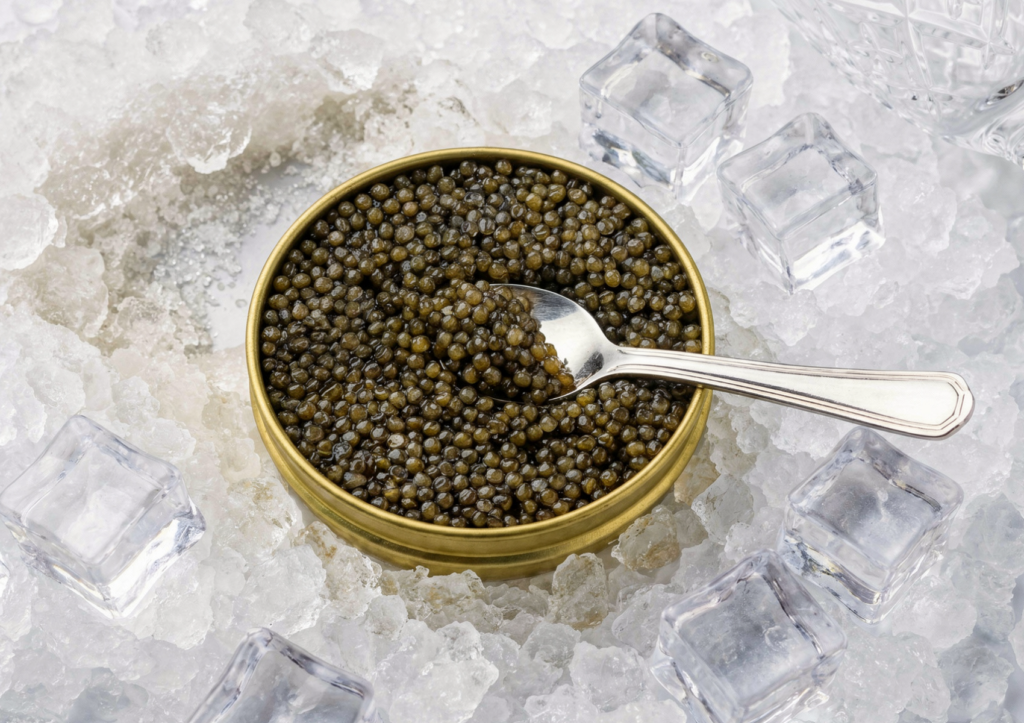
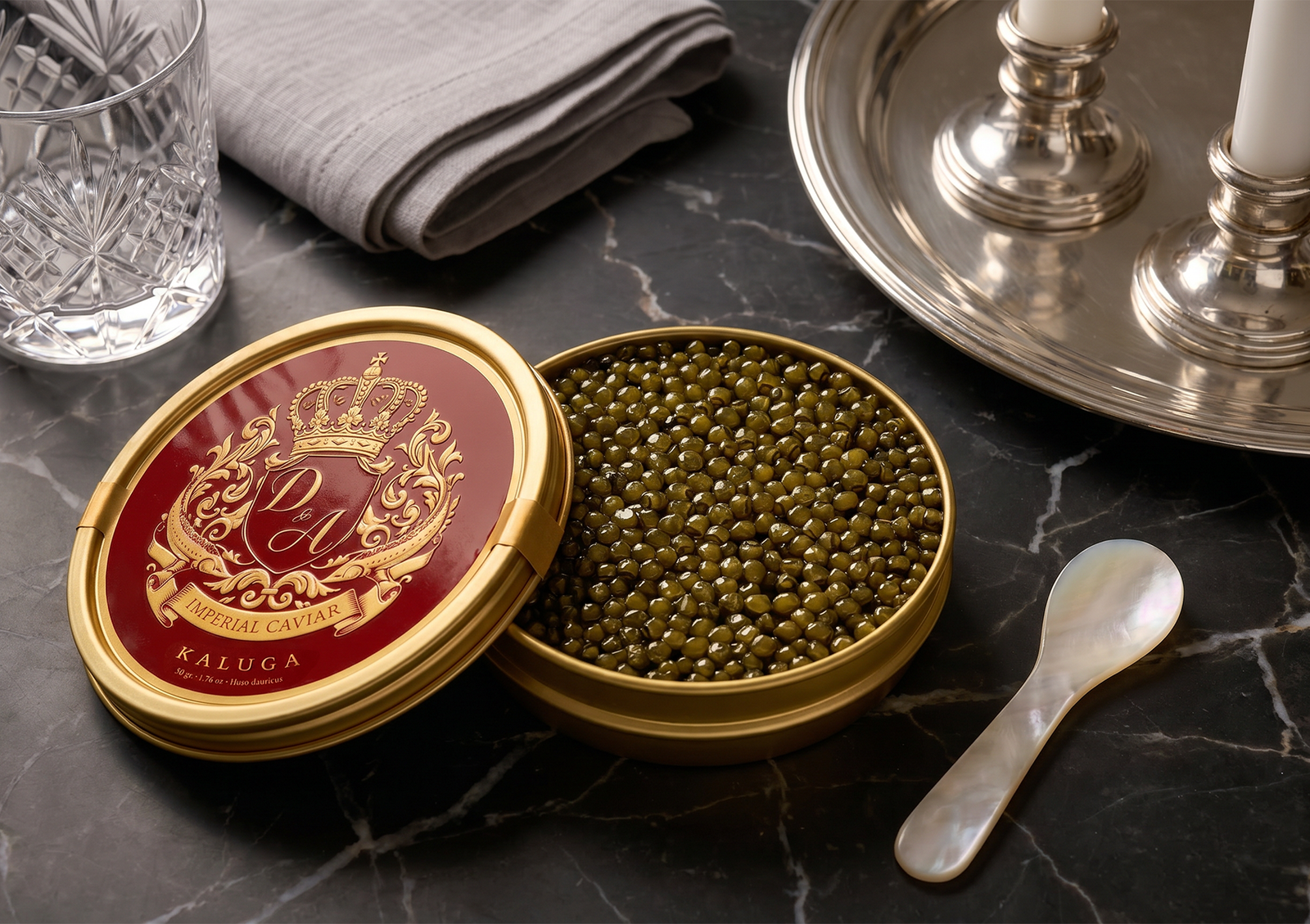
Kaluga caviar is defined above all by its size and its creaminess. The pearls are large, typically between 3.0 and 3.6 millimetres, with a firm, glossy surface ranging from dark grey to near-black. They are among the largest pearls produced by any farmed sturgeon species and make an immediate visual impression that prepares the palate for what follows.
On the nose, a well-handled tin of Kaluga caviar delivers a clean, mild oceanic aroma with no sharpness or fishiness. The first impression is entirely inviting.
On the palate, the opening is rich and creamy with an immediate buttery quality that coats gently and evenly. The texture is firm enough to hold its shape briefly before releasing a flavour that develops in layers. First, the clean brine, then a nutty warmth that deepens through the mid-palate into something reminiscent of toasted walnut or fresh cream. The finish is long, smooth, and rounded with a gentle sweetness at the very end that lingers without demanding attention.
What distinguishes Kaluga from Siberian Sturgeon caviar, whose vivid mineral brine profile is explored in detail in our Siberian Sturgeon flavour guide, is its rounder, more enveloping character. Where Siberian delivers precision and sharpness, Kaluga offers depth and warmth. Both are exceptional expressions of the sturgeon world. They simply speak in different registers.
Kaluga Caviar and Beluga, Side by Side
This is the comparison most people eventually arrive at, and it deserves a straightforward treatment.
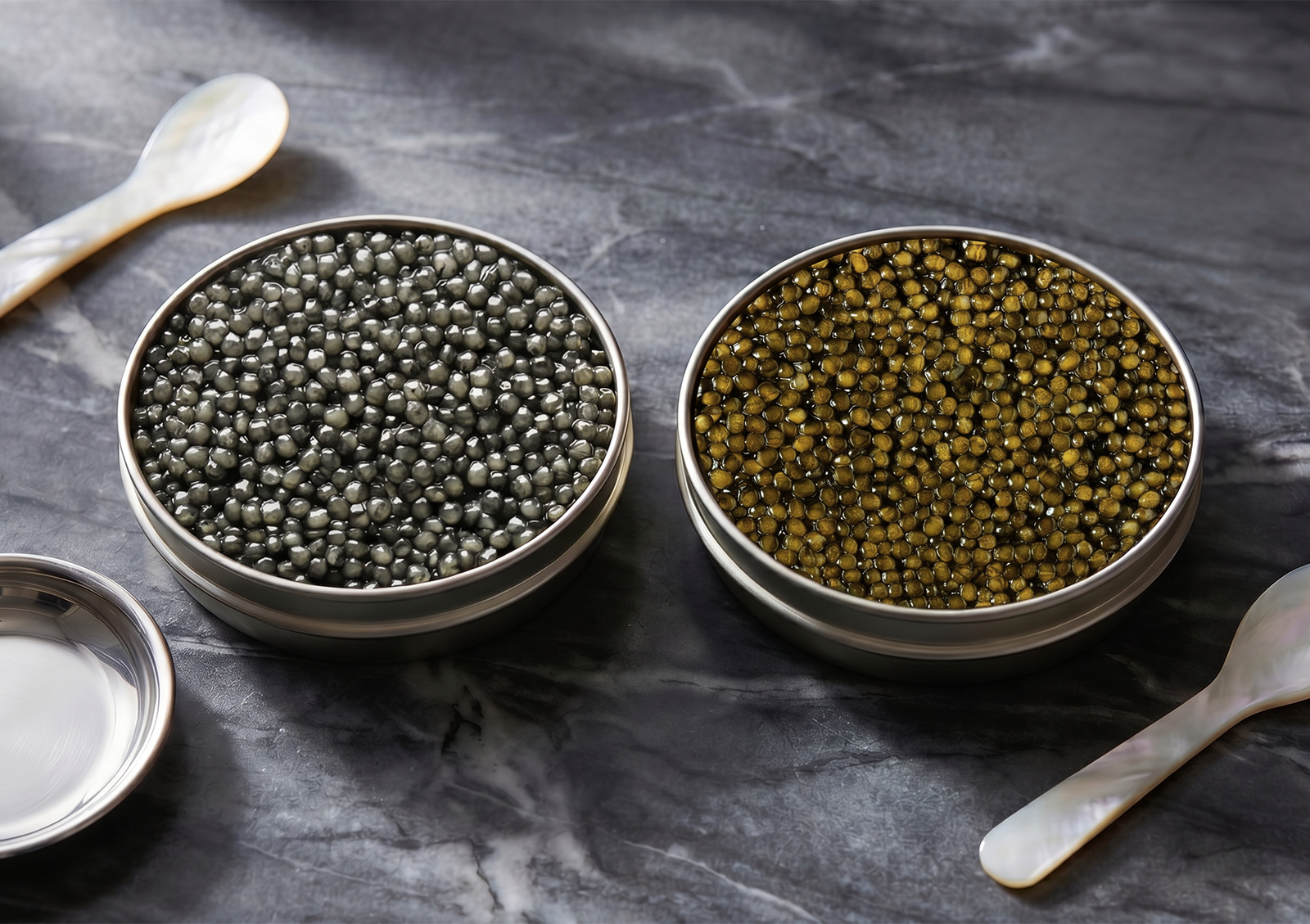
Beluga caviar comes from Huso huso, native to the Caspian Sea basin. Its pearls are large, ranging from pale grey to dark grey, with a pronounced mineral depth and a long, complex finish that has made it the benchmark of luxury caviar for centuries. Wild Beluga is among the most strictly regulated foods in the world, with international trade controls that significantly limit its availability.
Kaluga is a species of Huso, the Amur River equivalent of the same genus. Its pearls are comparable in size, its texture similarly velvety, and its flavour profile builds toward the same category of richness and depth. Where Beluga tends toward a more pronounced mineral intensity, Kaluga is rounder and creamier, slightly more approachable on the first encounter and equally rewarding on deeper exploration.
The honest conclusion is that they are not the same caviar. They are two distinct expressions of the same level of quality, produced by closely related species from different river systems. Choosing between them is a matter of palate preference, not hierarchy. Those who find Beluga’s mineral depth thrilling will appreciate it for exactly that reason. Those who find Kaluga’s creamy warmth more compelling are not choosing lesser caviar. They are choosing differently. The good news for those in Indonesia is that both expressions are available through caviar.id, making the comparison a question worth exploring at the table rather than on the page.
The Farm That Changed the Conversation
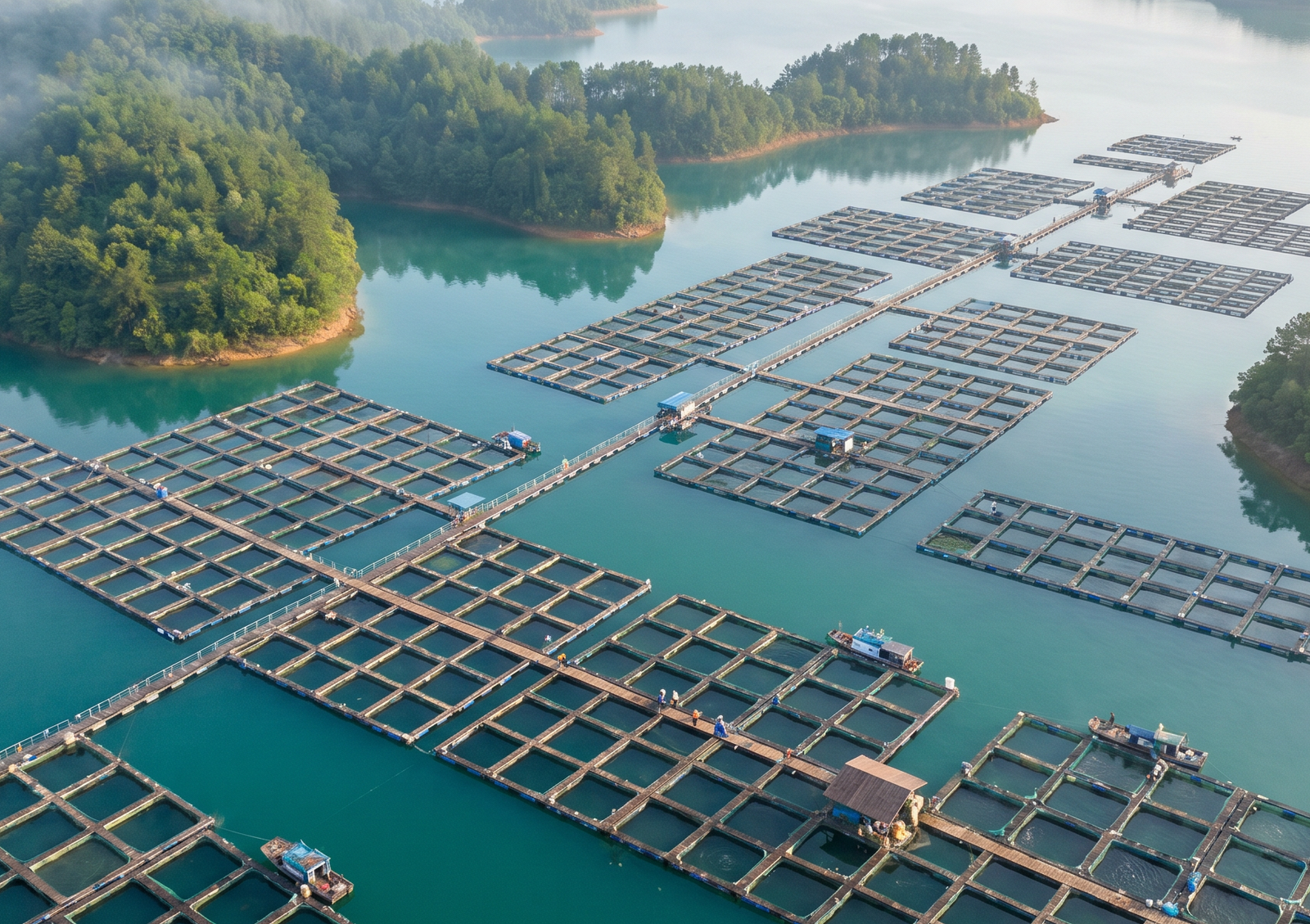
Kaluga Queen, the producer of Kaluga caviar available through caviar.id, is the world’s largest caviar producer. Founded in 2003 at Qiandao Lake, also known as Thousand Island Lake, in Zhejiang Province, China, the company produces over 60 tonnes of caviar annually and supplies 21 of the 26 three-Michelin-starred restaurants in Paris.
Qiandao Lake is a government-designated natural reserve with exceptionally clean, oxygen-rich water fed by mountain springs. The conditions closely replicate the cold, pristine environment of the Amur River, and the farm has built its entire production model around replicating those conditions as precisely as possible. Sturgeon are raised in near-wild cage systems, fed carefully managed diets, and harvested non-lethally. This means the fish are not killed during roe extraction, allowing them to continue producing in subsequent seasons.
Kaluga Queen operates under full CITES certification, the international framework governing trade in endangered species, and maintains complete traceability across the supply chain from egg to tin. The fact that 21 of Paris’s most critically scrutinised kitchens have chosen to serve it is not a marketing claim. It is a documented reality that reflects the standard of what is inside every tin.
Kaluga Queen Caviar in Indonesia
At caviar.id, the Kaluga Queen range is available across three expressions, each representing a different facet of the producer’s range.
Kaluga Queen Kaluga is the flagship expression, the pure Kaluga hybrid that delivers the full buttery, nutty profile described above. It is the right starting point for anyone encountering Kaluga caviar for the first time and the reference point for those who already know it well.
Kaluga Queen Beluga brings the Beluga profile into Kaluga Queen’s aquaculture framework, producing a caviar that carries the mineral depth and pronounced richness associated with the Beluga species while adhering to the same rigorous production and sustainability standards that define the brand.
Kaluga Queen Oscietra offers a slightly smaller pearl with a nuttier, more complex mid-palate, with the Oscietra profile expressed through Kaluga Queen’s characteristic precision and consistency.
All three have been distributed to fine-dining establishments and five-star hotel kitchens across Jakarta and Bali, where the demand for provenance-assured, internationally certified caviar continues to grow. The full Kaluga Queen range is available through this page.
A Closing Thought
Beluga caviar earned its reputation over centuries. Kaluga caviar has built its case over decades through rigorous farming, transparent certification, and a flavour profile that has convinced the world’s most discerning palates without relying on history alone. That is a different kind of achievement, and arguably a more relevant one for anyone approaching premium caviar today.
Both are available through caviar.id. The most honest way to settle the comparison is to taste them.