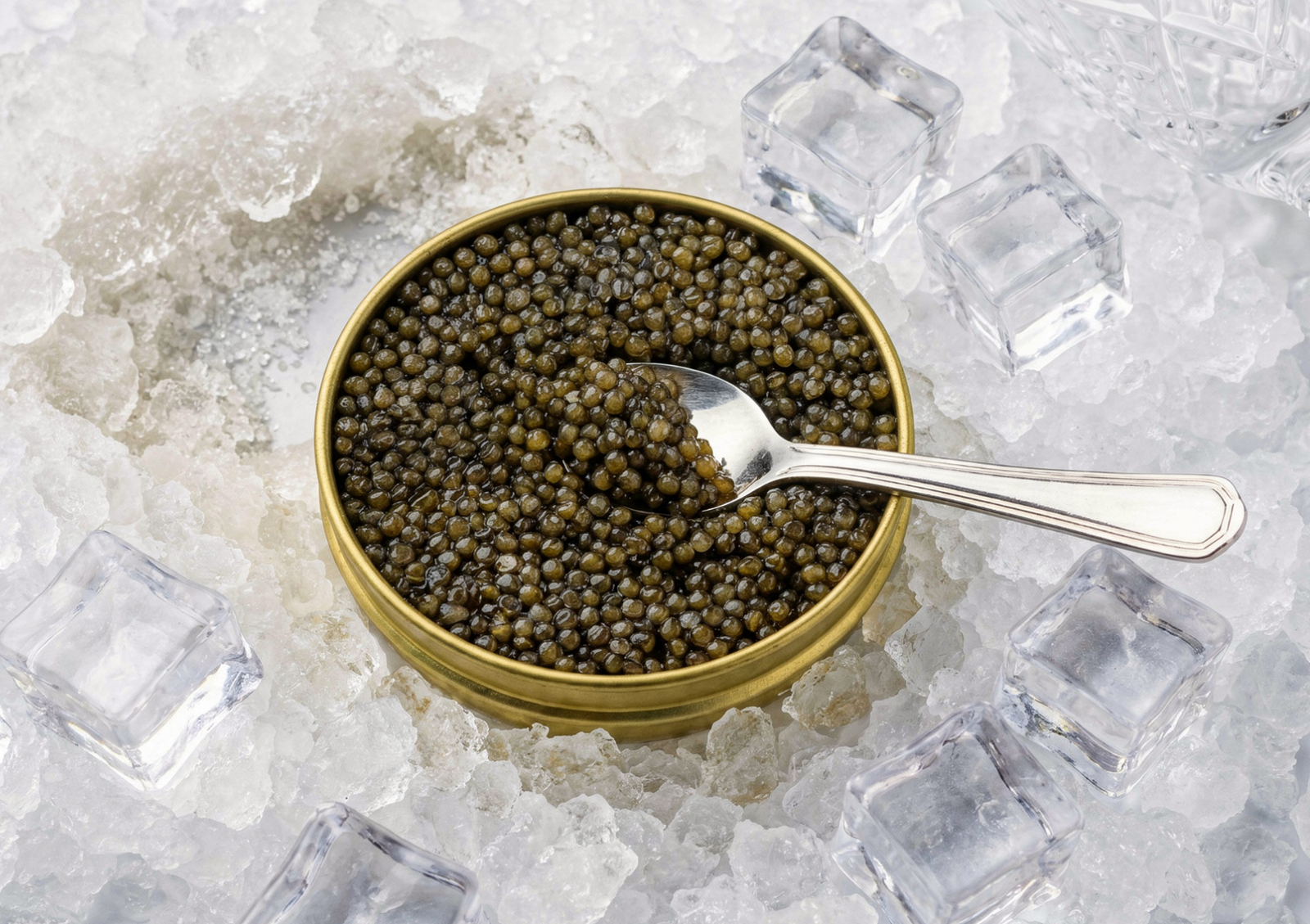
There are caviars that are celebrated for their size. Others for their rarity. And then there is sterlet caviar, a roe so deeply woven into the history of European royalty that its reputation was shaped not by markets or trends, but by the tables of tsars, emperors, and aristocrats who prized it above all others.
To taste sterlet caviar today is to encounter something that has survived centuries of reverence. Understanding the history behind each pearl makes that encounter far more profound.
The Smallest Sturgeon with the Longest Story
Sterlet (Acipenser ruthenus) is the smallest member of the sturgeon family. It rarely grows beyond 1.2 metres in length and reaches maturity earlier than its larger relatives, beginning to produce roe from around five years of age. What it lacks in scale, it more than compensates for in character.
Native to the river systems flowing into the Black Sea, the Caspian Sea, and the rivers of Siberia, the sterlet has inhabited European and Asian waterways for millions of years. Its small, delicate pearls, ranging from beige and grey to the prized pale gold of the albino variant, have been gathered and consumed since antiquity.
The sterlet is also unique among its family in one important respect: it lives exclusively in freshwater. Unlike Beluga or Siberian Sturgeon, which migrate between freshwater and saltwater, the sterlet spends its entire life in rivers and lakes. This freshwater origin shapes everything about the flavour of its roe, producing a taste that is softer, cleaner, and more delicate than the oceanic profiles found in other sturgeon species.
A Roe Fit for Tsars
The history of sterlet caviar and the Russian imperial court is not merely anecdotal. It is documented, deliberate, and centuries deep.
From the reign of Ivan the Terrible in the sixteenth century through to the final years of the Romanov dynasty, sterlet was the designated fish of the Russian tsar. It was served at coronation banquets, state dinners, and royal celebrations as a matter of protocol rather than preference. The tsar’s table was not considered properly set without it.
The reasons for this preference were not purely gastronomic. Sterlet was difficult to transport alive, sensitive to water quality, and impossible to farm at scale using the methods of the time. Its presence on a table was therefore a direct signal of access, wealth, and proximity to the empire’s finest river sources. Serving sterlet caviar was a statement that required no explanation.
This tradition extended beyond Russia. Sterlet caviar was delivered to the royal courts of several European nations, where its reputation preceded it. Its pale, delicate pearls and uniquely soft flavour distinguished it immediately from the darker, bolder caviars that were more commonly available.
The Flavour That Earned the Crown
To understand why sterlet caviar commanded such enduring loyalty from the world’s most discerning tables, the taste itself must be examined.
Sterlet caviar is defined above all by its softness. The pearls are small, typically between one and two millimetres, and thin-skinned. They do not burst with the assertiveness of Siberian caviar or deliver the rich nuttiness of Russian Sturgeon. Instead, they dissolve almost immediately on the palate, releasing a flavour that is exceptionally clean, mildly briny, and remarkably creamy for a roe of such small size.
The aftertaste is where sterlet caviar makes its lasting impression. It lingers as a gentle, buttery warmth with a faintly sweet, mineral note unlike any other sturgeon species. Those who have tasted it often describe the experience as fleeting but unforgettable: a flavour that does not demand attention but is impossible to forget once encountered.
That is the foundation of all sterlet caviar. At its rarest, however, the species produces something even more extraordinary.
The golden sterlet, this exceptionally rare expression is most often associated with albino sterlet sturgeon and prized for pearls that shimmer in shades of ivory, champagne, and pale gold. Its flavour carries the species’ signature delicacy further still, with a creaminess that borders on the ethereal and a finish so clean it seems almost to belong to a different category of luxury altogether. For centuries, it has stood among the most coveted delicacies to grace imperial tables.
It is worth clarifying where the name “golden” comes from, as it is often misunderstood. Standard sterlet caviar produces pearls in shades of beige, grey, and near-black. Golden sterlet caviar is produced exclusively by albino sterlet sturgeon: fish carrying a rare genetic condition that prevents the production of melanin entirely.
The absence of this pigment causes the roe to develop in tones of pale gold, ivory, and platinum rather than the dark hues typical of most sturgeon species. The name is therefore not a grading term or a marketing distinction. It is a literal description of what the pearls look like: luminous, pale, and unlike anything else on a caviar menu. This genetic rarity is also what makes golden sterlet caviar among the most sought-after expressions of the species, both historically and today.
What Is the Difference Between Golden Sterlet and Regular Sterlet?
Both golden and regular sterlet come from the same species, Acipenser ruthenus, and share the same foundational flavour character: soft, clean, mildly briny, and creamy with a lingering buttery finish. The distinction between them is not one of quality but of origin, appearance, and rarity.
Regular sterlet caviar, sometimes called classic or black sterlet, is produced by pigmented sterlet sturgeon. Its pearls range in colour from dark grey to near-black, occasionally with a brownish hue depending on the fish’s diet and water source. The flavour is the hallmark sterlet profile: delicate, clean, and noticeably softer than the more assertive Siberian or Ossetra varieties. This is the sterlet that stocked the imperial kitchens of Russia for centuries and remains the most widely available expression of the species today.
Golden sterlet caviar, by contrast, is produced exclusively by albino sterlet sturgeon. Albinism in sturgeon is a rare genetic condition that suppresses melanin production entirely, resulting in pearls that develop in shades of pale gold, ivory, and platinum. Beyond the visual distinction, the flavour of golden sterlet carries an added layer of creaminess and a slightly more pronounced sweetness on the finish, subtle differences that experienced tasters consistently identify.
The practical difference for buyers comes down to two things: availability and price. Because albino sterlet are significantly rarer than their pigmented counterparts, golden sterlet caviar is produced in far smaller quantities and commands a considerably higher price. Regular sterlet, while still a refined and historically significant caviar, is the more accessible entry point to the species and, for most occasions, the more appropriate one.
For those new to sterlet, classic black sterlet is the natural starting point. For those who have already encountered the species and wish to explore its rarest expression, golden sterlet represents one of the most singular experiences the caviar world has to offer.
From the Rivers of Russia to Responsible Aquaculture

Like all wild sturgeon species, sterlet populations declined significantly throughout the twentieth century due to overfishing, river pollution, and habitat loss. The wild sterlet that once supplied the imperial courts of Europe became increasingly scarce, and with it, the availability of its roe.
The response from the world’s finest aquaculture producers has been both rigorous and respectful. Today, premium sterlet sturgeon caviar is produced through controlled freshwater farming that replicates the clean, cold-river conditions the species requires. The finest producers maintain strict water quality standards, manage fish populations with care, and process the roe to the Malossol standard to preserve its characteristic delicacy.
This commitment to responsible production has not diminished the quality of the caviar. If anything, the precision of modern aquaculture has made it possible to deliver consistency in flavour and texture that wild harvesting could never achieve. The history in every pearl is now matched by the science behind it.
Sterlet Caviar in Indonesia

The appreciation for sterlet sturgeon caviar in Indonesia reflects the broader growth of premium caviar culture across the archipelago. Among Jakarta’s private dining scene and Bali’s most refined hospitality establishments, sterlet has found an audience that understands its significance and values its distinction from the better-known Beluga and Oscietra varieties.
At caviar.id, Indonesia’s foremost curated caviar destination, sterlet caviar is available through one of the world’s most respected producers in this category.
Aquatir Caviar – Sterlet, the Moldovan aquaculture house with a long record of sustainable freshwater sturgeon farming, produces a selection of sterlet that honours the species’ heritage without compromise. Raised in clean, cold freshwater systems that closely mirror the sterlet’s natural habitat, Aquatir’s sterlet caviar is the classic expression of the species: dark, lustrous pearls with the clean, creamy finish that has defined sterlet roe for centuries. The Malossol processing preserves every nuance of the flavour, from the soft opening to the long, gently sweet aftertaste.
It is worth noting that Aquatir’s offering available through caviar.id is classic black sterlet caviar, not the golden albino variant. The golden sterlet remains one of the rarest and most historically celebrated expressions of the species, but what caviar.id brings to Indonesia through Aquatir the authentic, traditional sterlet roe: the same dark-pearled caviar that graced the tables of Russian tsars for centuries.
Aquatir’s sterlet has been distributed to a number of Indonesia’s most distinguished fine-dining establishments and five-star hotel kitchens across Jakarta and Bali, where it appears on tasting menus designed for guests who look beyond the familiar names and seek something with genuine depth of character.
For those wishing to explore the sterlet available in Indonesia, the complete sterlet collection is available at the caviar.id sterlet product page. To understand how sterlet sits within the broader landscape of caviar labels available in Indonesia, the complete caviar brand comparison guide offers a thorough overview of every label in the portfolio.
A Closing Reflection
Every tin of sterlet caviar carries more than flavour. It carries the memory of river courts and coronation tables, of a fish so prized that its presence once signalled the highest form of hospitality a host could offer. That history does not make the taste better. But it makes the experience of tasting it something richer and more layered than the palate alone can account for.
For those ready to experience that in Indonesia, the sterlet collection at caviar.id is the place to start.
Explore the Sterlet collection at this website.
For those curious about the rarest expression of this species, read our in-depth piece on the velvet texture of the rare Albino Sterlet. To find the right caviar label for your occasion, the complete caviar brand comparison guide for Indonesia is a useful next step.


