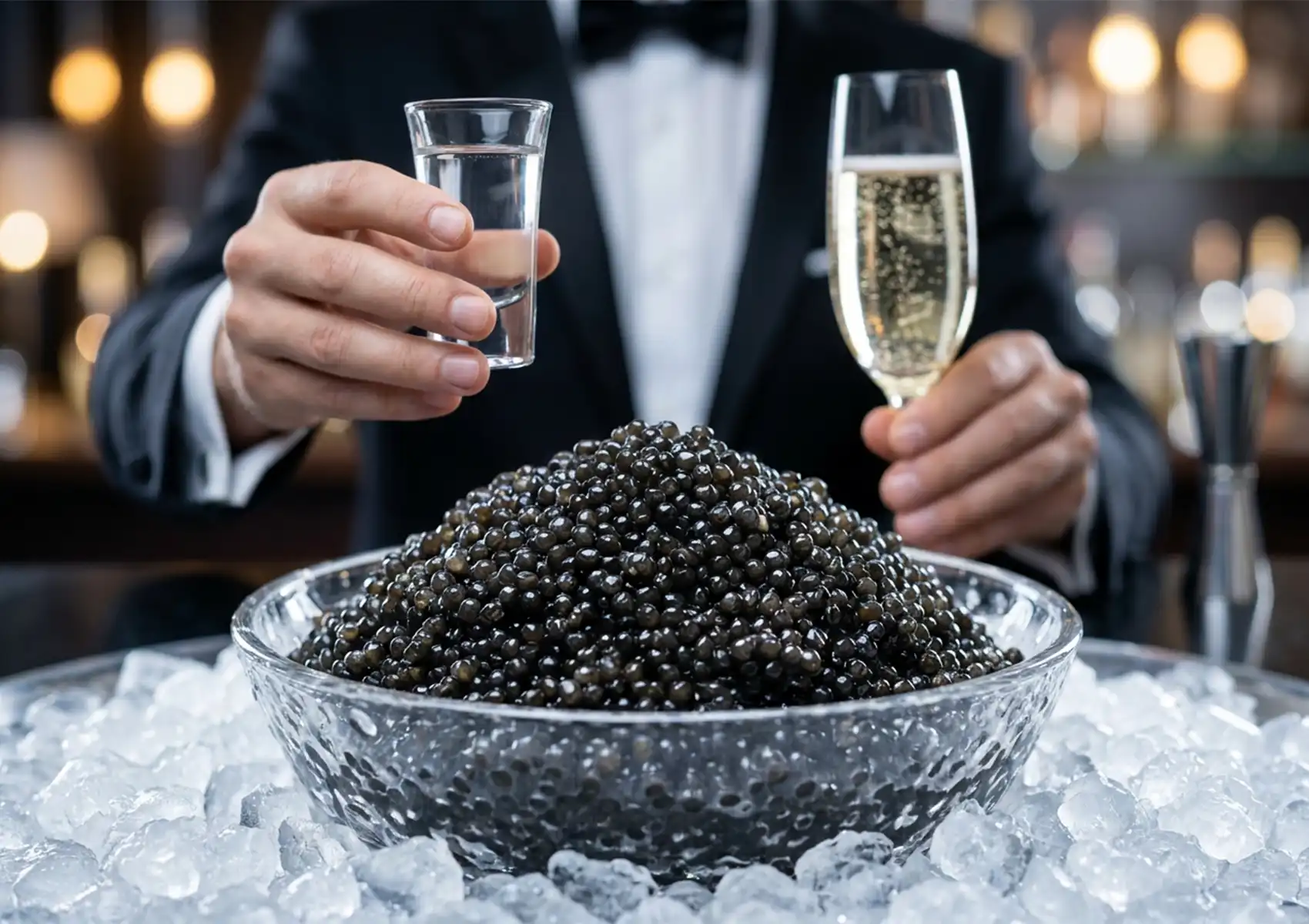
A question arises almost every time a tin of premium caviar is opened at home or set before guests at a dinner party. It is not about which mother-of-pearl spoon to use, nor about whether to serve blinis or brioche. The question is simpler, and far more contentious.
Vodka or champagne?
This is the central debate in caviar-pairing drink culture, and it has divided enthusiasts, sommeliers, and culinary historians for well over a century. Both drinks have earned their place beside the world’s most prized delicacy. Both carry the weight of tradition. And both, when chosen correctly, can transform a simple tasting into something genuinely unforgettable.
The answer, as with most things worth knowing about caviar, is not quite as straightforward as it appears. It depends on the occasion, the caviar variety in your tin, and ultimately, the experience you wish to create. At Caviar Indonesia, we believe that understanding the why behind a pairing is just as important as the pairing itself. So let us walk through both arguments with the care they deserve.
Why the Drink Matters More Than You Think
Before choosing between vodka and champagne, it helps to understand what caviar is actually asking of its companion. Premium sturgeon roe carries three dominant characteristics that define how it should be paired.
First, there is natural salinity. Even in malossol preparations, where salt is used sparingly, caviar retains a clean, oceanic brine that needs a drink that lifts rather than drowns it.
Second, there is richness. The omega-3 oils within each grain give caviar its characteristic creaminess. A poorly chosen drink leaves that richness sitting heavily on the palate, masking the very flavours you are paying to enjoy.
Third, there is textural delicacy. The pop of a caviar pearl is one of the great sensory pleasures in fine dining. A drink with aggressive tannins, pronounced sweetness, or heavy oak will compete with and ultimately overwhelm that delicate experience.
These three qualities explain why the world settled on two drinks above all others as the correct answers to the caviar-pairing question. Vodka and champagne both respect caviar’s natural complexity rather than competing with it. Everything else is secondary.
The Case for Vodka
A Tradition Rooted in the Caspian
Long before champagne became the international symbol of celebration, caviar was being enjoyed with vodka across Russia and the broader Caspian region. This is not mere historical curiosity. The pairing developed organically, over centuries, in the very places where caviar was harvested and consumed daily by those who knew it best.
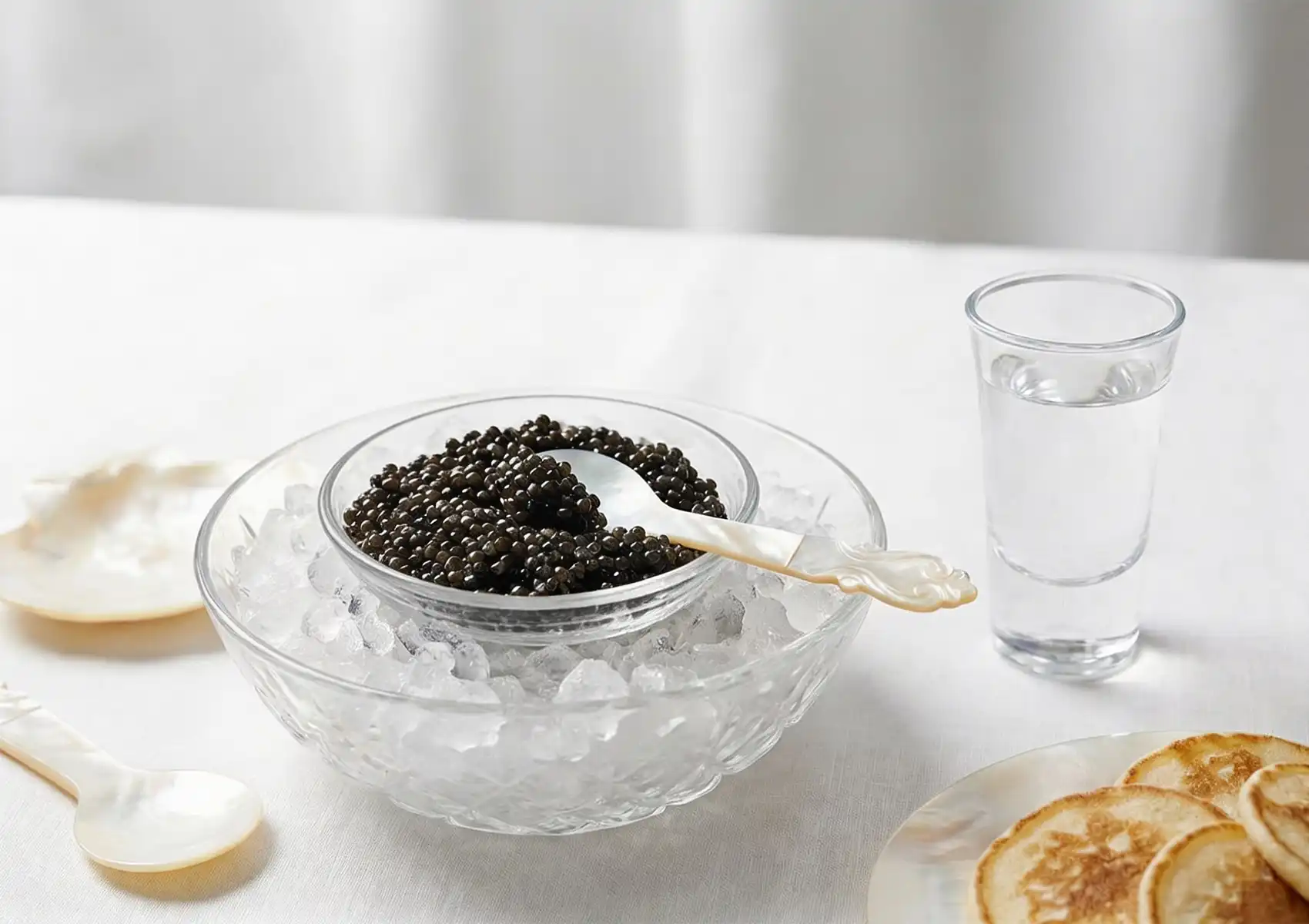
The tradition endures because it works on a level of precision almost scientific. Vodka with caviar is a pairing built on one defining principle: neutrality. A properly distilled, unflavoured wheat or rye vodka introduces virtually nothing to the equation. No oak, no residual sugar, no botanical interference. Its sole function is to cleanse the palate and prepare it for the next pearl.
What Vodka Actually Does to the Palate
When served at the correct temperature, between minus six and minus ten degrees Celsius, vodka undergoes a subtle transformation. It becomes slightly viscous, almost syrupy in texture, with its alcoholic harshness muted almost entirely. This is the version of vodka that belongs beside caviar.
The cold spirit coats the mouth for just a moment, stripping away the residual salt and oil from the previous bite. The result is that every spoonful of caviar tastes like the first. There is no flavour fatigue, no heaviness that builds. The experience stays sharp and clean throughout.
For rare, high-grade caviars where every nuance counts, such as the Beluga varieties carried by Russian Caviar House and Kaluga Queen, or the delicate Sterlet from Aquatir, vodka is arguably the purist’s choice. It allows the caviar’s true character, its minerality, its subtle nuttiness, its lingering oceanic finish, to speak completely without competition.
How to Serve Vodka with Caviar
Serving vodka correctly is as important as choosing the right bottle. Several things are worth knowing before opening the tin.
- Serve from the freezer. Vodka should be between -6 and -10 degrees Celsius. Anything warmer introduces an alcohol burn that fights the caviar’s delicacy.
- Use a neutral, unflavoured spirit. Flavoured vodkas, whether citrus, pepper, or vanilla, interfere directly with the caviar’s flavour profile and should be saved for cocktails.
- Pour small measures of around 30 to 50 millilitres. The Eastern European tradition spaces pour throughout the meal. This is a tasting ritual, not a drinking occasion.
- Use small, chilled shot glasses or narrow tumblers rather than large vessels.
- Follow the ritual: sip, then eat. Allow a breath between the two. The vodka should clear the palate just before the caviar arrives.
A note on quantity: for a seated caviar tasting, plan for approximately 100-150 millilitres of vodka per person over the evening, served in two to four small pours. This is sufficient to accompany the caviar without overshadowing the experience.
The Case for Champagne
The Language of Celebration
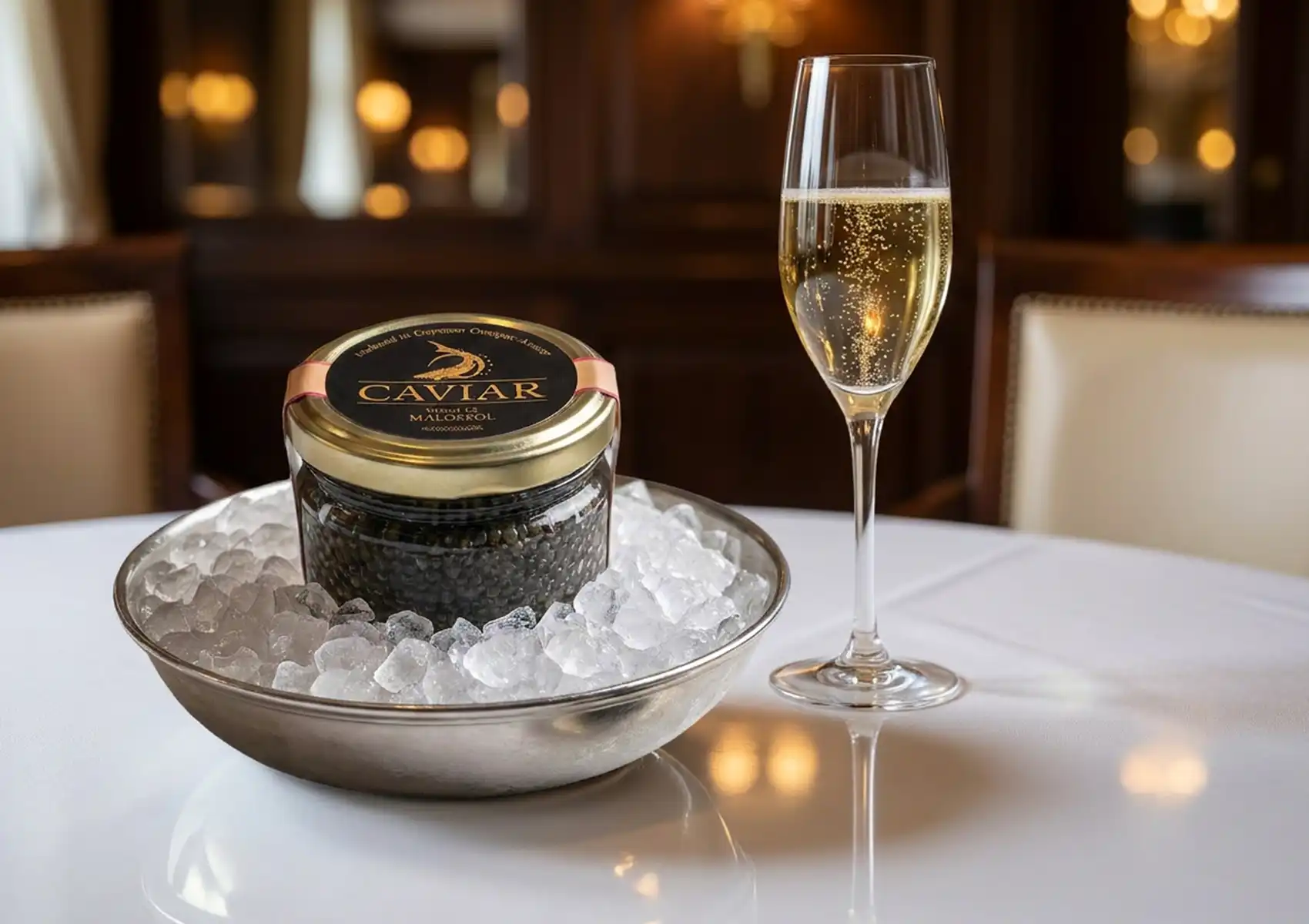
Where vodka is austere and ceremonial, champagne with caviar is expressive and festive. This is the pairing of the grand occasion, of anniversaries and New Year’s tables, of the moment you want to signal to your guests that this evening is something altogether different.
Champagne earns its place beside caviar through chemistry as much as culture. The high acidity in a well-made Brut or Extra Brut cuts cleanly through caviar’s natural oils, refreshing the palate rather than neutralising it entirely. The fine, persistent bubbles then lift the flavours gently across the tongue, amplifying the roe’s buttery depth and mineral complexity in a way that still water, still wine, or indeed vodka cannot replicate.
The effect is layered rather than precise. Where vodka creates a clean slate, champagne creates a conversation between two complex flavour profiles. When the pairing works, the result is greater than the sum of its parts.
Choosing the Right Style of Champagne
Not all champagne is equally suited to caviar, and the distinction matters considerably. The key variable is sugar content and the resulting sweetness.
Brut and Extra Brut styles are the correct choices. Their dryness respects the caviar’s salinity without introducing sweetness that would clash with the marine notes. Sweeter styles such as Demi-Sec should be avoided entirely alongside quality sturgeon roe.
Blanc de Blancs, produced entirely from Chardonnay, is widely regarded as the finest match for premium caviar. Its citrus-driven acidity and mineral backbone mirror the oceanic qualities of the roe with particular elegance. For the finest Beluga or Oscietra, a vintage Blanc de Blancs is the sommelier’s recommendation above all other styles.
Blanc de Noirs, produced from Pinot Noir, offers more body and a subtle red-fruit character. This can work beautifully with richer, nuttier caviars where a little more weight in the pairing is welcome.
A practical note: serve champagne between seven and nine degrees Celsius, not ice-cold. Too cold a temperature dulls the aromas and makes the acidity feel sharp rather than refreshing. If available, a tulip-shaped glass allows the aromas to develop more generously than a traditional narrow flute.
Which Caviars Suit Champagne Best
The champagne pairing particularly pairs well with caviars with pronounced nutty or buttery notes. Oscietra varieties from Antonius Caviar, D&A Imperial Caviar, and Kaluga Queen respond especially well to the acidity and bubble structure of a quality Blanc de Blancs. The medium grain and complex flavour profile of Oscietra invites the champagne’s layered character, creating a genuinely memorable combination.
The N25 Caviar range, known across the haute cuisine world for its four-stage quality selection process and remarkable consistency, also pairs beautifully with vintage champagne. Both the caviar and the wine are built on precision and patience, and that shared philosophy is evident at the table.
Vodka vs Champagne at a Glance
Both drinks deserve a place at the caviar table. The choice is ultimately one of intent.
- Purity vs complexity. Vodka lets the caviar speak for itself. Champagne introduces an expressive dialogue between two flavour profiles.
- Temperature and sensation. Ice-cold vodka delivers a sharp, cleansing reset. Champagne served at the correct chill is refreshing and buoyant.
- Tradition vs occasion. Vodka leans ceremonial and is rooted in Eastern European caviar culture. Champagne leans celebratory and suits the Western luxury dining setting.
- Caviar alone vs accompanied. Vodka excels when the caviar is the singular focus, served simply with perhaps a blini and a small amount of cream. Champagne thrives when caviar is paired with accompaniments such as smoked seafood, delicate garnishes, or a more composed first course.
- The connoisseur vs the celebrant. Vodka rewards those who wish to understand caviar deeply and quietly. Champagne rewards those who wish to share its pleasure expansively.
The best answer: if you are serving a rare, high-grade caviar and wish every nuance to be fully appreciated, choose vodka. If you are celebrating an occasion and want the experience to feel generous, glamorous, and layered, choose champagne. If you are hosting a longer tasting with multiple varieties, consider offering both and letting your guests discover their own preferences.
Beyond the Two Classics
For those who wish to explore further, there are a few additional pairings that the modern caviar table occasionally welcomes.
Unoaked Chardonnay or Chablis can be a compelling alternative when Champagne is unavailable. The mineral backbone and clean acidity of a well-made Chablis mirror the oceanic quality of premium caviar without the distraction of oak or residual sweetness. This is a pairing for those who prefer still wine but wish to respect the caviar’s delicacy.
Japanese sake, specifically Junmai Daiginjo, has become a point of genuine interest among caviar connoisseurs in recent years. Its clean, slightly fruity character and the absence of tannins make it a thoughtful alternative, particularly with Beluga, where its gentleness matches the roe’s exceptional refinement.
Regardless of what is in the glass, the underlying principle remains consistent. The drink’s role is to serve the caviar, not to compete with it. Anything with heavy tannins, pronounced oak, excessive sweetness, or bold aromatic character will work against rather than with even the finest roe.
Choosing Your Next Caviar Pairing Drink
Whether the answer is vodka, champagne, or a thoughtful alternative, the most important thing is that the drink you choose has been considered with the same care as the caviar itself. The caviar-pairing drink you select will shape the entire table experience. It will influence not only the flavours you taste, but the memory you carry away from the evening.
At Caviar Indonesia, every tin in our collection has been selected with exactly this kind of consideration. From the precise, award-winning Beluga from the Russian Caviar House to the artisanal complexity of Kaviari Caviar, and the surgically consistent N25 range, our portfolio is built for those who take both caviar and its enjoyment seriously.
Whether you are planning an intimate dinner, a corporate occasion, or simply learning how to serve caviar properly for the first time, we are here to help you make every element of the experience right. Browse our full selection at caviar.id and, as always, do not hesitate to reach out for a personal recommendation.
Some choices deserve careful consideration. The caviar pairing drink is one of them.
A Gentle Indulgence. — caviar.id