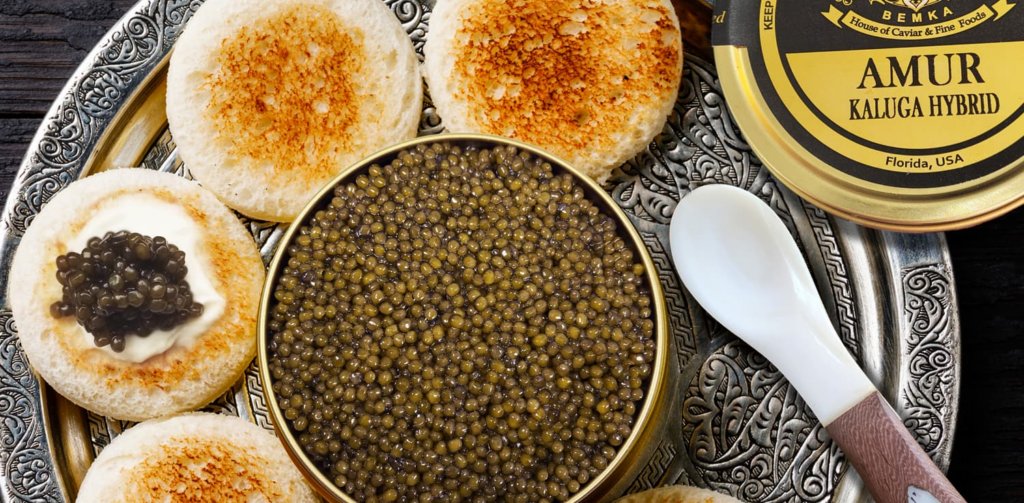
There is a tendency, in conversations about caviar, to speak almost exclusively about Beluga. Its size, its rarity, and its price make it the obvious subject of reverence. But for those who engage with caviar regularly rather than ceremonially, it is often the Siberian Sturgeon caviar pairing that generates the most interesting discussion.
Siberian Sturgeon, known formally as Acipenser baerii, produces roe of remarkable consistency. The grains are medium-sized, typically 2 to 3 millimetres, and range in colour from deep grey to black. Where Beluga impresses through sheer opulence, and Oscietra seduces through its nutty complexity, Siberian Sturgeon earns its admirers through something quieter: balance.
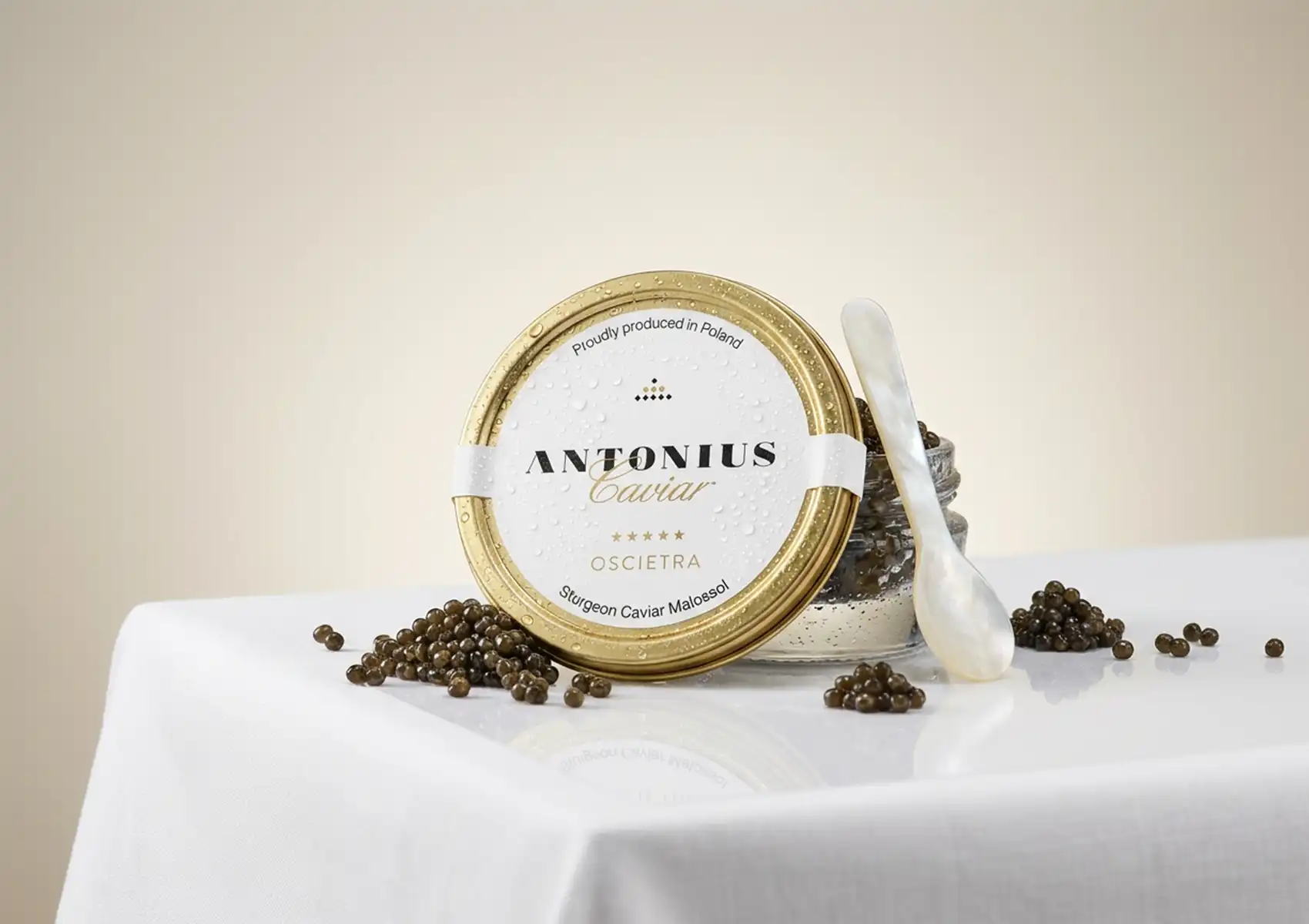
At Caviar Indonesia, our Siberian Sturgeon selections include the Antonius Caviar Siberian and the Aquatir Caviar. Both sourced from producers with documented provenance and rigorous quality standards. Understanding how to pair these caviars correctly is the first step toward getting the most from them.
What is the Siberian Sturgeon Caviar Flavour Like
Before any Siberian Sturgeon caviar pairing can be made well, the flavour of the caviar itself must be properly understood. Rushing to the drink without first understanding what is in the tin is one of the most common mistakes made at the caviar table.
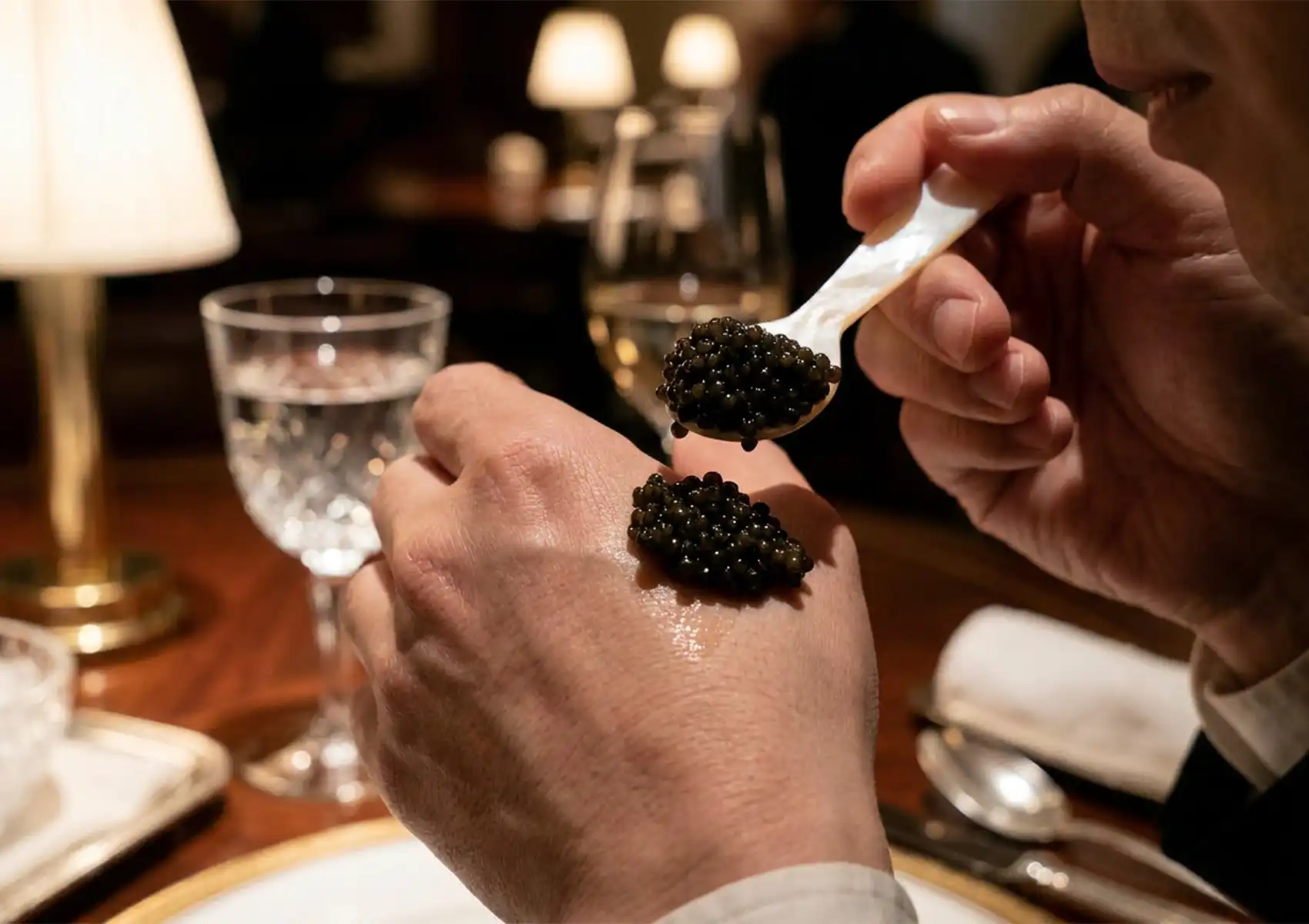
Siberian Sturgeon roe is characterised by a clean, fresh brininess. It carries a distinct oceanic quality without the aggressive salinity that less carefully handled caviars sometimes develop. The finish is mild, with a gentle creaminess and a faint mineral note that lingers pleasantly on the palate. It is not as buttery as a mature Oscietra, nor as intensely flavoured as Sevruga. It occupies a precise and appealing middle ground.
This flavour profile has direct implications for pairing. Because the Siberian Sturgeon’s character is clean and moderately expressive rather than bold, it is best served with drinks that bring clarity, acidity, and freshness. Anything too heavy, too sweet, or too aromatic will flatten what is genuinely a refined and interesting eating experience.
The Classic Answer: Vodka
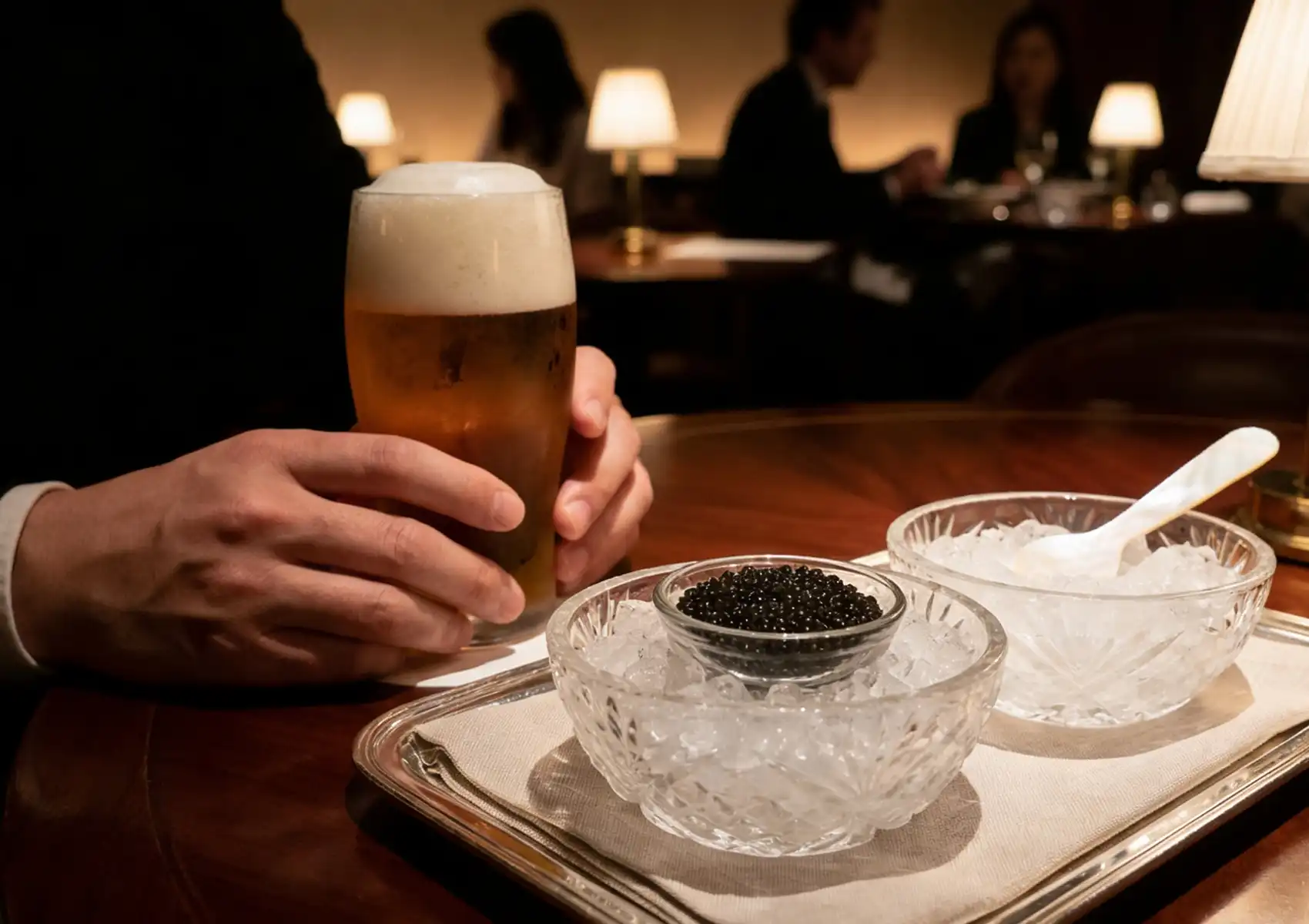
For those approaching the pairing of Siberian Sturgeon caviar from a traditional perspective, vodka remains the natural starting point. As with all premium sturgeon caviars, ice-cold vodka functions as a palate cleanser of remarkable efficiency. Served between minus six and minus ten degrees Celsius, a quality unflavoured wheat or rye vodka introduces almost nothing to the equation. It simply resets the palate between bites, ensuring that every spoonful of Siberian caviar arrives with the full freshness of the first.
The pairing particularly suits the Aquatir Caviar, where the caviar’s cleaner, more direct flavour profile is well served by vodka’s neutrality. When the caviar is the entire point of the occasion, it is presented simply on a mother-of-pearl spoon, perhaps with a small amount of unsalted butter on warm toast. In that case, vodka is the honest choice.
What to drink with Siberian caviar in this context is therefore not a complicated question. Choose a premium, unflavoured spirit. Serve it from the freezer. Pour small measures. And let the caviar speak.
The Modern Answer: Mineral White Wine
Where the vodka pairing is rooted in tradition, the Siberian Sturgeon caviar pairing with a mineral white wine is a more contemporary consideration, and one that many experienced tasters find genuinely compelling.
The reasoning is straightforward. Siberian Sturgeon’s fresh brininess and light mineral finish respond particularly well to wines that share those characteristics. A well-made Chablis, with its flinty, sea-spray quality and high natural acidity, acts as a kind of mirror to the caviar rather than a contrast. The two flavours do not compete. They reinforce each other, creating a coherence on the palate that is quietly impressive.
An unoaked Chardonnay from Burgundy carries similar properties: high acidity, low residual sugar, and a mineral backbone that honours the oceanic quality of the roe without adding the distraction of oak or tropical fruit. Caviar and white wine pairing of this kind is not yet the first instinct of most people reaching for a bottle alongside caviar, but it is increasingly the recommendation of those who have tasted both options thoughtfully.
The key requirements for any white wine considered alongside Siberian Sturgeon caviar are consistent: no oak, no residual sweetness, high acidity, and a clean, mineral finish. Deviate from these parameters and the pairing will work against the caviar rather than with it.
What to Avoid
Knowing what not to serve is as useful as knowing what to serve. Several drinks that might seem reasonable choices will actively diminish the Siberian Sturgeon caviar pairing experience.
Sparkling wine with noticeable sweetness is a common misstep. Extra Dry and Demi-Sec champagne styles, despite their seemingly luxurious associations, introduce residual sugar that clashes with the caviar’s natural salinity. The palate receives two competing signals and struggles to elegantly resolve them.
Full-bodied red wines should be avoided entirely alongside caviar of any variety. Their tannins bind with the oils in the roe and produce a metallic, astringent sensation that ruins both the wine and the caviar simultaneously.
Heavily flavoured spirits, including gin with pronounced botanical character and flavoured vodkas of any kind, overwhelm the Siberian Sturgeon’s relatively delicate flavour. The caviar disappears behind the drink, which defeats the purpose of serving either.
Room-temperature spirits of any kind, even those that would otherwise be appropriate, are unsuitable. Temperature is not a preference in caviar pairing. It is a technical requirement.
Serving Notes for the Complete Experience
A successful Siberian Sturgeon caviar pairing is as much about the conditions of service as the drink itself. The following details make a genuine difference.
The caviar should be removed from the refrigerator five to ten minutes before serving. This allows the flavours to open slightly without the grains softening. Too cold, and the Siberian Sturgeon’s subtle mineral notes remain locked. Too warm, and the texture suffers.
The tin should rest on crushed ice throughout the tasting. The drink should be poured in modest quantities and refreshed rather than served in a single large measure. And the spoon, wherever possible, should be mother-of-pearl, bone, or wood. Metal spoons introduce a faint metallic note that the Siberian Sturgeon’s clean profile is particularly sensitive to.
For those purchasing Siberian caviar in Indonesia, whether the Antonius Caviar Siberian for an intimate home tasting or the Aquatir Caviar range for a restaurant service, the Caviar Indonesia’s team is available to advise on specific pairing recommendations based on occasion, quantity, and the other elements of your menu.
A Caviar That Rewards Attention
The Siberian Sturgeon is not the most theatrical caviar in the world. It does not arrive with the mythological weight of Beluga or the golden allure of a mature Oscietra. What it offers instead is something arguably more useful: a consistent, elegant, genuinely pleasurable eating experience that pairs beautifully with a range of carefully chosen drinks.
A well-executed pairing of Siberian sturgeon caviar is one of the most accessible entry points into serious caviar appreciation. It is the caviar that builds confidence, develops the palate, and inspires the curiosity to explore further.
Explore the Antonius Caviar Siberian and Aquatir Caviar selections at caviar.id. If you are ready to buy Siberian caviar Indonesia and would like a personal recommendation on serving and pairing, our team is always glad to help.