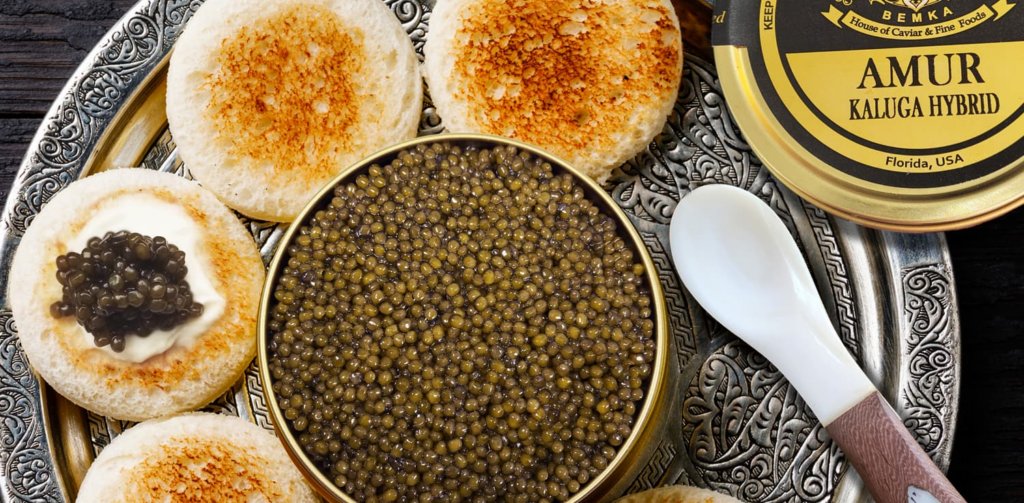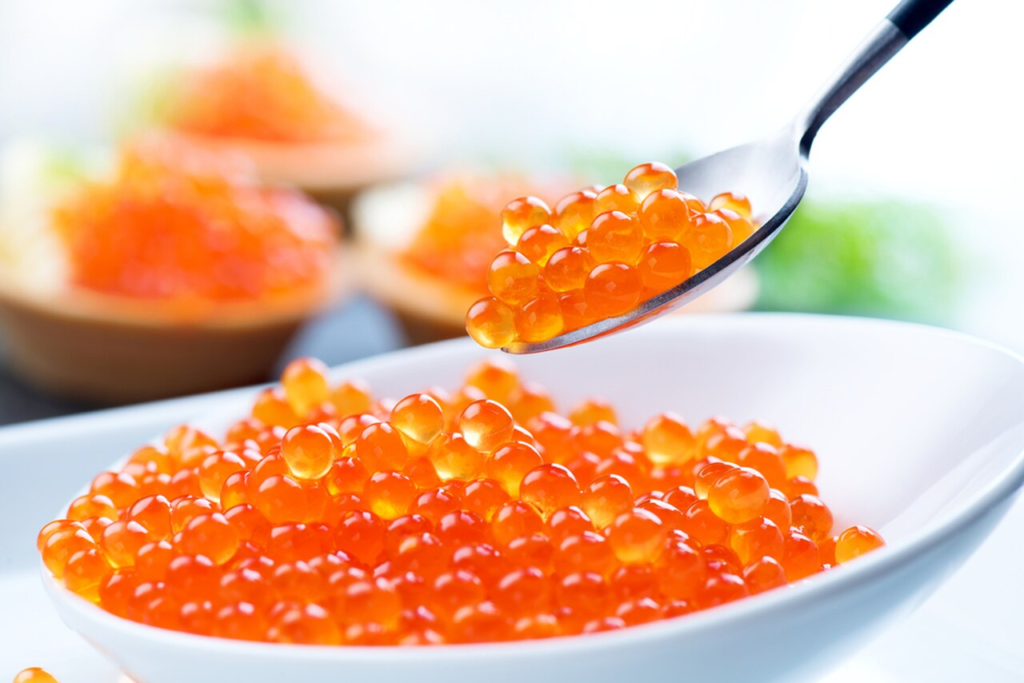
When you think of luxury food, caviar almost certainly comes to mind. Those delicate, glistening pearls have been celebrated for centuries, and at the heart of this tradition lies Russian caviar.
But what exactly makes Russian caviar so special? Why do connoisseurs around the world, including here in Indonesia, seek it out? And most importantly, how can you enjoy it the authentic Russian way?
This guide answers all your questions. From the history and types of Russian caviar to serving etiquette and where to buy authentic caviar in Indonesia, consider this your complete resource.
What Is Russian Caviar? (And What Makes It Special?)
Let us start with the most common question.
Russian caviar refers to the salt-cured eggs (roe) of sturgeon species native to the Caspian Sea region, an area historically connected to Russia and Iran. The most prized species include:
| Species | Caviar Name | Characteristics |
| Beluga (Huso huso) | Beluga Caviar | Largest eggs (3-4mm), buttery, creamy, light grey to charcoal |
| Russian Sturgeon (Acipenser gueldenstaedtii) | Oscietra / Osetra | Medium eggs, firm texture, nutty, briny, golden to brown |
| Siberian Sturgeon (Acipenser baerii) | Baerii Caviar | Small dark eggs, earthy, bold sea-breeze flavour |
| Stellate Sturgeon (Acipenser stellatus) | Sevruga Caviar | Small grey eggs, intense flavour, salty profile |
What makes Russian caviar special?
Three things set Russian caviar apart from other fish roe:
- The Sturgeon Itself: Sturgeon are ancient fish that take 8 to 20 years to mature. This long waiting period concentrates flavour and creates that legendary creamy, nutty taste.
- The Malossol Method: Russian tradition perfected the “Malossol” (little salt) curing process, using only 3-5% salt. This preserves the delicate flavour instead of masking it.
- Cultural Heritage: For centuries, Russian tsars served caviar at royal banquets. That prestige carries through to today. When you eat Russian caviar, you connect with a rich history.
True caviar comes exclusively from sturgeon. While other fish eggs (salmon, trout, lumpfish) are delicious, they are technically “roe,” not caviar.
Why Is Russian Caviar So Expensive?
This is one of the most asked questions on Google. The answer has four layers:
1. Time (The Longest Waiting Period)
A female Beluga sturgeon takes 18 to 20 years to produce harvestable eggs. Russian sturgeon (Oscietra) takes 10 to 12 years to reach maturity. During these decades, farmers must feed, monitor, and care for each fish daily.
2. Scarcity and Regulation
Wild sturgeon are critically endangered. Since the 2000s, CITES (the Convention on International Trade in Endangered Species) has banned the capture of wild sturgeon. All legal caviar today comes from sustainable farms that must meet strict regulations, maintain detailed records, and undergo regular inspections.
3. Labour-Intensive Processing
Each step, from ultrasound monitoring to hand-sieving the eggs to the delicate Malossol salting, requires skilled craftsmen. Broken eggs lower the grade and value.
4. Limited Yield
A single sturgeon produces only 15 to 20 per cent of its body weight in eggs. After two decades of waiting, that is a small harvest.
In short, you are not paying just for fish eggs. You are paying for 20 years of patience, international certification, master craftsmanship, and a flavour experience that cannot be rushed.
What Is Russian Caviar Called?
You will encounter several names for Russian caviar, depending on the sturgeon species:
| Common Name | Also Called | Notes |
| Beluga | “King of Caviar” | Largest, creamiest, rarest |
| Oscietra | Osetra, Russian Caviar | Most popular, nutty and firm |
| Sevruga | Starry Sturgeon Caviar | Small eggs, intense flavour |
| Baerii | Siberian Sturgeon Caviar | Earthy, bold, great for beginners |
Note: Some products labelled “Russian Caviar” may come from hybrid sturgeon or farms outside Russia (including Europe, China, and the United States). Always check the species and origin.
Where Does Russian Caviar Come From Now?
Historically, Russian caviar came exclusively from the Caspian Sea, shared by Russia, Iran, Kazakhstan, Azerbaijan, and Turkmenistan.
Today, due to conservation laws, almost all caviar comes from sustainable sturgeon farms worldwide. The best farms, like those partnered with Caviar Indonesia, are located in:
- France (Sturia, Kaviari)
- Italy (Calvisius)
- Poland (Antonius)
- Russia (Russian Caviar House)
- China (Kaluga Queen)
These farms follow strict environmental and animal welfare standards, ensuring you receive authentic, traceable, and delicious caviar.
Today, authentic Russian caviar refers to the specific heritage species (such as Russian Oscietra or Siberian Baerii) and the traditional Malossol curing method. To protect endangered wild populations, almost all legal caviar now comes from sustainable sturgeon farms worldwide. Even if the fish is ethically raised in France or Italy, the bloodline and the artisanal preparation remain strictly Russian.
Types of Russian Caviar: A Quick Comparison
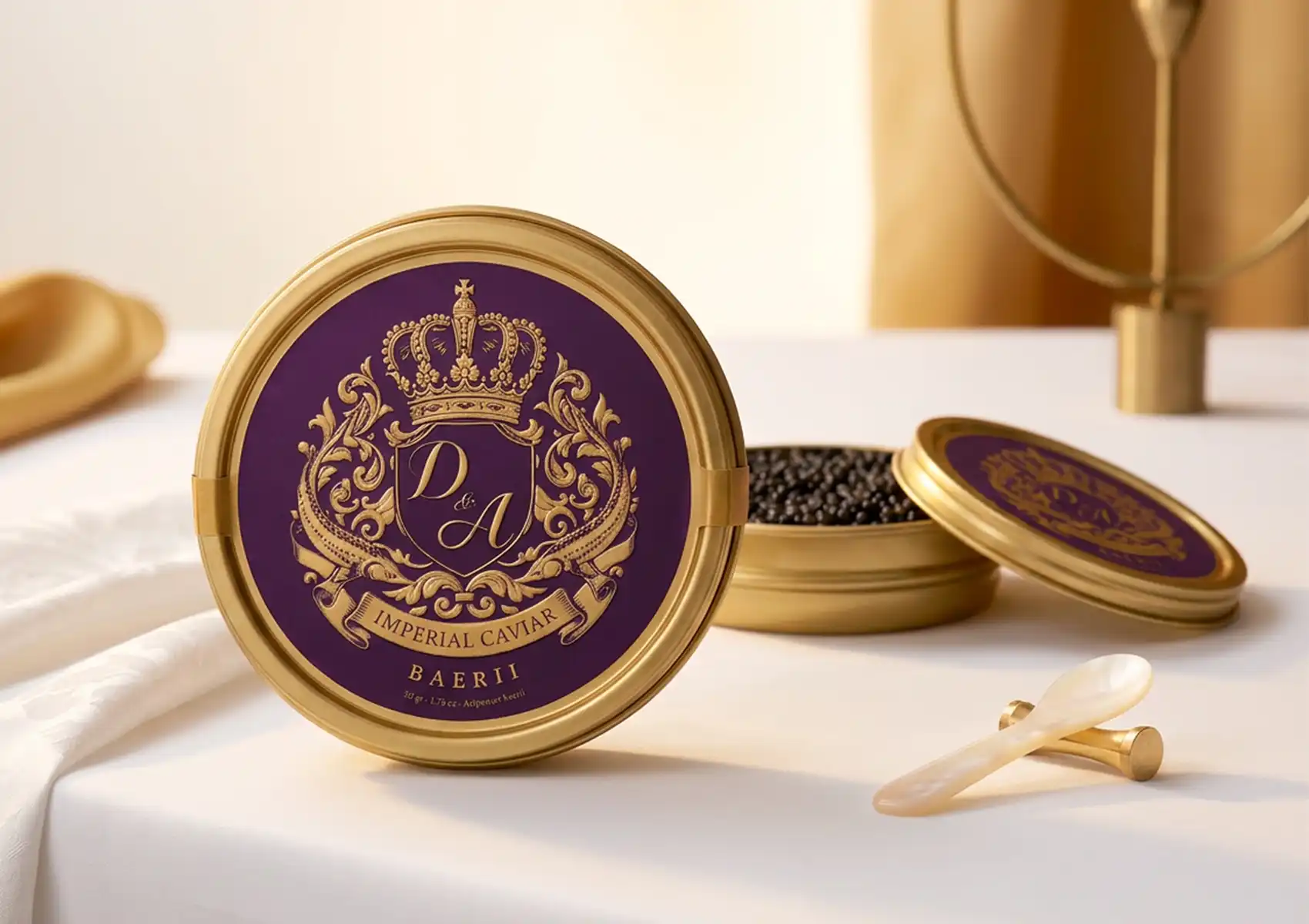
If you are new to the world of caviar, understanding the distinct characteristics of each sturgeon species is essential. Here is a quick guide to how the most celebrated Russian varieties compare
| Caviar Type | Pearl Size and Colour | Flavor Profile | Perfect For |
| Beluga | Large (3 to 4mm), light to dark grey | Creamy, buttery, and incredibly delicate | Ultimate luxury and milestone celebrations |
| Oscietra | Medium (2.5 to 3mm), golden to dark brown | Nutty, firm texture, with a refined brine | Connoisseurs and elegant dinner parties |
| Sevruga | Small, pearlescent grey | Intense, robust, and bold sea flavour | Experienced palates and traditional pairings |
| Baerii | Small to medium, dark brown to black | Earthy, sweet, with a balanced sea breeze | Beginners and creative culinary pairings |
How to Eat Caviar Russian Style
The Russian tradition is not about pretension. It is about honouring the caviar’s delicate flavour. Here is how to do it right.
The Right Utensils: No Metal
Never use a metal spoon. Silver or stainless steel reacts with the caviar, creating a bitter, metallic aftertaste.
Use spoons made from:
- Mother-of-pearl (the traditional choice)
- Bone or horn
- Glass
- Plastic (in a pinch)
The Perfect Temperature
Caviar must be served very cold, ideally between 0°C and 3°C. As it warms up, its flavour deteriorates.
How to serve: Nestle the unopened tin in a bowl of crushed ice. Open it 15 to 20 minutes before serving to let the flavours “wake up,” but keep it on ice throughout.
Classic Russian Accompaniments
The traditional Russian spread includes:
| Category | Examples | Role |
| Base | Blinis (small pancakes), toast points, dark rye bread | Neutral canvas |
| Creamy element | Crème fraîche, unsalted butter | Adds richness |
| Garnishes | Finely chopped hard-boiled egg (whites and yolks separated), minced red onion, fresh chives or dill | Texture and contrast |
How to build the perfect bite:
- Take a blini or toast point
- Add a thin layer of unsalted butter or a small dollop of crème fraîche
- Sprinkle a pinch of chopped egg or onion (optional)
- Top with a small spoonful of caviar
- Enjoy without chewing. Press the pearls against your palate with your tongue.
The “Caviar Bump” (Pure Tasting)
To experience caviar’s unadulterated flavour, try the caviar bump:
- Place a small amount of caviar on the back of your hand, between your thumb and index finger
- Let it warm for just a moment
- Slurp it directly
This method, popularised by Russian tradition, allows you to taste the caviar’s true profile without any accompaniments.
How to Serve Russian Caviar (The Complete Guide)
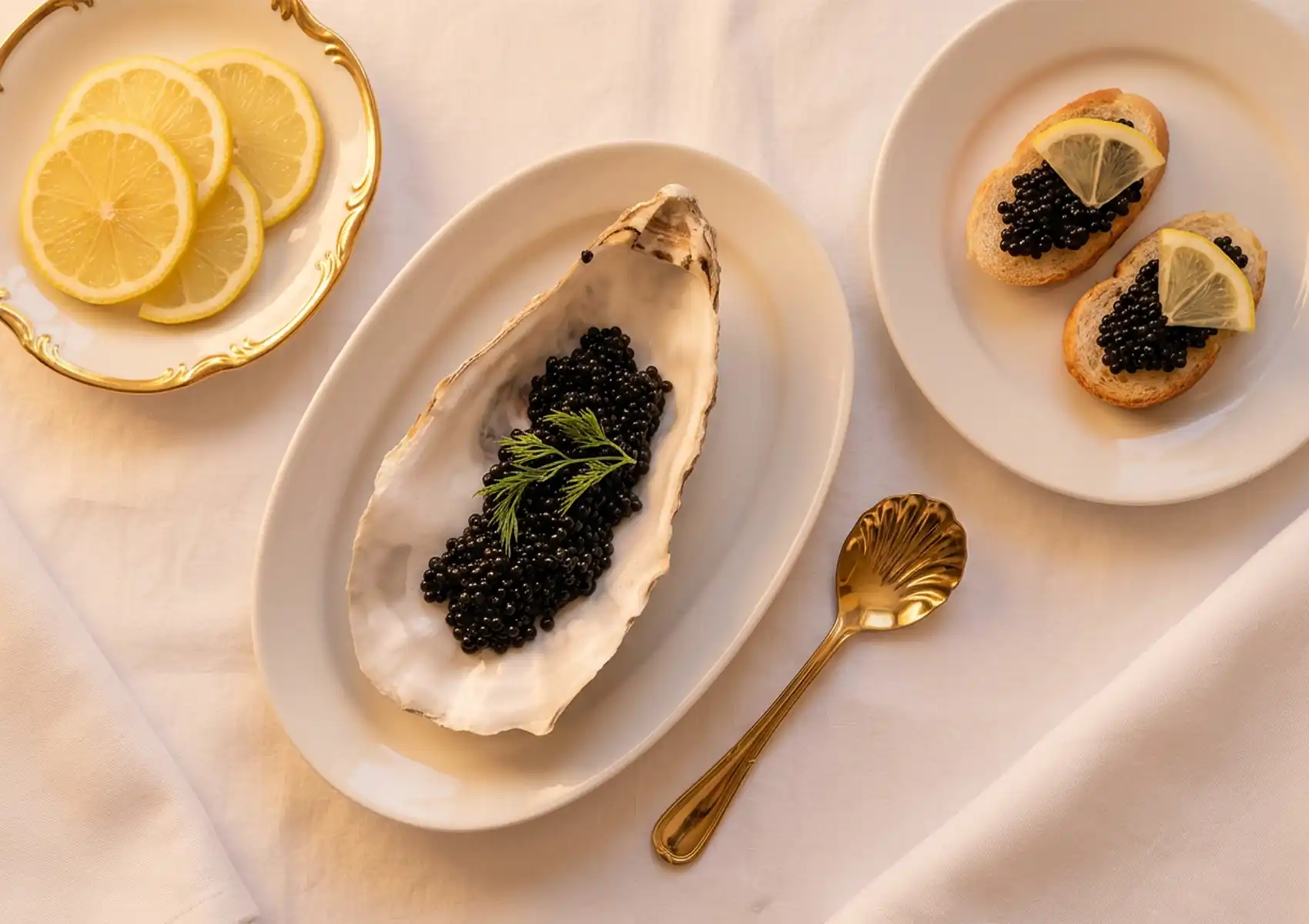
Hosting a caviar tasting at home is easier than you think. Here is your checklist:
What You Need
- Caviar (30-50g per person if main appetiser, 15g if garnish)
- Crushed ice (to keep the tin chilled)
- Mother-of-pearl spoons (or non-metal alternatives)
- Small bowls for accompaniments
- Chilled vodka or dry Champagne (traditional pairings)
Step-by-Step Serving
- Chill everything. Keep caviar in the coldest part of your fridge until serving time.
- Prepare the ice bowl. Fill a large bowl with crushed ice. Nestle the caviar tin directly into the ice.
- Open 15 to 20 minutes before serving. This allows the flavours to open up. Keep the tin on ice.
- Arrange accompaniments. Place blinis, crème fraîche, chopped eggs, and onions in small bowls around the caviar.
- Pour the drinks. Ice–cold vodka (kept in the freezer) or dry Champagne.
- Let guests build their own bites. Provide non-metal spoons for serving.
What to Drink with Russian Caviar
| Drink | Why It Works |
| Ice-cold vodka | The classic Russian pairing. Clean, neutral, cuts through richness. |
| Dry Champagne (Brut) | Bubbles cleanse the palate; acidity balances the brine. |
| Dry white wine (Sancerre, Chablis) | Mineral-driven wines complement without overpowering. |
Avoid: Sweet wines, heavy reds, or flavoured spirits. They will clash with the caviar’s delicate notes.
Common Russian Caviar Mistakes to Avoid
| Mistake | Why It Is Wrong | The Fix |
| Using a metal spoon | Creates a metallic taste | Use mother-of-pearl, glass, or plastic |
| Serving caviar warm | Flavour becomes fishy | Keep on crushed ice at all times |
| Freezing caviar | Ice crystals rupture delicate membranes | Never freeze. Keep chilled only. |
| Cooking with caviar | Heat destroys texture and flavour | Add caviar only after cooking, at the very end |
| Overpowering with strong flavours | Masks the caviar’s subtlety | Use neutral bases (blinis, toast, butter) |
| Chewing the eggs | You miss the flavour release | Press gently against the palate with the tongue |
Why Choose Caviar Indonesia for Authentic Russian Caviar
At Caviar Indonesia, we bring the finest authentic sturgeon caviar directly to your table in Bali and Jakarta.
What We Offer
| Variety | Available Brands | Best For |
| Beluga | Kaviari, Caviar Colony, Kaluga Queen | Ultimate luxury, anniversaries, state banquets |
| Oscietra (Russian Sturgeon) | Antonius, Calvisius, N25, Russian Caviar House | Dinner parties, connoisseurs |
| Siberian (Baerii) | Sturia, Labeyrie, PERSEUS | Beginners, seafood pairings |
| Sterlet | Aquatir, D&A Imperial | Rare, intimate dining (once reserved for Russian royalty) |
Why Customers Trust Us
- 100 per cent authentic. Every tin is traceable to sustainable farms
- CITES-certified. Legal, ethical, and fully documented
- Chilled delivery to Bali and Jakarta. The cold chain is never broken
- Premium brands. Kaviari, Kaluga Queen, Sturia, Antonius, Calvisius, and more
- Expert guidance. We help you choose the right caviar for your occasion
How to Order
- Visit caviar.id
- Browse by sturgeon type (Beluga, Oscietra, Baerii, Sterlet) or by brand
- Select your tin size (30g, 50g, 125g, or more)
- Enter your delivery address in Bali or Jakarta
- Receive chilled, authentic caviar at your door
Shop Russian Caviar at Caviar Indonesia
Frequently Asked Questions
What is special about Russian caviar?
Russian caviar comes from the sturgeon species native to the Caspian Sea. Its special qualities include an exceptionally buttery, nutty, or briny flavour (depending on species), a delicate “pop” texture, and centuries of cultural prestige from Russian tsars.
Why is Russian caviar so expensive?
Because sturgeon take 10 to 20 years to produce eggs, strict CITES regulations limit supply, and the Malossol curing process requires skilled craftsmanship. You are paying for decades of patience and quality, not just the eggs.
What is Russian caviar called?
Depending on the sturgeon species, it is called Beluga, Oscietra (or Osetra), Sevruga, or Baerii (Siberian). All are true Russian caviar varieties.
How to eat caviar Russian style?
Serve chilled on a bed of ice. Use a mother-of-pearl spoon (never a metal one). Pair with blinis, crème fraîche, and finely chopped egg. Press the pearls against your palate with your tongue. Do not chew. Drink ice-cold vodka or dry Champagne.
How to serve Russian caviar at home?
Place the tin on crushed ice. Open 15 to 20 minutes before serving. Provide non-metal spoons. Arrange blinis, crème fraîche, chopped egg, and onion in small bowls. Let guests build their own bites.
Where does Russian caviar come from today?
Historically, from the Caspian Sea. Today, due to conservation laws, almost all Russian caviar comes from sustainable sturgeon farms in France, Italy, Poland, Russia, and China. Caviar Indonesia partners only with these certified farms.
Can I buy authentic Russian caviar in Bali?
Yes. Caviar Indonesia delivers chilled, authentic Russian caviar (Beluga, Oscietra, Baerii, and Sterlet) directly to your door in Bali and Jakarta.
How should I store caviar at home?
Keep unopened tins in the coldest part of your refrigerator, not the door. Once opened, consume within 48 hours. Press plastic wrap directly onto the caviar’s surface, replace the lid, and return to the fridge. Never freeze.
Is Russian caviar healthy?
Yes. Caviar is rich in omega-3 fatty acids, high-quality protein, Vitamin B12, and selenium. It is a nutrient-dense food that supports heart and brain health.
What is the difference between black caviar and golden caviar?
Colour depends on the specific sturgeon species and its diet. Golden caviar often comes from rare heritage species like the Golden Oscietra, or from albino variants. It is extremely rare and highly sought after, delivering a nutty flavour that rivals the finest traditional black caviar.
Final Thoughts
Russian caviar is more than a luxury ingredient. It is a taste of history, patience, and masterful craftsmanship. From the ancient sturgeon of the Caspian Sea to your table in Indonesia, every pearl represents decades of care.
Now that you know how to eat caviar Russian style, why it is so expensive, and where to buy authentic Russian caviar, you are ready to enjoy it with confidence.
Ready to experience authentic Russian caviar?
Visit Caviar Indonesia to order today.
Premium brands. 100 per cent authentic.