Types of Caviar Explained – Varieties & Differences
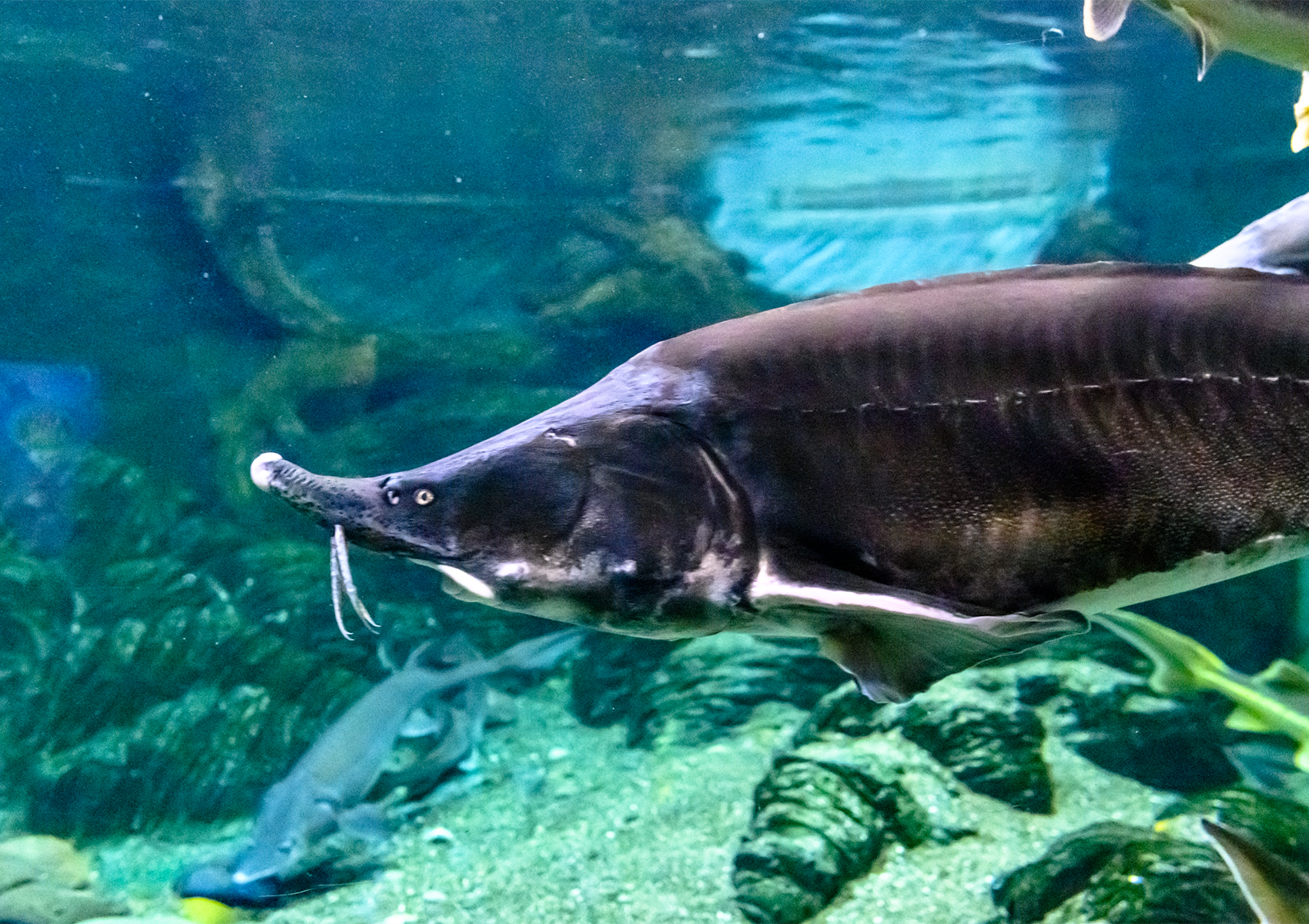
Beluga, Kaluga Hybrid, Oscietra, Sterlet, Sevruga, Siberian and White Sturgeon are seven popular types of caviar.
Each differs in flavour, pearl size, texture and price. Understanding these differences can make it easier to choose a caviar that suits your taste, budget and occasion.
Caviar Indonesia specialises in sturgeon caviar from international producers. This guide draws on that experience to explain what distinguishes the seven types.
7 Popular Types of Caviar
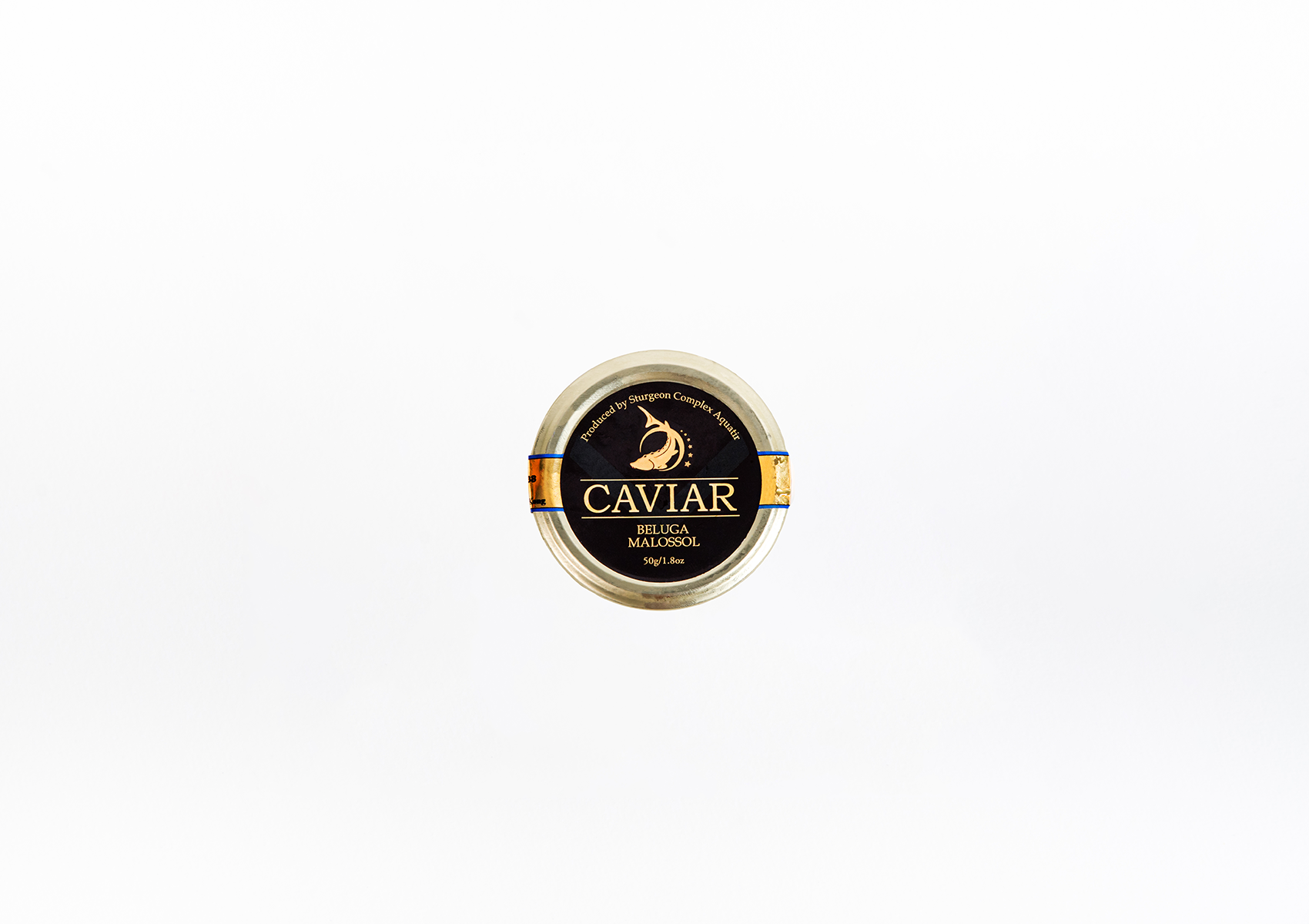
Beluga Caviar
Beluga has large, soft pearls and a delicate, buttery flavour. The pearls range from light to dark grey and are less strongly briny than other varieties. Beluga takes many years to mature, which is one reason its caviar is rare and expensive.
Choose it if: You prefer large, soft pearls and a mild, buttery flavour.
Kaluga Hybrid Caviar
Kaluga Hybrid has large pearls and a mild, creamy flavour. Its pearls are generally firm, giving them a noticeable pop in the mouth. It is produced by crossing two sturgeon species and is often considered an alternative to Beluga.
Choose it if: You like large pearls and a mild flavour but a firmer texture.
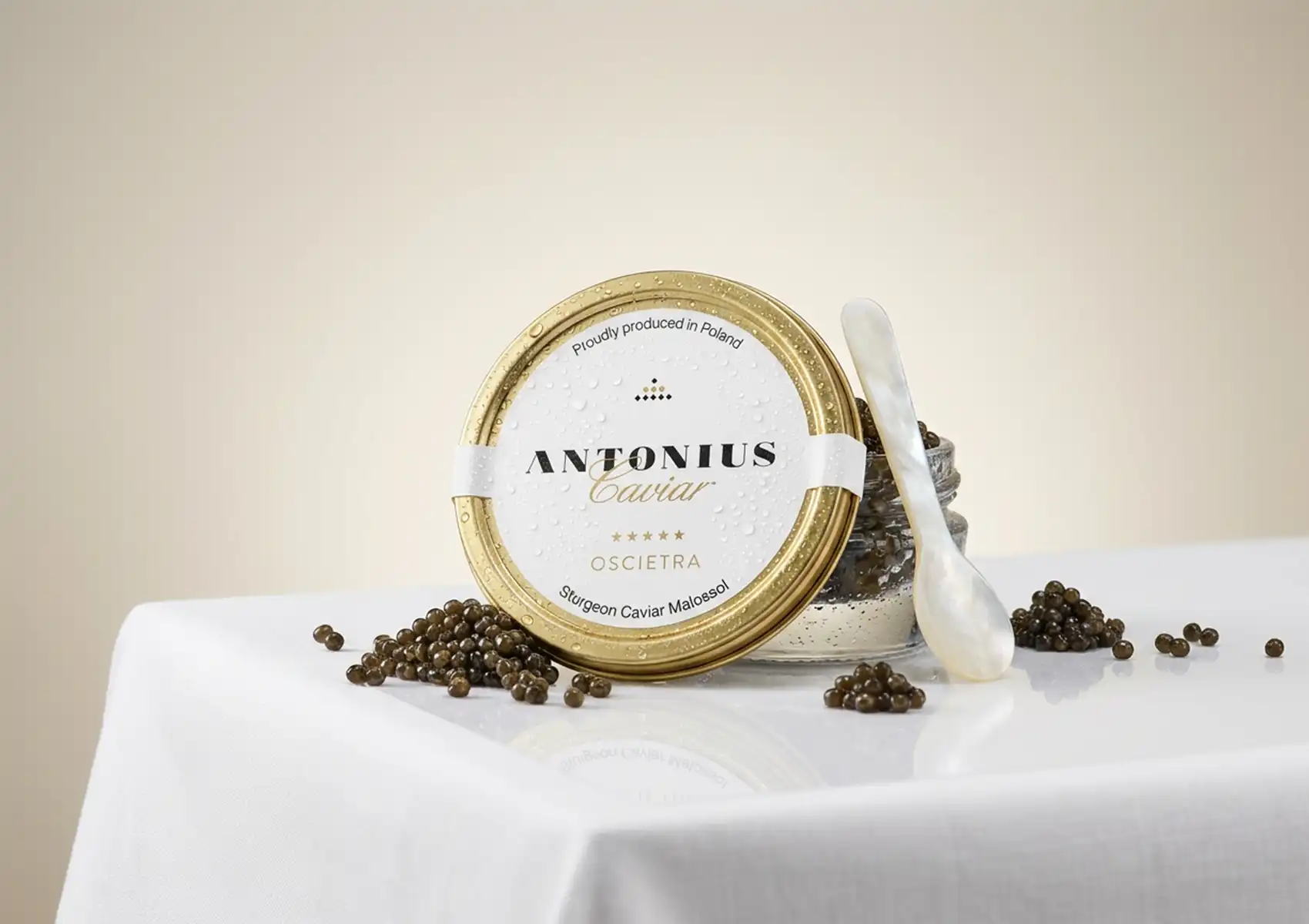
Oscietra Caviar
Oscietra is known for its nutty flavour, often with a buttery finish. Its firm pearls range from grey and olive to brown and gold.
Choose it if: You prefer a nutty taste over a strongly briny one.
Choose it if: You want to try some offbeat caviar.
Sevruga Caviar
Sevruga has small, firm pearls and a bold, briny flavour.
Choose it if: You like a stronger, saltier caviar.
Siberian Caviar
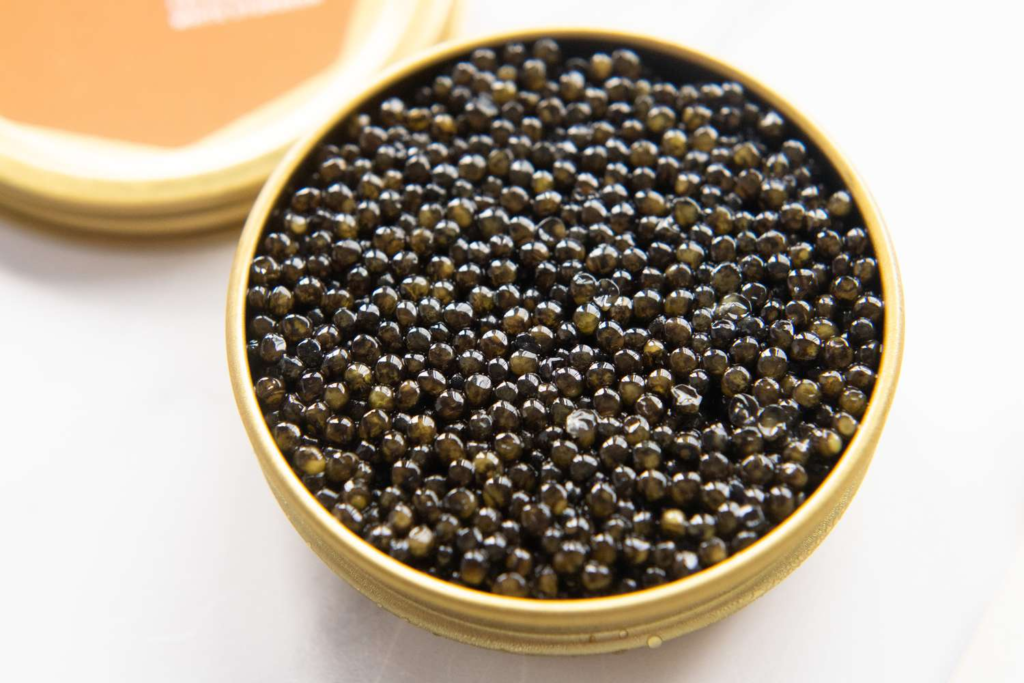
Siberian caviar has medium-sized pearls in shades of black, grey and brown. It has a rich flavour, though the taste can differ by producer. Siberian sturgeon is widely farmed, so its caviar is generally more affordable than many luxury varieties.
Choose it if: You are trying caviar for the first time.
White Sturgeon Caviar
White Sturgeon has medium to large, dark pearls and a clean, mild flavour. The White Sturgeon is North America’s largest fresh water fish and its firm pearls have a noticeable pop, without the stronger taste of varieties, like Sevruga.
Choose it if: You want larger, firm pearls at a more affordable price.
Caviar Types at a Glance
Type
Flavour
Pearl Size
Texture
Price Position
Beluga
Buttery, delicate
Large
Soft, delicate
Ultra-luxury
Kaluga Hybrid
Creamy, mild
Large
Firm pop
Luxury
Oscietra
Nutty, buttery
Medium to large
Firm
Luxury
Sterlet
Mild, delicate
Small
Delicate
More accessible
Sevruga
Bold, briny
Small
Firm
Luxury
Siberian
Rich
Medium
Firm
More accessible
White Sturgeon
Clean, mild
Medium to large
Firm
More accessible
Note: Price positions are general comparisons rather than fixed price bands. Prices vary by producer, quality, pearl characteristics and availability.
Why Is Some Caviar More Expensive Than Others?
Maturation time: Different sturgeon take different periods of time to produce roe. During these years, the farm must feed and care for the fish. The longer this takes, the more it costs the farm – and that can make the caviar more expensive.
Pearl properties: The size, colour, firmness and consistency of caviar pearls make caviar valuable. Larger pearls or more uniform pearls may cost more.
Production: Producers raise the fish differently. Some of them may choose eggs for their caviar. The choices affect the quality and price of the caviar. A known producer can also sell at a premium because of its reputation.
Availability: Some caviar is produced in smaller amounts than other caviar. When demand is high, but supply is low, prices can go up.
Buy Caviar in Indonesia from Caviar Indonesia
Caviar Indonesia offers genuine sturgeon caviar from renowned aquaculture producers throughout the world. The collection includes Beluga, Russian Sturgeon, Siberian Sturgeon and Sterlet.
You can also choose from internationally respected brands, like Antonius Caviar, Kaluga Queen, Aquatir Caviar, D&A Imperial Caviar and Russian Caviar House, with nationwide delivery for home, restaurant and wholesale customers.
Shop the caviar collection or speak with the team for help choosing a caviar that suits your taste, occasion and budget.
FAQs
What is the difference between a caviar type and a caviar grade?
A caviar type refers to the sturgeon it comes from (for example, Beluga or Oscietra). A grade describes characteristics, like pearl size and colour, used to assess the caviar.
Is a larger caviar pearl of better quality?
No. Pearl size is one characteristic of caviar, but quality also depends on texture, consistency and flavour.
Does the colour of caviar indicate its quality?
Not by itself. Caviar naturally comes in black, grey, brown, olive, amber and gold. Colour can vary depending on the type of caviar.
Can the same type of caviar taste different?
Yes. That depends on the producer and the batch you get.
Is any type of caviar considered the best?
There is no single type that everyone will prefer. The best choice is up to your taste.
Luxury Food Gifts in Indonesia
If you are looking for a luxury food gift in Indonesia, great options include caviar, speciality coffee, artisan chocolate, celebratory baked goods, and curated hampers.
This guide explains when to choose each one and what to check before you buy.
Five Luxury Food Gifts in Indonesia
1] Caviar
Occasion:
Caviar is suitable for important clients, weddings, anniversaries and milestone celebrations. It is a special treat that many of the recipients would not buy for themselves. Trusted retailers like Caviar Indonesia have a generous selection of high quality caviar sourced from around the world which can be shipped to customers all over Indonesia.
Guidelines for Purchase:
Ask the seller for a recommendation based on your budget and occasion.
If the recipient is new to caviar, consider flavour and texture, too. Some varieties are milder and more delicate; others are richer in taste. This difference helps you choose something the recipient will enjoy.
Caviar must be kept cold during transit. Check how the seller keeps it cold during shipping.
Ask the seller if they have serving accessories.
Think about when you will be serving the caviar. If you are serving it at a dinner party or a celebration and want to share it, ask the retailer what size tin would be appropriate for the number of guests you will have. This way, you will buy the right amount and won’t end up with too much or too little.
Note:Beluga caviar is premium. Oscietra is another premium option that usually costs less.
2] Speciality Coffee
Occasion: Speciality coffee is a good gift for coffee lovers, important clients and corporate occasions.
Guidelines for Purchase:
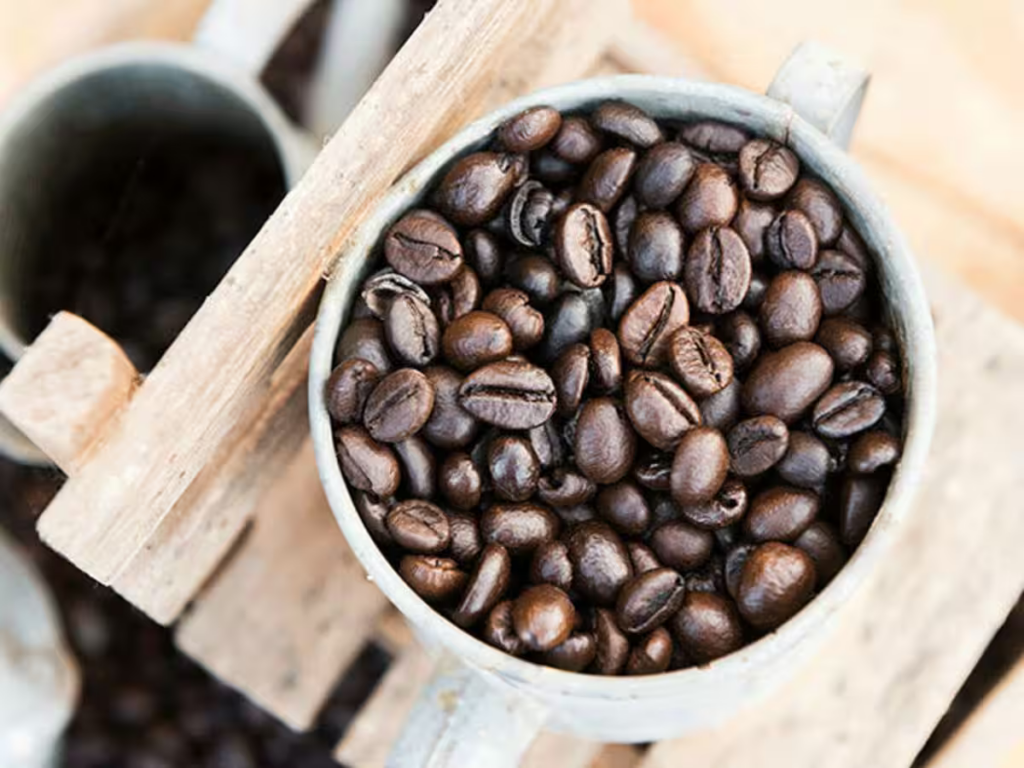
Look for coffee from recognised growing regions like Kintamani in Bali or Toraja in Sulawesi. The pack should ideally name the farm, estate, or producer rather than simply say ‘Indonesian coffee’. This tells you more specifically where the beans came from.
When buying Kopi Luwak, check how it was sourced. Its production involves coffee beans eaten and passed by civets. Many producers keep the animals in cages, which raises animal-welfare concerns. Look for genuinely wild-sourced coffee.
Choose whole beans if the recipient has a grinder. If not, go for freshly ground coffee.
Before you buy, check the roast date. This tells you how fresh the coffee is.
3] Bean-to-Bar Chocolate
Occasion:
Bean-to-bar chocolate is excellent for chocolate lovers, hosts, birthdays and thank-you gifts.
Guidelines for Purchase:
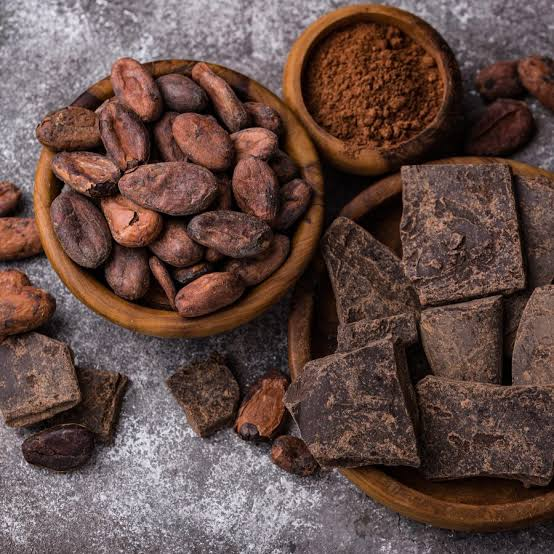
Check where the cacao comes from. Indonesian chocolate makers use cacao grown in Sumatra, Sulawesi, Kalimantan and Bali. A named origin tells you where the cacao used in the chocolate was grown.
Look for the term ‘bean-to-bar’. It means the chocolate maker handles the process from cacao beans to the finished chocolate bar, rather than simply using ready-made chocolate.
Choose the cocoa percentage based on the recipient’s taste. Milk chocolate is sweeter. Dark chocolate with a higher cocoa percentage has a stronger taste.
If you do not know what the recipient likes, choose a gift set with different flavours or cocoa percentages. This gives them a few options to try.
Note: Indonesian bean-to-bar maker Krakakoa has won awards at the UK’s Academy of Chocolate. Jungle Gold Bali is another regional favourite that makes an excellent gift.
4] Indonesian Celebratory Baked Goods
Occasion:
Lapis Legit and Nastar are good for Lebaran, Imlek (Chinese New Year), and Natal (Christmas).
Guidelines for Purchase:
Choose fresh products only. This way, you get more time to serve them.
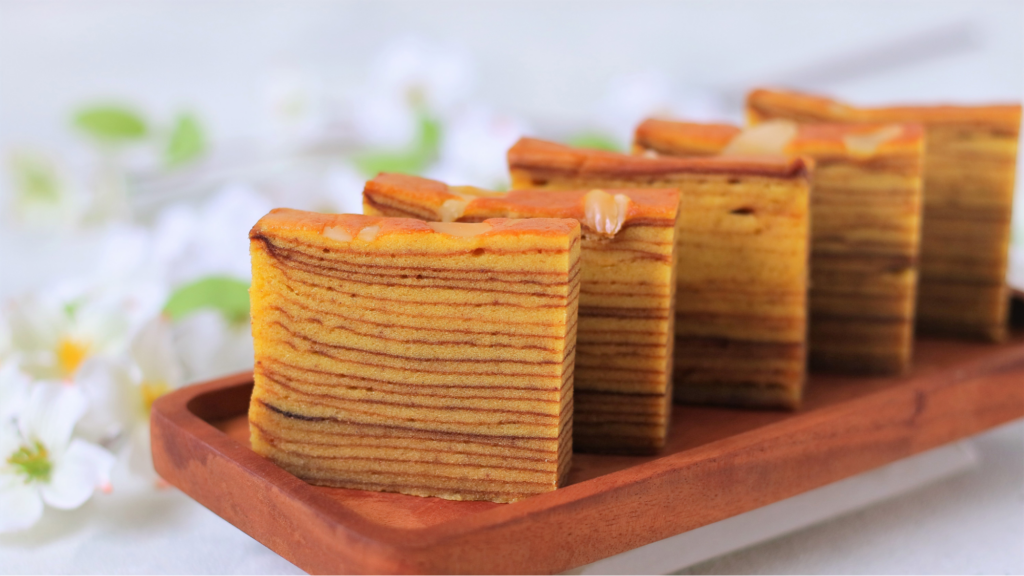
When choosing Lapis Legit, look at the layers. This Indonesian cake is made by baking one thin layer at a time, so even layers are an important part of its appearance.
Ask what butter and spices are used in the Lapis Legit. These ingredients affect its flavour and richness.
For Nastar, ask if the pineapple filling is made in-house, and what kind of butter is used in the pastry. These details can help you weigh up the different bakeries.
Consider how the gift will be shared. A whole Lapis Legit works well as a centrepiece for a family gathering, while a box of individual Nastar is easier to pass around.
5] Bespoke Luxury Hampers
Occasion: Custom hampers suit corporate gifts,
family celebrations and holiday occasions.
Guidelines for Purchase:
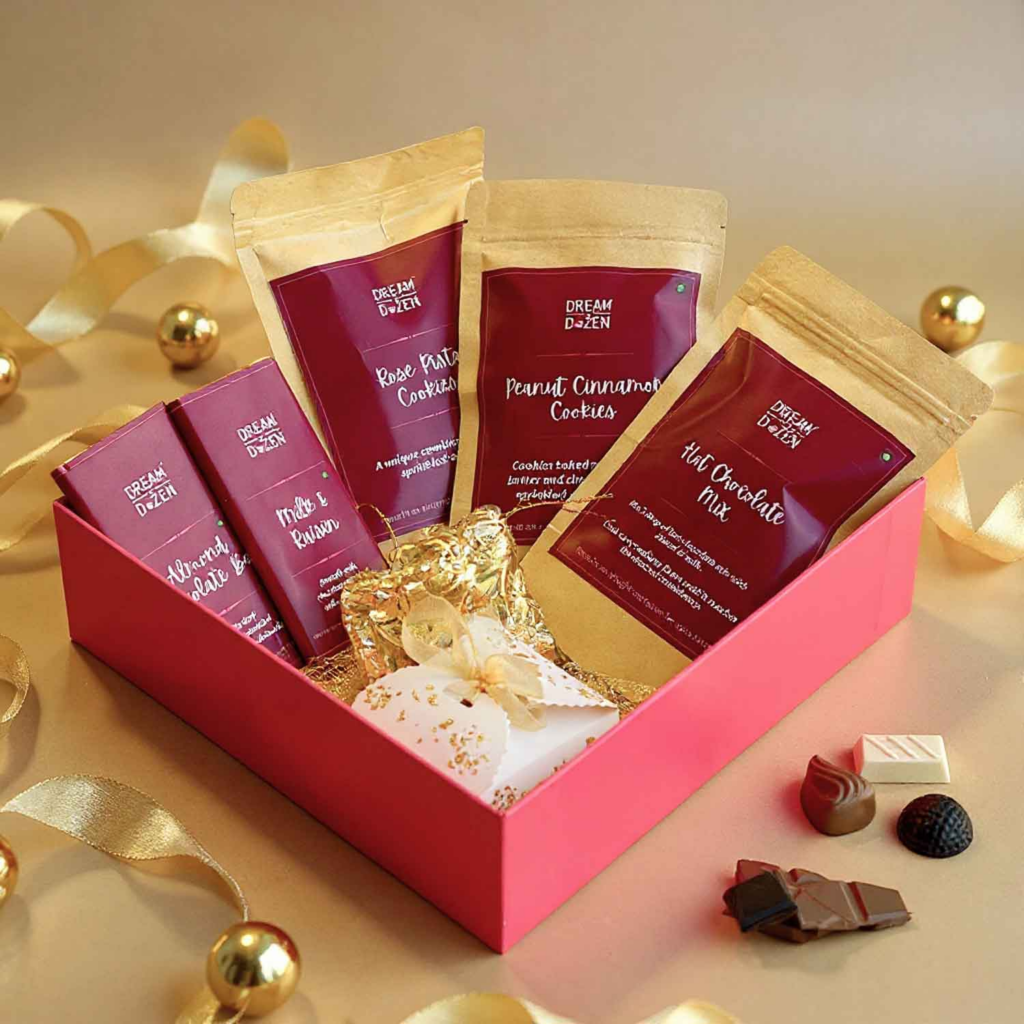
See the brands, the sizes of products and how many items you get. That helps you know what you actually get for the price.
Choose products based on the recipient’s dietary preferences. This is especially important if the hamper has a variety of different foods.
Look at the arrangement of the hamper. Check the box layout and whether you can add a personalised card/message.
If you are ordering for a company, ask whether the seller can handle multiple hampers and add company branding or individual recipient messages.
Luxury Caviar Gifts in Indonesia
Caviar Indonesia brings together caviar from established producers from all over the world to offer the highest quality caviar to Indonesian customers. Its range is sourced from sustainable farms, with every tin traceable to its source.
You do not need to know caviar to find the right one. Caviar Indonesia’s sommeliers can help you choose the right caviar for your budget, the occasion and the recipient’s tastes. They can also help you understand the differences between types of caviar before you buy.
Caviar is expensive, and getting it wrong can cost you twice. If your first tin is too intense, too salty, or not suited to an untrained palate, you may think caviar is not for you. The differences are not always clear.
This Best Caviar for Beginners Guide removes the guesswork. It covers all the basics that can help a beginner purchase caviar confidently.
Caviar also comes in several types, each has its own flavour, texture, and price. At Caviar Indonesia, we offer the best caviar from around the world, shipped Indonesia-wide.
Tips for Beginners: How to Choose the Right Caviar
When buying your first tin, look for these factors.
Flavour
Choose a mild, buttery caviar for your first tin, not a strong or salty one.
A strong, salty caviar can overwhelm you. All you will remember is salt. A mild, buttery caviar lets you actually taste the roe itself. You will notice its creaminess, its faint nuttiness, and the light pop of the pearls.
You can try either of the two caviar types, Siberian sturgeon (Acipenser baerii) and Oscietra (Acipenser gueldenstaedtii). Both are named after the fish they come from and have a milder taste.
Price
Buy a small tin first, not a large one.
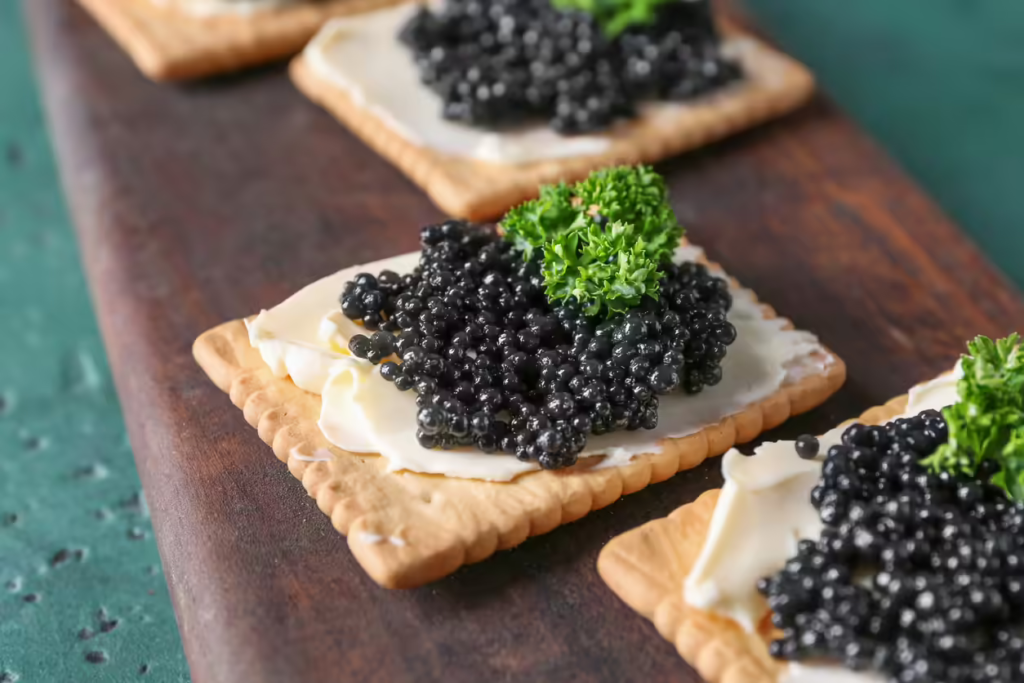
A 30-gram tin is enough to try the caviar properly. You can taste it plain, then again with blini or crème fraîche.
A good entry-level caviar, like Siberian sturgeon, starts from around IDR 900,000 for this size. Prices climb from there depending on grade and brand, so treat this as a starting point, not your full budget.
Texture
Look for firm pearls, not soft or mushy ones.
If the pearls feel soft or mushy instead, the caviar is past its best. This is usually the first thing people notice, even before they register the flavour.
Malossol
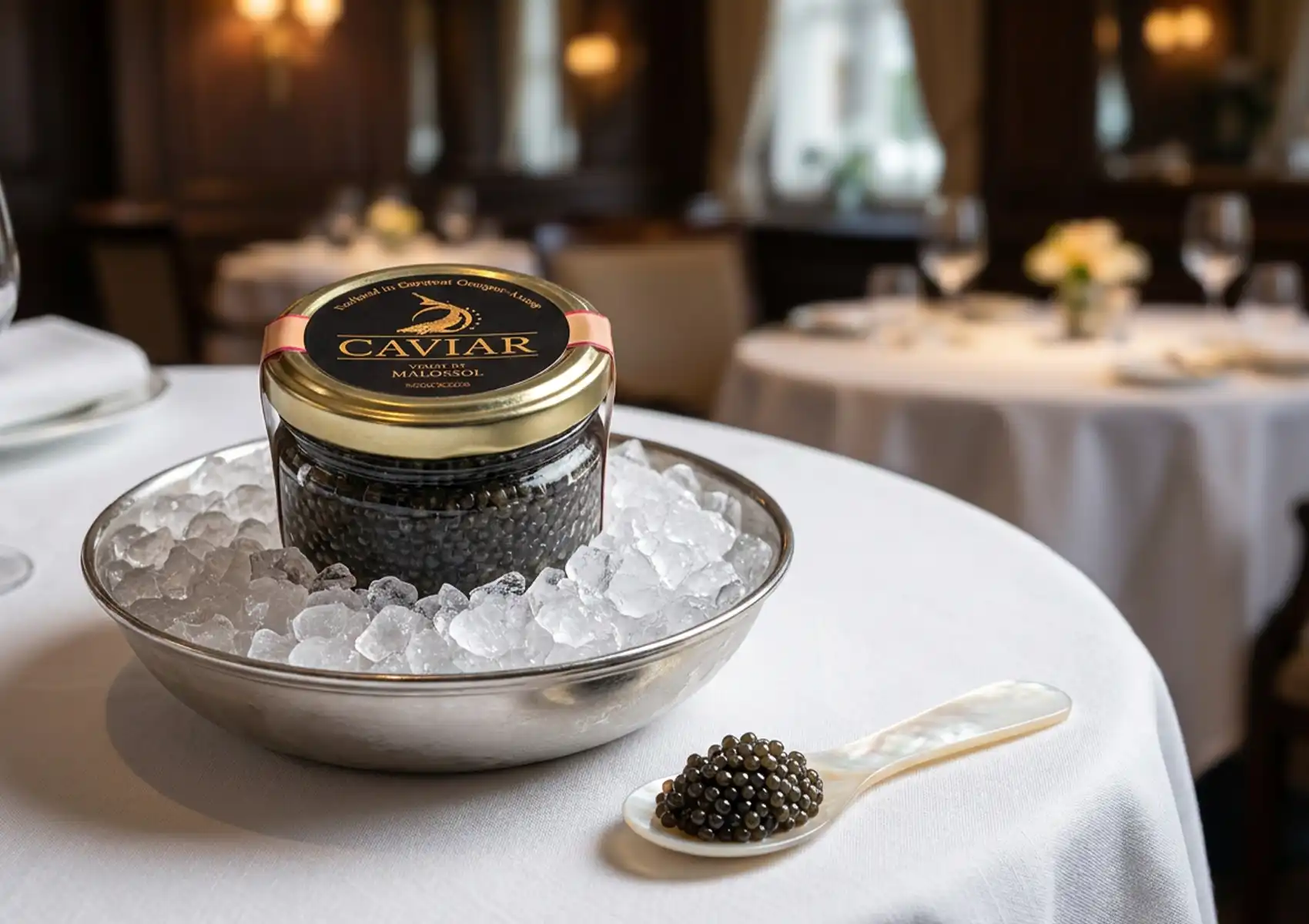
Look for the word ‘Malossol‘ on the tin. It is a mark of quality.
Malossol is Russian for ‘little salt’. It means the roe was lightly cured, usually with less than 5% salt. That light cure lets the caviar’s natural flavour come through, instead of being masked by salt. Most good tins carry this label.
Every legal tin carries this code. It is a short string of letters and numbers that shows the species, country, and harvest year. It exists because sturgeon have been protected since 1998, after overfishing nearly wiped out wild populations.
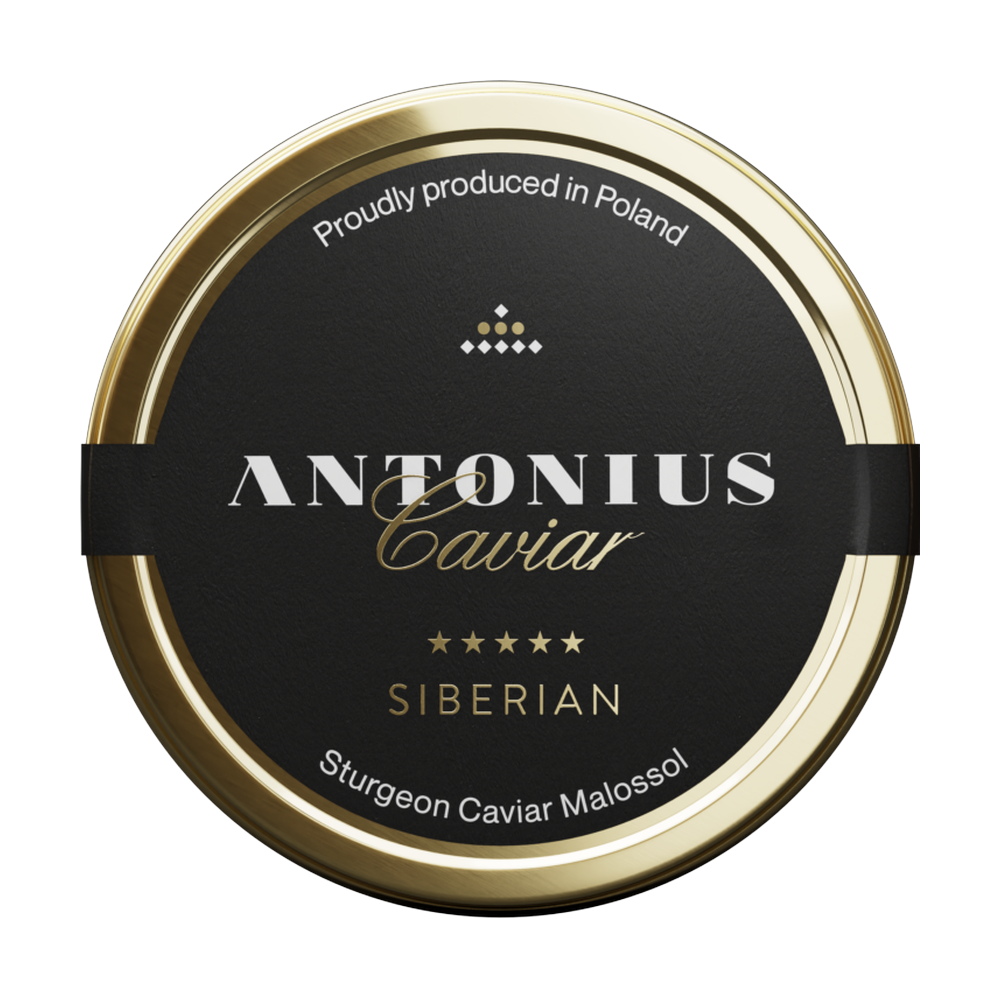
Antonius Caviar, the brand we stock, uses sustainably farmed sturgeon rather than wild-caught fish. A valid CITES code confirms this.
The Best Caviar Types to Try First
There are several types of caviar, including Kaluga, Sevruga, and Sterlet. For a first tin, though, two stand out as the easiest to start with.
Siberian Sturgeon
Start here. Of the common types, it has the mildest flavour and the most forgiving price.
Siberian sturgeon caviar has a mild, clean flavour with a faint earthy note. The pearls are small to medium, firm, and range in colour from black to grey to brown. A 30-gram tin starts from IDR 900,000.
Serve it with blini and a little crème fraîche, or eat it plain first to learn the flavour properly.We stock Antonius Caviar’s Siberian tin as our pick for first-time buyers.
Oscietra
Once Siberian feels familiar, move on to Oscietra. It is a step up in flavour and price.
Oscietra caviar has a nutty, buttery flavour with a longer finish than Siberian. The pearls are medium to large, firmer, and range in colour from grey to golden brown. A 30-gram tin starts from IDR 1,140,000.
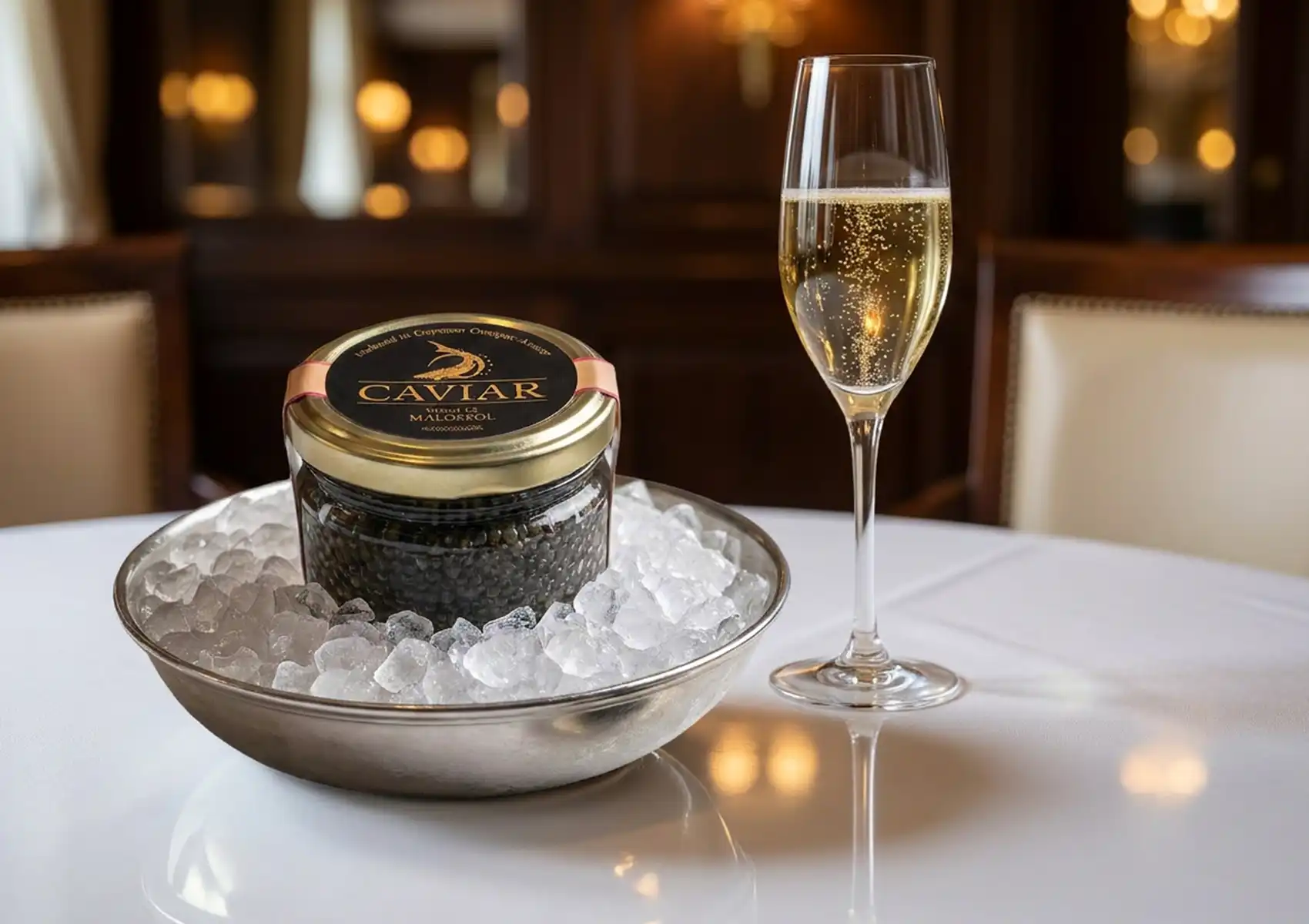
Pair it with a dry Champagne or chilled vodka for a proper first tasting.We recommend Antonius Caviar’s Oscietra as the step up from Siberian.
Beluga
Save this one for later. It is not the right caviar to start with.
Beluga is the largest, rarest, and most expensive caviar in the world, with a soft, buttery pearl and a long, delicate finish. Without Siberian or Oscietra to compare it to, you will not have a reference point.
How to Serve Your First Caviar Tin
Serve caviar cold and taste it plain.
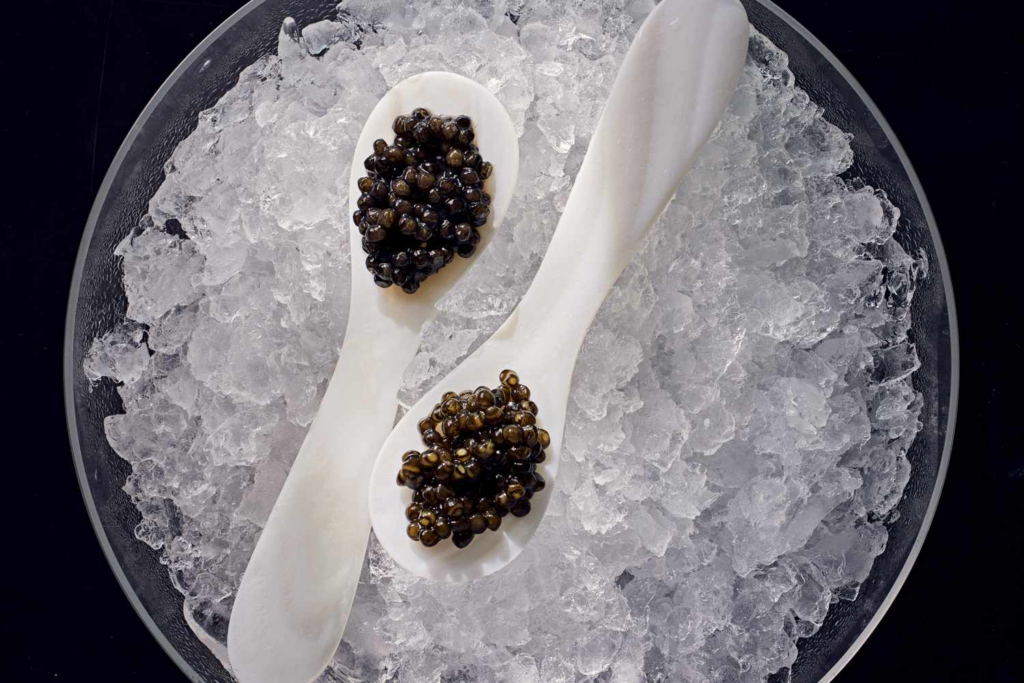
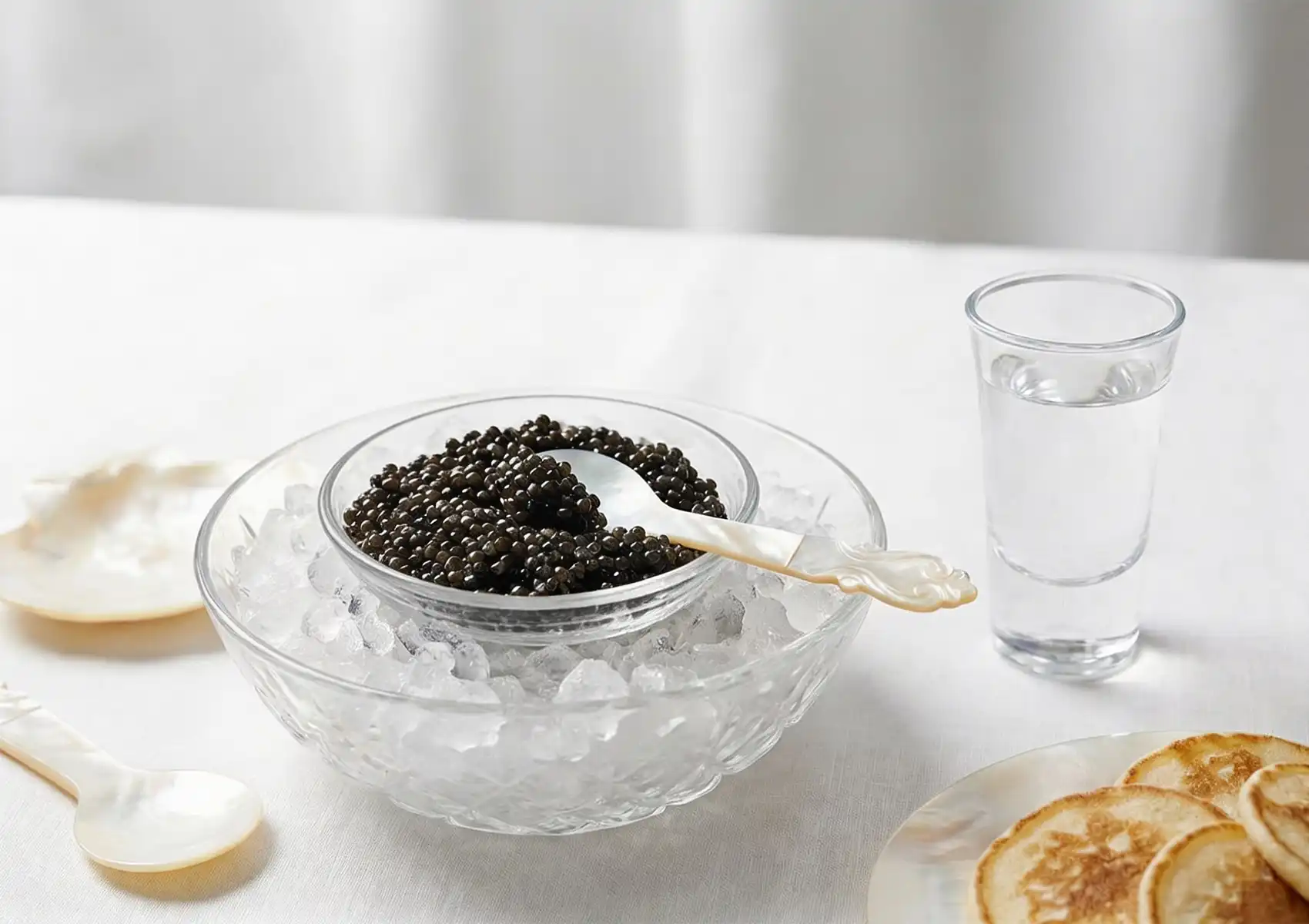
Take the tin straight from the fridge and place it on ice if you have it. Use a spoon made of mother of pearl, bone, or wood, never metal, since metal dulls the flavour. Taste your first spoonful plain, without blini or crème fraîche.
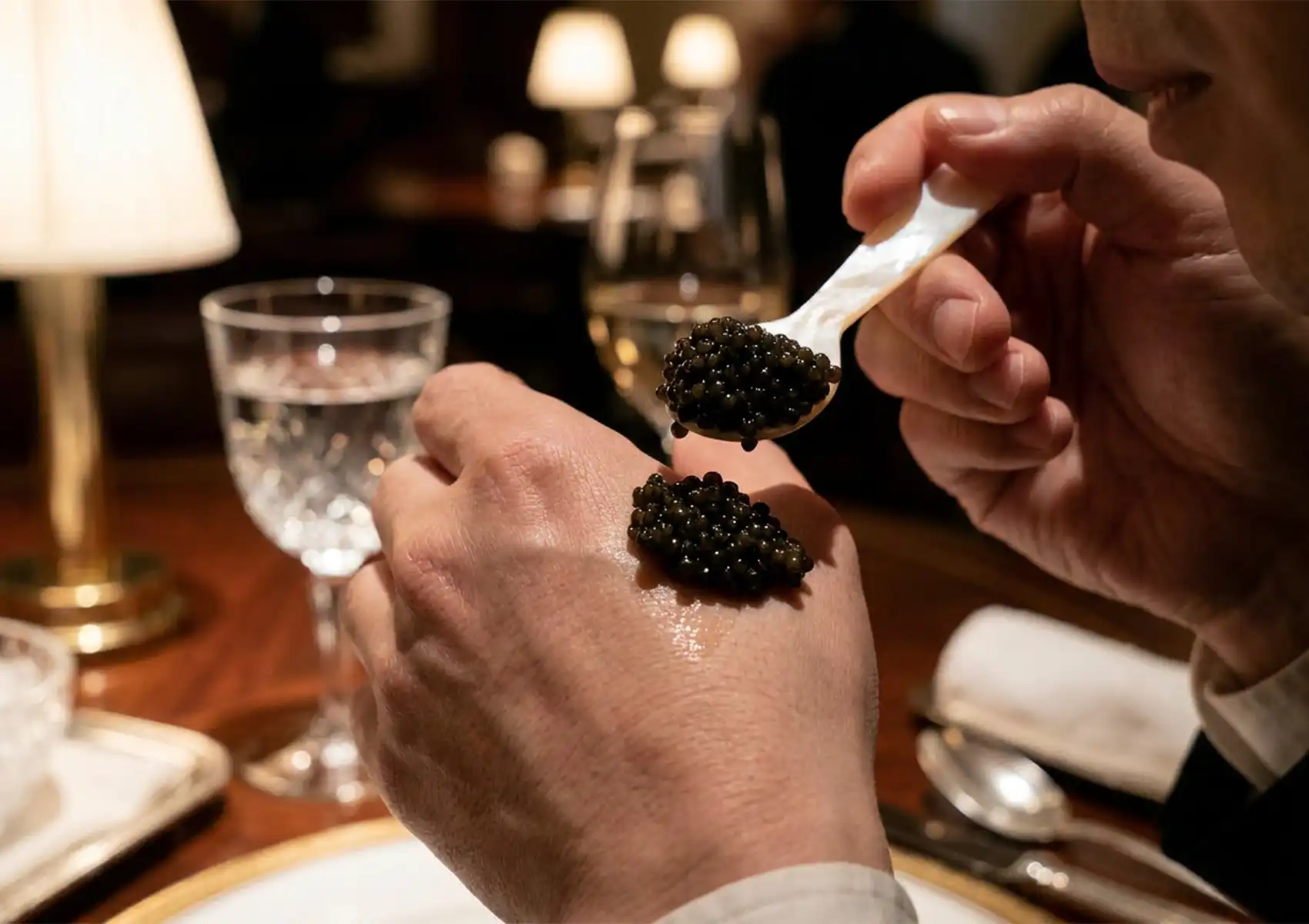
Scoop the pearls onto the back of your hand, between thumb and forefinger. Avoid eating straight from a spoon dipped repeatedly into the tin. This keeps the rest of the tin at a stable temperature.
Where to Buy Caviar in Indonesia?
Caviar Indonesia stocks a wide range of fine caviar from around the world, shipped cold across the country with a CITES code on every tin. Browse the full range, and we will help you pick the right first tin.
Best Caviar for the Price – What Caviar Is Worth Buying?
Beluga and Kaluga always grab the top spot on the price list. But ‘best caviar for the price’ does not necessarily mean ‘most expensive’. It means the caviar tin that gives you the most real quality for your money.
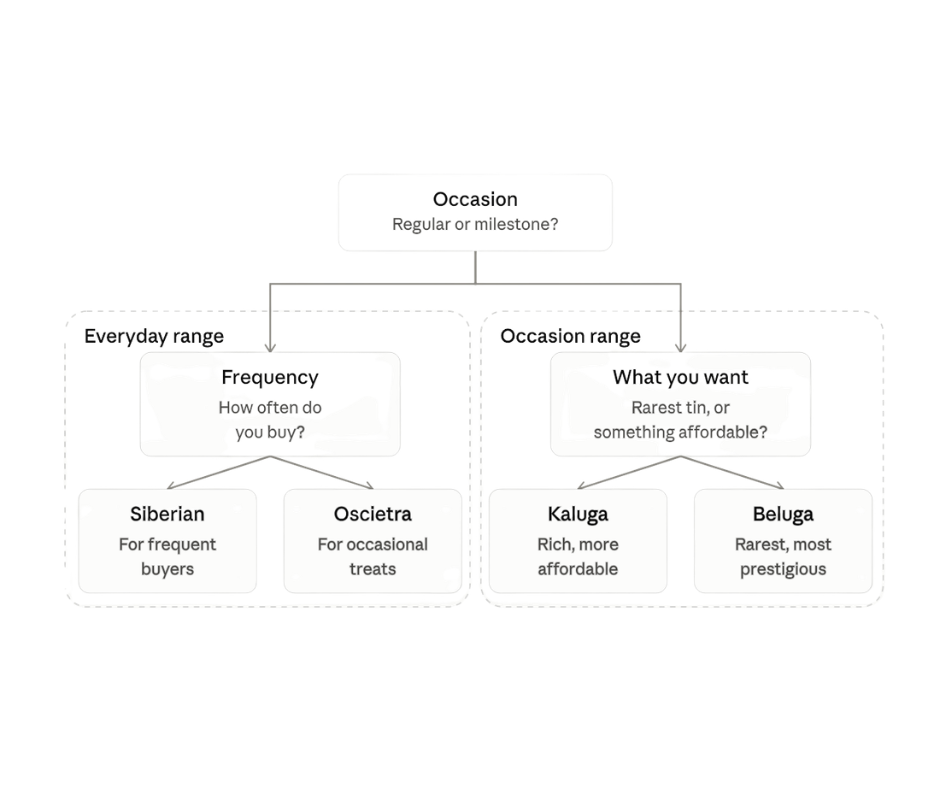
Pick Beluga or Kaluga for an occasion or celebration. Pick Siberian or Oscietra if you enjoy caviar regularly and want the best flavour for your budget.
This guide breaks down the caviar types to help you make a value-for-money purchase.
How to Choose the Best Value Caviar
Ask yourself these three questions to find the best-value caviar for you:
Occasion: Are you buying for a regular dinner, or a milestone? Are you a caviar beginner?
Frequency: If you buy caviar regularly, look for better value per gram than you would for milestones.
What you want out of it: Maximum flavour for your budget, or the status of serving something rare.
Best Caviar for the Price: Beluga vs Kaluga
Both tins come from farmed sturgeon under CITES tracing. So, the real difference between them is name recognition and richness. At Caviar Indonesia, we offer both Beluga and Kaluga Caviar.
Purpose
Beluga
Kaluga
You want the name most people recognise, even guests who know nothing about caviar.
Yes
No
You want a rich flavour, and are not concerned about the price.
Yes
No
You want a rich flavour, but at a more affordable price.
No
Yes
You want to buy for the experience, not the label.
No
Yes
Best Caviar for the Price: Siberian vs Oscietra
As of July 2026, Antonius Siberian costs IDR 900,000 for a 30g tin. Antonius Oscietra costs IDR 1,140,000 for a 30g tin.
Both use the same light-salt curing method (called Malossol). Neither is more or less processed than the other. The price gap indicates flavour and richness, not a difference in how the caviar is made.
Purpose
Siberian
Oscietra
You want the lowest cost per gram on this list.
Yes
No
You want a noticeably richer flavour and can spend a bit more.
No
Yes
You buy caviar regularly, not for a special occasion.
Yes
No
You are treating yourself occasionally; budget is not the main concern.
No
Yes
Where to Buy the Best Value Caviar in Indonesia
Whether you are buying your first tin or looking for a special occasion caviar, Caviar Indonesia offers authentic farmed Beluga, Kaluga, Oscietra and Siberian caviar with nationwide cold-chain delivery. Browse the collection online. You can also contact our team for personalised recommendations.
Best Caviar for the Price: FAQs
Is expensive caviar worth it?
Expensive caviar often offers a richer and more delicate flavour than more affordable varieties like Siberian. That level of flavour comes at a higher price. You also pay for the occasion itself. Serving something rare and prestigious is not something everyday tins can offer. This combination makes the higher price worth it, not the taste alone.
Is cheap caviar good caviar?
Reasonably priced caviar is not a compromise. A price far below IDR 500,000 for 30g is a red flag. It is worse if the listing also lacks a named species, a CITES label, or confirmed cold-chain delivery.
How do you compare caviar prices across brands?
Compare cost per gram, not tin price alone. Also check that the species and grade are clearly listed. A lower price means nothing if the listing does not even name the species.
What is the cheapest way to try real caviar?
Buy a 30g tin of Antonius Siberian. It gives you an authentic caviar experience at the lowest cost.
Why is Beluga caviar so expensive?
Beluga sturgeon take 15 to 20 years to mature. Wild Beluga trade has been effectively shut out of major markets since the mid-2000s, and CITES requires strict permits for any legal trade. Nearly all Beluga sold today comes from CITES-traced farmed sturgeon.
Is farmed caviar lower quality than wild caviar?
No. Modern aquaculture can produce caviar that rivals the quality of historic wild caviar. Most premium caviar sold today comes from carefully managed farms.
How much caviar should you buy for the price?
A tasting portion is 15 to 30g per person. One 30g tin is enough for one or two people to try it.
Is caviar a good gift at any price point?
Yes. Siberian works as a thoughtful, accessible gift. Beluga or Kaluga works for a milestone gift where the occasion justifies the price.
Does bigger roe always mean better caviar?
Larger roe often commands a higher price, but size alone does not determine quality. Check colour consistency, a clean briny smell, and a clearly listed grade and species instead.
Why is caviar more expensive in Indonesia than direct from Europe?
Import and cold-chain shipping add to the cost. Every tin must stay near freezing from farm to fridge, and that adds cost on top of the roe itself.
Vodka or Champagne? Which Pairs Best with Caviar
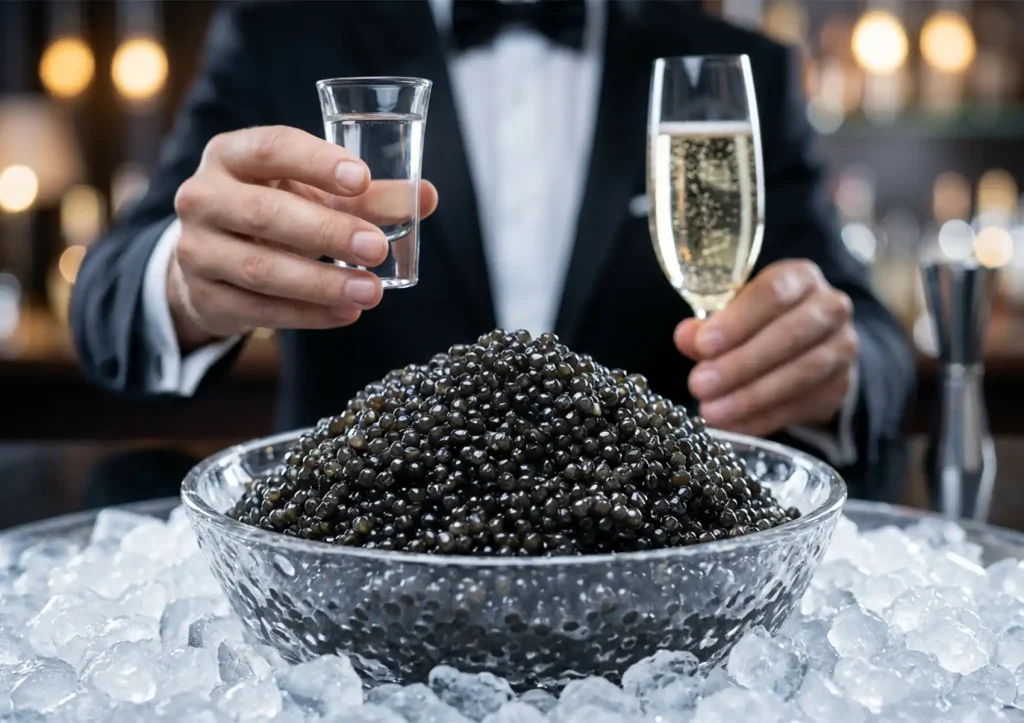
A question arises almost every time a tin of premium caviar is opened at home or set before guests at a dinner party. It is not about which mother-of-pearl spoon to use, nor about whether to serve blinis or brioche. The question is simpler, and far more contentious.
Vodka or champagne?
This is the central debate in caviar-pairing drink culture, and it has divided enthusiasts, sommeliers, and culinary historians for well over a century. Both drinks have earned their place beside the world’s most prized delicacy. Both carry the weight of tradition. And both, when chosen correctly, can transform a simple tasting into something genuinely unforgettable.
The answer, as with most things worth knowing about caviar, is not quite as straightforward as it appears. It depends on the occasion, the caviar variety in your tin, and ultimately, the experience you wish to create. At Caviar Indonesia, we believe that understanding the why behind a pairing is just as important as the pairing itself. So let us walk through both arguments with the care they deserve.
Why the Drink Matters More Than You Think
Before choosing between vodka and champagne, it helps to understand what caviar is actually asking of its companion. Premium sturgeon roe carries three dominant characteristics that define how it should be paired.
First, there is natural salinity. Even in malossol preparations, where salt is used sparingly, caviar retains a clean, oceanic brine that needs a drink that lifts rather than drowns it.
Second, there is richness. The omega-3 oils within each grain give caviar its characteristic creaminess. A poorly chosen drink leaves that richness sitting heavily on the palate, masking the very flavours you are paying to enjoy.
Third, there is textural delicacy. The pop of a caviar pearl is one of the great sensory pleasures in fine dining. A drink with aggressive tannins, pronounced sweetness, or heavy oak will compete with and ultimately overwhelm that delicate experience.
These three qualities explain why the world settled on two drinks above all others as the correct answers to the caviar-pairing question. Vodka and champagne both respect caviar’s natural complexity rather than competing with it. Everything else is secondary.
The Case for Vodka
A Tradition Rooted in the Caspian
Long before champagne became the international symbol of celebration, caviar was being enjoyed with vodka across Russia and the broader Caspian region. This is not mere historical curiosity. The pairing developed organically, over centuries, in the very places where caviar was harvested and consumed daily by those who knew it best.
The tradition endures because it works on a level of precision almost scientific. Vodka with caviar is a pairing built on one defining principle: neutrality. A properly distilled, unflavoured wheat or rye vodka introduces virtually nothing to the equation. No oak, no residual sugar, no botanical interference. Its sole function is to cleanse the palate and prepare it for the next pearl.
What Vodka Actually Does to the Palate
When served at the correct temperature, between minus six and minus ten degrees Celsius, vodka undergoes a subtle transformation. It becomes slightly viscous, almost syrupy in texture, with its alcoholic harshness muted almost entirely. This is the version of vodka that belongs beside caviar.
The cold spirit coats the mouth for just a moment, stripping away the residual salt and oil from the previous bite. The result is that every spoonful of caviar tastes like the first. There is no flavour fatigue, no heaviness that builds. The experience stays sharp and clean throughout.
For rare, high-grade caviars where every nuance counts, such as the Beluga varieties carried by Russian Caviar House and Kaluga Queen, or the delicate Sterlet from Aquatir, vodka is arguably the purist’s choice. It allows the caviar’s true character, its minerality, its subtle nuttiness, its lingering oceanic finish, to speak completely without competition.
How to Serve Vodka with Caviar
Serving vodka correctly is as important as choosing the right bottle. Several things are worth knowing before opening the tin.
Serve from the freezer. Vodka should be between -6 and -10 degrees Celsius. Anything warmer introduces an alcohol burn that fights the caviar’s delicacy.
Use a neutral, unflavoured spirit. Flavoured vodkas, whether citrus, pepper, or vanilla, interfere directly with the caviar’s flavour profile and should be saved for cocktails.
Pour small measures of around 30 to 50 millilitres. The Eastern European tradition spaces pour throughout the meal. This is a tasting ritual, not a drinking occasion.
Use small, chilled shot glasses or narrow tumblers rather than large vessels.
Follow the ritual: sip, then eat. Allow a breath between the two. The vodka should clear the palate just before the caviar arrives.
A note on quantity: for a seated caviar tasting, plan for approximately 100-150 millilitres of vodka per person over the evening, served in two to four small pours. This is sufficient to accompany the caviar without overshadowing the experience.
The Case for Champagne
The Language of Celebration
Where vodka is austere and ceremonial, champagne with caviar is expressive and festive. This is the pairing of the grand occasion, of anniversaries and New Year’s tables, of the moment you want to signal to your guests that this evening is something altogether different.
Champagne earns its place beside caviar through chemistry as much as culture. The high acidity in a well-made Brut or Extra Brut cuts cleanly through caviar’s natural oils, refreshing the palate rather than neutralising it entirely. The fine, persistent bubbles then lift the flavours gently across the tongue, amplifying the roe’s buttery depth and mineral complexity in a way that still water, still wine, or indeed vodka cannot replicate.
The effect is layered rather than precise. Where vodka creates a clean slate, champagne creates a conversation between two complex flavour profiles. When the pairing works, the result is greater than the sum of its parts.
Choosing the Right Style of Champagne
Not all champagne is equally suited to caviar, and the distinction matters considerably. The key variable is sugar content and the resulting sweetness.
Brut and Extra Brut styles are the correct choices. Their dryness respects the caviar’s salinity without introducing sweetness that would clash with the marine notes. Sweeter styles such as Demi-Sec should be avoided entirely alongside quality sturgeon roe.
Blanc de Blancs, produced entirely from Chardonnay, is widely regarded as the finest match for premium caviar. Its citrus-driven acidity and mineral backbone mirror the oceanic qualities of the roe with particular elegance. For the finest Beluga or Oscietra, a vintage Blanc de Blancs is the sommelier’s recommendation above all other styles.
Blanc de Noirs, produced from Pinot Noir, offers more body and a subtle red-fruit character. This can work beautifully with richer, nuttier caviars where a little more weight in the pairing is welcome.
A practical note: serve champagne between seven and nine degrees Celsius, not ice-cold. Too cold a temperature dulls the aromas and makes the acidity feel sharp rather than refreshing. If available, a tulip-shaped glass allows the aromas to develop more generously than a traditional narrow flute.
Which Caviars Suit Champagne Best
The champagne pairing particularly pairs well with caviars with pronounced nutty or buttery notes. Oscietra varieties from Antonius Caviar, D&A Imperial Caviar, and Kaluga Queen respond especially well to the acidity and bubble structure of a quality Blanc de Blancs. The medium grain and complex flavour profile of Oscietra invites the champagne’s layered character, creating a genuinely memorable combination.
The N25 Caviar range, known across the haute cuisine world for its four-stage quality selection process and remarkable consistency, also pairs beautifully with vintage champagne. Both the caviar and the wine are built on precision and patience, and that shared philosophy is evident at the table.
Vodka vs Champagne at a Glance
Both drinks deserve a place at the caviar table. The choice is ultimately one of intent.
Purity vs complexity. Vodka lets the caviar speak for itself. Champagne introduces an expressive dialogue between two flavour profiles.
Temperature and sensation. Ice-cold vodka delivers a sharp, cleansing reset. Champagne served at the correct chill is refreshing and buoyant.
Tradition vs occasion. Vodka leans ceremonial and is rooted in Eastern European caviar culture. Champagne leans celebratory and suits the Western luxury dining setting.
Caviar alone vs accompanied. Vodka excels when the caviar is the singular focus, served simply with perhaps a blini and a small amount of cream. Champagne thrives when caviar is paired with accompaniments such as smoked seafood, delicate garnishes, or a more composed first course.
The connoisseur vs the celebrant. Vodka rewards those who wish to understand caviar deeply and quietly. Champagne rewards those who wish to share its pleasure expansively.
The best answer: if you are serving a rare, high-grade caviar and wish every nuance to be fully appreciated, choose vodka. If you are celebrating an occasion and want the experience to feel generous, glamorous, and layered, choose champagne. If you are hosting a longer tasting with multiple varieties, consider offering both and letting your guests discover their own preferences.
Beyond the Two Classics
For those who wish to explore further, there are a few additional pairings that the modern caviar table occasionally welcomes.
Unoaked Chardonnay or Chablis can be a compelling alternative when Champagne is unavailable. The mineral backbone and clean acidity of a well-made Chablis mirror the oceanic quality of premium caviar without the distraction of oak or residual sweetness. This is a pairing for those who prefer still wine but wish to respect the caviar’s delicacy.
Japanese sake, specifically Junmai Daiginjo, has become a point of genuine interest among caviar connoisseurs in recent years. Its clean, slightly fruity character and the absence of tannins make it a thoughtful alternative, particularly with Beluga, where its gentleness matches the roe’s exceptional refinement.
Regardless of what is in the glass, the underlying principle remains consistent. The drink’s role is to serve the caviar, not to compete with it. Anything with heavy tannins, pronounced oak, excessive sweetness, or bold aromatic character will work against rather than with even the finest roe.
Choosing Your Next Caviar Pairing Drink
Whether the answer is vodka, champagne, or a thoughtful alternative, the most important thing is that the drink you choose has been considered with the same care as the caviar itself. The caviar-pairing drink you select will shape the entire table experience. It will influence not only the flavours you taste, but the memory you carry away from the evening.
At Caviar Indonesia, every tin in our collection has been selected with exactly this kind of consideration. From the precise, award-winning Beluga from the Russian Caviar House to the artisanal complexity of Kaviari Caviar, and the surgically consistent N25 range, our portfolio is built for those who take both caviar and its enjoyment seriously.
Whether you are planning an intimate dinner, a corporate occasion, or simply learning how to serve caviar properly for the first time, we are here to help you make every element of the experience right. Browse our full selection at caviar.id and, as always, do not hesitate to reach out for a personal recommendation.
Some choices deserve careful consideration. The caviar pairing drink is one of them.
A Gentle Indulgence. — caviar.id
The Perfect Drink Pairing for Siberian Sturgeon Caviar
There is a tendency, in conversations about caviar, to speak almost exclusively about Beluga. Its size, its rarity, and its price make it the obvious subject of reverence. But for those who engage with caviar regularly rather than ceremonially, it is often the Siberian Sturgeon caviar pairing that generates the most interesting discussion.
Siberian Sturgeon, known formally as Acipenser baerii, produces roe of remarkable consistency. The grains are medium-sized, typically 2 to 3 millimetres, and range in colour from deep grey to black. Where Beluga impresses through sheer opulence, and Oscietra seduces through its nutty complexity, Siberian Sturgeon earns its admirers through something quieter: balance.
At Caviar Indonesia, our Siberian Sturgeon selections include the Antonius Caviar Siberian and the Aquatir Caviar. Both sourced from producers with documented provenance and rigorous quality standards. Understanding how to pair these caviars correctly is the first step toward getting the most from them.
What is the Siberian Sturgeon Caviar Flavour Like
Before any Siberian Sturgeon caviar pairing can be made well, the flavour of the caviar itself must be properly understood. Rushing to the drink without first understanding what is in the tin is one of the most common mistakes made at the caviar table.
Siberian Sturgeon roe is characterised by a clean, fresh brininess. It carries a distinct oceanic quality without the aggressive salinity that less carefully handled caviars sometimes develop. The finish is mild, with a gentle creaminess and a faint mineral note that lingers pleasantly on the palate. It is not as buttery as a mature Oscietra, nor as intensely flavoured as Sevruga. It occupies a precise and appealing middle ground.
This flavour profile has direct implications for pairing. Because the Siberian Sturgeon’s character is clean and moderately expressive rather than bold, it is best served with drinks that bring clarity, acidity, and freshness. Anything too heavy, too sweet, or too aromatic will flatten what is genuinely a refined and interesting eating experience.
The Classic Answer: Vodka
For those approaching the pairing of Siberian Sturgeon caviar from a traditional perspective, vodka remains the natural starting point. As with all premium sturgeon caviars, ice-cold vodka functions as a palate cleanser of remarkable efficiency. Served between minus six and minus ten degrees Celsius, a quality unflavoured wheat or rye vodka introduces almost nothing to the equation. It simply resets the palate between bites, ensuring that every spoonful of Siberian caviar arrives with the full freshness of the first.
The pairing particularly suits the Aquatir Caviar, where the caviar’s cleaner, more direct flavour profile is well served by vodka’s neutrality. When the caviar is the entire point of the occasion, it is presented simply on a mother-of-pearl spoon, perhaps with a small amount of unsalted butter on warm toast. In that case, vodka is the honest choice.
What to drink with Siberian caviar in this context is therefore not a complicated question. Choose a premium, unflavoured spirit. Serve it from the freezer. Pour small measures. And let the caviar speak.
The Modern Answer: Mineral White Wine
Where the vodka pairing is rooted in tradition, the Siberian Sturgeon caviar pairing with a mineral white wine is a more contemporary consideration, and one that many experienced tasters find genuinely compelling.
The reasoning is straightforward. Siberian Sturgeon’s fresh brininess and light mineral finish respond particularly well to wines that share those characteristics. A well-made Chablis, with its flinty, sea-spray quality and high natural acidity, acts as a kind of mirror to the caviar rather than a contrast. The two flavours do not compete. They reinforce each other, creating a coherence on the palate that is quietly impressive.
An unoaked Chardonnay from Burgundy carries similar properties: high acidity, low residual sugar, and a mineral backbone that honours the oceanic quality of the roe without adding the distraction of oak or tropical fruit. Caviar and white wine pairing of this kind is not yet the first instinct of most people reaching for a bottle alongside caviar, but it is increasingly the recommendation of those who have tasted both options thoughtfully.
The key requirements for any white wine considered alongside Siberian Sturgeon caviar are consistent: no oak, no residual sweetness, high acidity, and a clean, mineral finish. Deviate from these parameters and the pairing will work against the caviar rather than with it.
What to Avoid
Knowing what not to serve is as useful as knowing what to serve. Several drinks that might seem reasonable choices will actively diminish the Siberian Sturgeon caviar pairing experience.
Sparkling wine with noticeable sweetness is a common misstep. Extra Dry and Demi-Sec champagne styles, despite their seemingly luxurious associations, introduce residual sugar that clashes with the caviar’s natural salinity. The palate receives two competing signals and struggles to elegantly resolve them.
Full-bodied red wines should be avoided entirely alongside caviar of any variety. Their tannins bind with the oils in the roe and produce a metallic, astringent sensation that ruins both the wine and the caviar simultaneously.
Heavily flavoured spirits, including gin with pronounced botanical character and flavoured vodkas of any kind, overwhelm the Siberian Sturgeon’s relatively delicate flavour. The caviar disappears behind the drink, which defeats the purpose of serving either.
Room-temperature spirits of any kind, even those that would otherwise be appropriate, are unsuitable. Temperature is not a preference in caviar pairing. It is a technical requirement.
Serving Notes for the Complete Experience
A successful Siberian Sturgeon caviar pairing is as much about the conditions of service as the drink itself. The following details make a genuine difference.
The caviar should be removed from the refrigerator five to ten minutes before serving. This allows the flavours to open slightly without the grains softening. Too cold, and the Siberian Sturgeon’s subtle mineral notes remain locked. Too warm, and the texture suffers.
The tin should rest on crushed ice throughout the tasting. The drink should be poured in modest quantities and refreshed rather than served in a single large measure. And the spoon, wherever possible, should be mother-of-pearl, bone, or wood. Metal spoons introduce a faint metallic note that the Siberian Sturgeon’s clean profile is particularly sensitive to.
For those purchasing Siberian caviar in Indonesia, whether the Antonius Caviar Siberian for an intimate home tasting or the Aquatir Caviar range for a restaurant service, the Caviar Indonesia’s team is available to advise on specific pairing recommendations based on occasion, quantity, and the other elements of your menu.
A Caviar That Rewards Attention
The Siberian Sturgeon is not the most theatrical caviar in the world. It does not arrive with the mythological weight of Beluga or the golden allure of a mature Oscietra. What it offers instead is something arguably more useful: a consistent, elegant, genuinely pleasurable eating experience that pairs beautifully with a range of carefully chosen drinks.
A well-executed pairing of Siberian sturgeon caviar is one of the most accessible entry points into serious caviar appreciation. It is the caviar that builds confidence, develops the palate, and inspires the curiosity to explore further.
The Complete Guide to Every Caviar Label Available in Indonesia
Not all caviar is the same. But even among buyers who understand that, a harder question often remains: not which variety to choose, but which label to choose.
A label is more than a name on a tin. It represents a farm, a philosophy, a set of standards applied at every stage from water quality to harvesting method to maturation time. Two tins of Oscietra from two different labels can taste noticeably different. Two Beluga selections can vary considerably in grain size, colour, and finish. Knowing the label is knowing what you are actually buying.
This caviar brand comparison covers all 12 labels available in Indonesia at caviar.id, grouped by tier, so you can find the right match for your taste, your occasion, and the impression you want to make.
Entry Tier: Accessible Excellence
These labels deliver genuine premium quality without requiring deep prior knowledge of caviar. They are the right starting point for first-time buyers and an elegant choice for occasions where caviar is one element of a larger spread.
Built on the belief that exceptional caviar should be within reach of a wider range of discerning palates, Caviar Colony is the most approachable label in the range. Clean flavour, reliable consistency, and a presentation that never feels like a compromise. A strong choice for hosts who want to introduce guests to quality caviar without overwhelming them.
Aquatir is a Moldovan producer with a long record in sustainable sturgeon farming. Its Siberian Sturgeon selection is particularly well regarded for its balanced, gently saline character. A good entry point for buyers who want European provenance at an accessible position within the premium tier.
A French label with strong name recognition across European fine food retail. Labeyrie brings a refined, food-culture sensibility to its caviar range. For buyers who appreciate French culinary heritage or are selecting a gift for someone who will recognise the name, Labeyrie carries immediate credibility.
Mid Tier: The Serious Choice
These labels represent the heart of any well-considered caviar selection. They are where most experienced buyers spend the most time, and where the differences between labels become genuinely interesting.
One of the most respected names in European aquaculture, Antonius produces multiple sturgeon varieties with a consistency that has earned it a loyal following among fine-dining professionals. Its Oscietra is particularly celebrated: nutty, complex, and long on the finish. A label that rewards attention.
China’s most internationally recognised caviar producer, Kaluga Queen, has reshaped the global market over the past two decades. Rigorous quality control, a wide variety range, and a flavour profile that sits closer to the wild caviars of the Caspian than most farmed alternatives. For buyers who want maximum flavour complexity at the mid tier, Kaluga Queen is the benchmark.
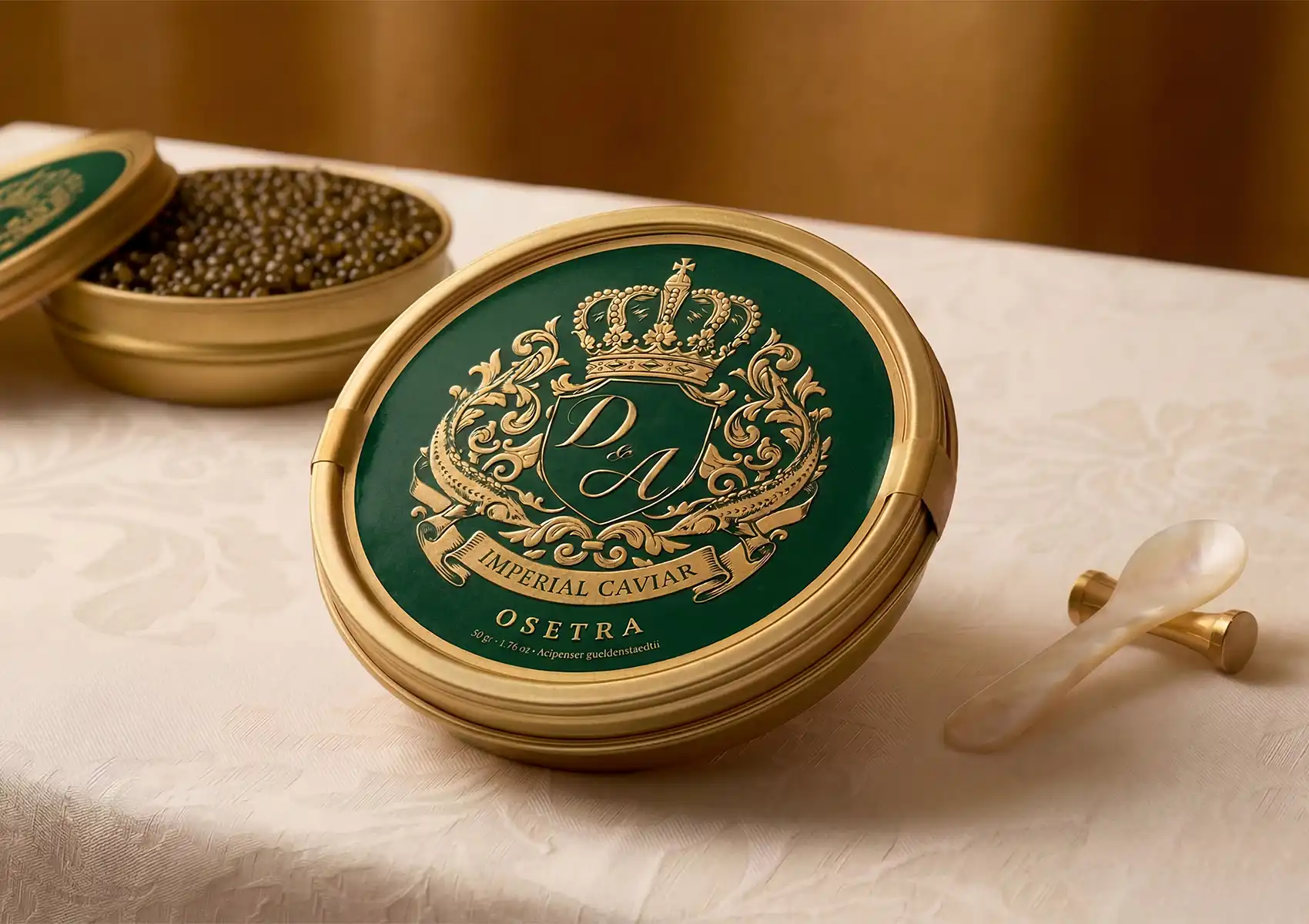
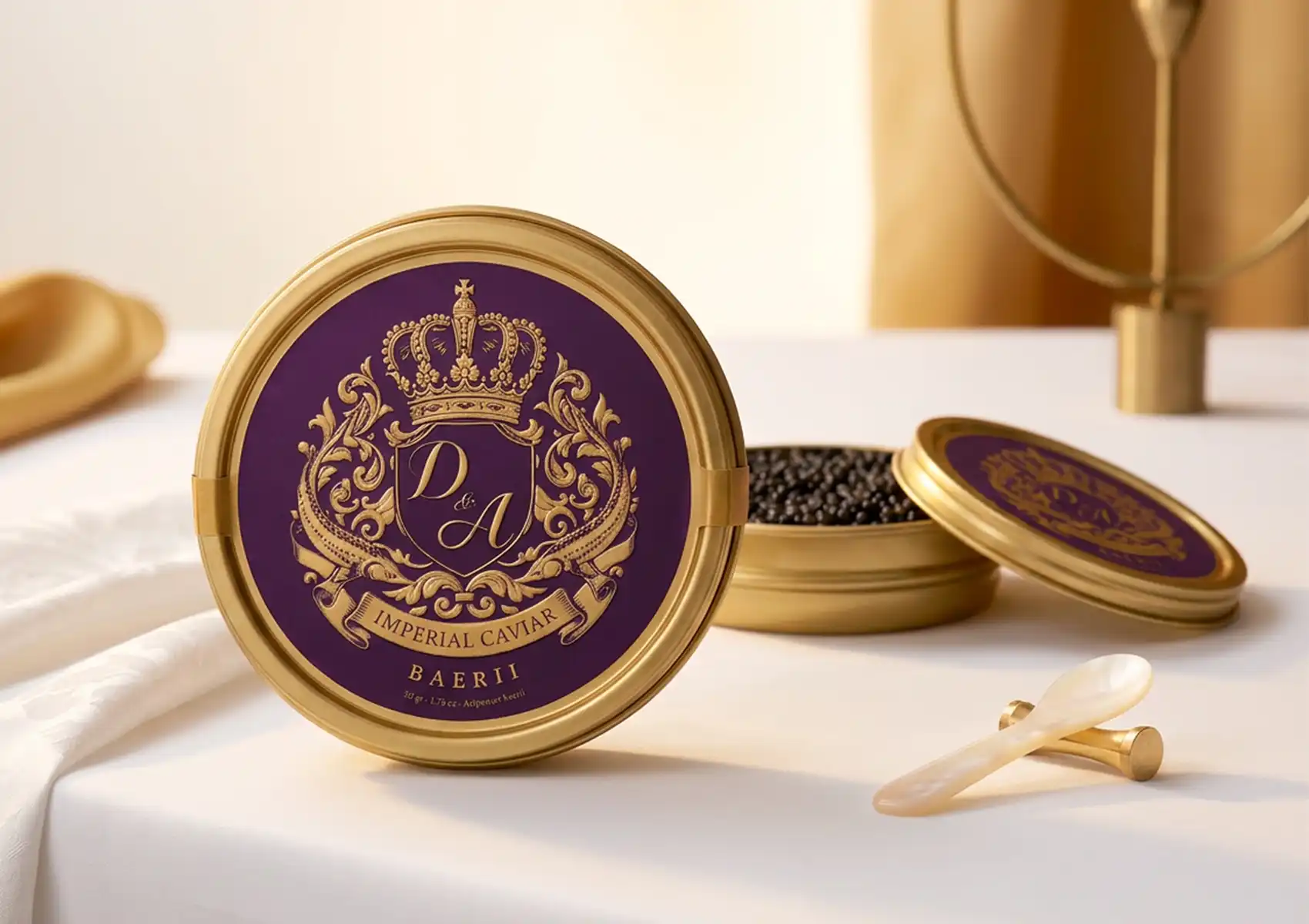
A label with a strong following among Indonesia’s fine dining establishments. D&A Imperial brings a house style that leans toward richness and depth, particularly in its Oscietra selection. A natural choice for corporate gifting and formal occasions, where the label itself makes a statement.
A French producer based in the Gironde region, Sturia is one of Europe’s most awarded caviar farms. Its approach to maturation gives its caviars a distinctively smooth, rounded character. For buyers who prioritise elegance and finesse over intensity, Sturia is consistently the right answer.
Premium Tier: For the Discerning Palate
These labels are chosen by buyers who know exactly what they are looking for and are unwilling to accept anything less. Each brings something specific to the table.
N25 has built its reputation on a four-stage quality selection process that eliminates inconsistency at every level. The result is a caviar that tastes precisely as it should, every time. For buyers who value precision and reliability above all else, and for occasions where nothing can be left to chance, N25 is the label of choice.
Refined in Paris and supplied to some of the world’s most decorated restaurants, Kaviari occupies a unique position in the market. It is not simply a producer but a selector and refiner, choosing caviars from the finest farms and finishing them to a Parisian standard. For the buyer whose palate distinguishes between very good and extraordinary, Kaviari is the answer.
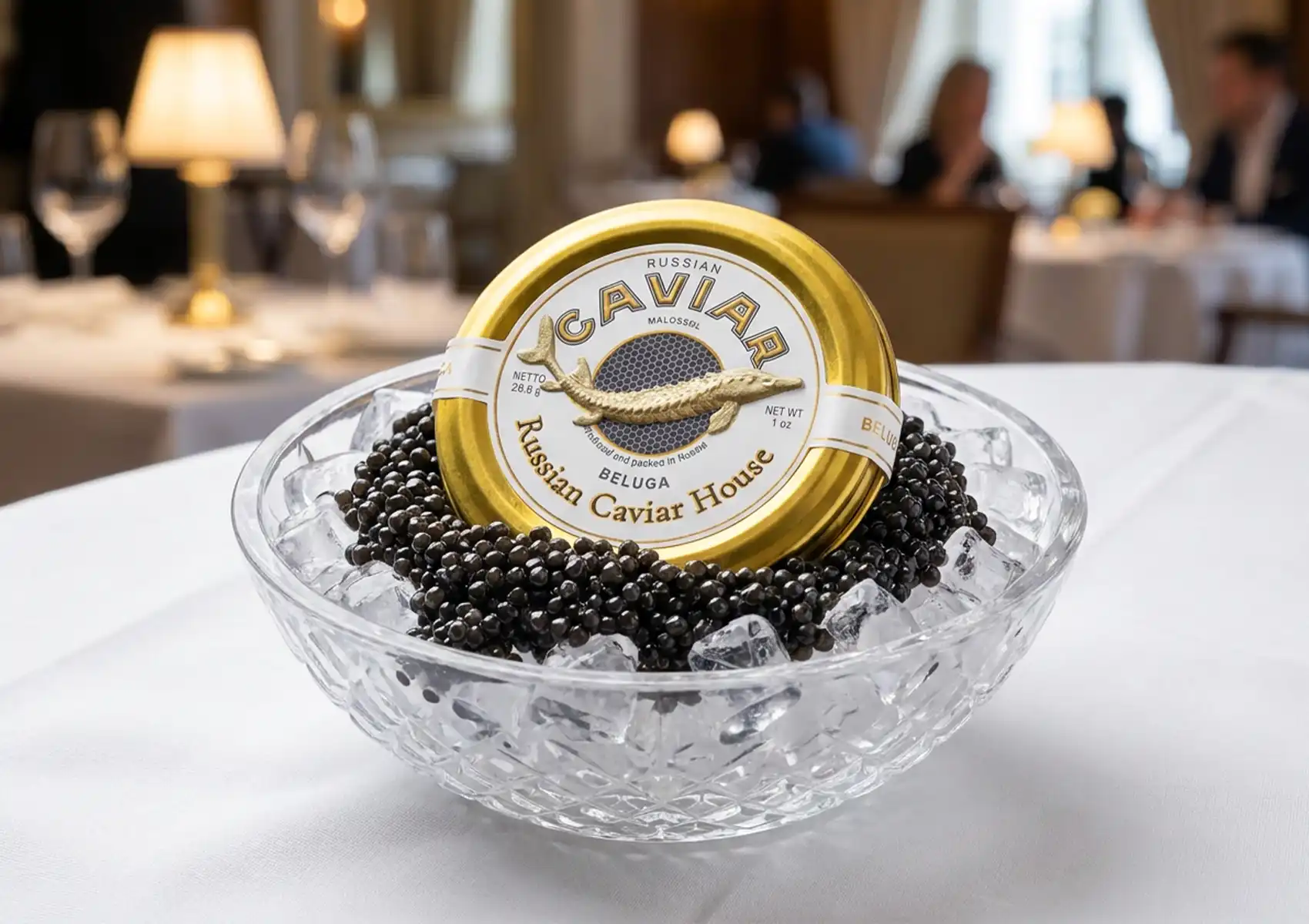
A label that has attracted significant attention from Indonesia’s top chefs for the purity and directness of its flavour profile. Russian Caviar House does not overcomplicate what it produces. It selects well, processes minimally, and lets the caviar speak. For buyers who want an unmediated, authentic caviar experience, this is the label.
Exceptional Tier: The Statement Choice
One label sits in a category of its own, reserved for occasions where the caviar is the entire point of the evening.
Supplied to Michelin-starred restaurants across Europe and Asia, PERSEUS represents the upper limit of what farmed caviar can achieve. Its Beluga selection, in particular, is produced under conditions that closely mirror the ideal environment of the wild Caspian. For hosts whose guests will recognise what is in front of them, and for gifts that need to say something that words cannot, PERSEUS is the only choice.
Italy’s most celebrated caviar producer, Calvisius, has been at the forefront of sustainable premium aquaculture for decades. Its packaging is among the most beautiful in the world, and its flavour profile, developed over generations of refinement, is one that experienced tasters return to again and again. For occasions that combine visual impact with genuine depth of flavour, Calvisius is exceptional.
Choosing Your Label
Use this caviar brand comparison as your starting point. Let the profile guide your taste and let the occasion make the final call. Every label here has earned its place, and each is available at caviar.id with nationwide delivery across Indonesia. For guidance on which label is right for your specific occasion, our team is available through the contact page or WhatsApp at any time.
How to Choose the Right Caviar for Any Dinner Party
Every great caviar moment is remembered for the same reason: someone made a decision to do it properly.
Sometimes that means a dinner party opening that silences a room. Sometimes it is a gift that says, without explanation, that the recipient is worth the extraordinary. Sometimes it is simply a quiet evening at home, a good bottle, a small tin, and the knowledge that you chose well.
Caviar in Indonesia is not yet as common as it deserves to be. The ingredients are available. The appetite for premium experiences is clearly present, particularly across Jakarta, Bali, and the country’s other centres of affluence. What is often missing is simply the knowledge of how to approach it, which varieties to choose, how to present them, what to serve alongside, and how to make the experience feel considered rather than merely expensive.
This guide covers everything, whether you are hosting ten guests, selecting a premium caviar gift, or serving it for the first time at your own table.
Start With the Selection, One Variety or Several
Before deciding on variety, it helps to know the occasion. A dinner party board calls for a different approach than a single tin chosen as a gift or a personal tasting at home. The principles that follow apply to all three, and the quantities and presentation simply scale accordingly.
The first decision any host must make when planning a caviar board is whether to serve a single, exceptional variety or to offer a curated selection of two or three different caviars. Both approaches have merit. The choice depends on the nature of the occasion and your guests’ familiarity with premium caviar.
For a focused, high-impact opening, a single exceptional variety served with one or two simple accompaniments is entirely appropriate. This approach works well when the caviar is genuinely rare or exceptional, such as a Beluga from Russian Caviar House or Kaluga Queen, and when the intention is to let a single experience speak for itself. It is also the more practical choice when the dinner party is intimate, with four to six guests, and the caviar is one element of a longer menu.
For a genuine tasting experience, a board presenting two to three different varieties allows guests to discover the differences between caviar types and producers. This approach is particularly effective for larger gatherings and for hosts whose guests include both caviar enthusiasts and curious newcomers. A well-designed Beluga and Oscietra dinner selection gives every guest something to explore, something to compare, and a natural conversation to inhabit throughout the first course.
At Caviar Indonesia, we carry all the varieties needed for both approaches. The caviar selection guide below is designed to help you choose.
The Caviar Selection Guide
When selecting caviars for a dinner party board, a useful structure is to think in three tiers: the accessible, the celebrated, and the exceptional.
The Accessible
Varieties that offer genuine quality and complexity without demanding the highest level of prior caviar experience. Siberian Sturgeon from Antonius Caviar or Aquatir is ideal here. Its clean, balanced flavour and moderate price point within the premium tier make it an elegant entry point for guests who may be encountering quality caviar for the first time. Caviar Colony also belongs in this tier, a label built on the belief that exceptional caviar should be within reach of a wider range of discerning palates.
The Celebrated
Sits at the heart of any serious caviar board. Oscietra is the natural choice, complex, distinctive, and beloved by experienced tasters. The D&A Imperial Caviar Oscietra, Kaluga Queen Oscietra, and Antonius Caviar Oscietra each offer a slightly different interpretation of the variety, and presenting two of these alongside one another creates an immediate and genuinely interesting comparison. N25 Caviar, known internationally for its four-stage quality selection and the precision of its flavour profile, also belongs in this tier.
The Exceptional
The centrepiece of the board, the variety that signals clearly that this evening is something out of the ordinary. Beluga from the Russian Caviar House, or Kaluga Queen, belongs here, as does the Kaviari Caviar range, refined in Paris and selected for the kind of palate that notices the difference between very good and extraordinary. PERSEUS Caviar, which supplies Michelin-starred restaurants globally, is another option for hosts whose guests will recognise and appreciate that provenance.
Building the Physical Board
The presentation of a caviar board is not secondary to its contents. At a dinner party, the visual impression of what is placed before guests arrives before any flavour does, and it sets the tone for everything that follows.
A caviar board for a dinner party hosted in Indonesia should observe the following principles.
Use crushed ice as the base. Caviar must be kept cold throughout the service, and crushed ice beneath the tins keeps it cold without requiring guests to rush through the experience. A wide, shallow dish or a dedicated caviar server works well. For a more informal elegance, a simple slate or marble board surrounded by ice is visually striking.
Keep the tins visible. Part of what is being communicated when premium caviar is served is provenance. The label on a Kaluga Queen or N25 tin carries meaning for guests who recognise it, and represents a quiet statement of quality for those who do not. There is no need to decant caviar from its tin for a dinner party presentation.
Provide the right spoons. Mother-of-pearl spoons are not optional for a proper service. They are functional, because metal interferes with the caviar’s flavour, and they are also beautiful. Provide one spoon per variety to prevent flavours from transferring between tins.
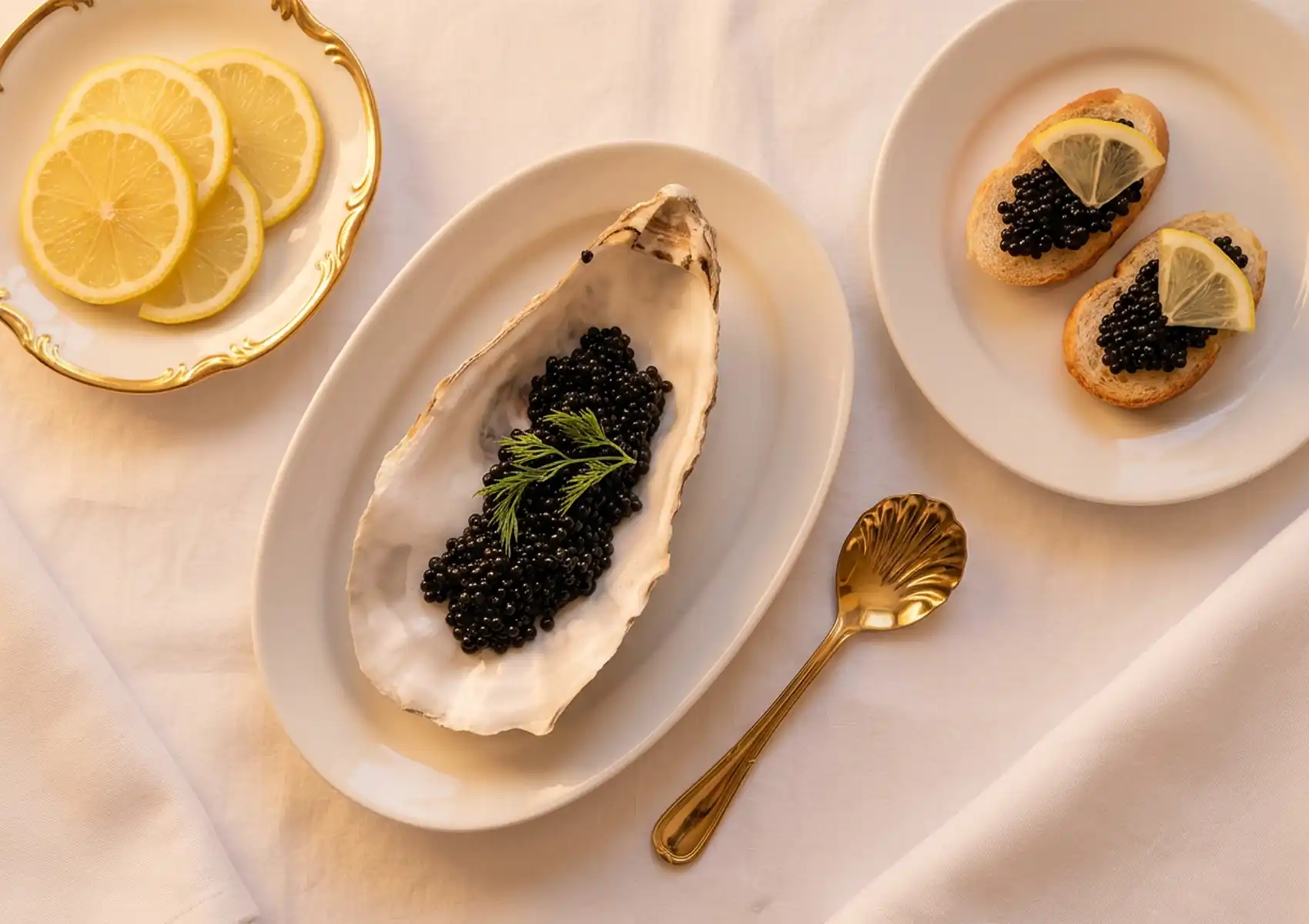
Place accompaniments deliberately. Warm blinis or lightly toasted brioche rounds form the base. A small dish of crème fraîche, another of finely chopped chives, and perhaps a few lemon wedges cover the classic range. Unsalted butter, served at room temperature, is an addition that many guests appreciate.
Quantities and How Much Caviar to Order
One of the most common uncertainties facing first-time caviar hosts is how much to order. The guiding principle is straightforward: serve enough for a genuine experience, but not so much that the occasion loses its sense of considered luxury.
For a dinner party, a standalone first course or an amuse-bouche.
Plan for approximately 10-15 grams per person. This is a proper tasting portion, enough to encounter the full flavour range of the caviar across several spoonfuls without the experience becoming overwhelming. If caviar is one element of a broader board alongside smoked salmon, oysters, or other fine ingredients, 8 to 10 grams per person is sufficient.
For a dedicated tasting, two or three varieties
Allocate 10 grams per variety per person. This gives each guest a proper impression of each caviar without fatigue setting in before the comparison is complete.
For personal enjoyment at home
A single 30g tin is the ideal starting point for one or two people. It is enough for a proper tasting, several unhurried spoonfuls, without waste. A 50g tin works well for two people who want a more generous experience.
For gifting
The 50g and 100g formats from Kaviari Caviar, Calvisius Caviar, and N25 Caviar present beautifully and are sized for a meaningful occasion. If you are selecting a premium caviar gift in Indonesia and are uncertain about the recipient’s familiarity with caviar, Siberian Sturgeon or Oscietra are the safest and most universally appreciated choices.
The Drink Pairing
No caviar guide would be complete without addressing what to pour. Champagne is the natural choice; it is celebratory, expressive, and visually appropriate for the occasion. A Brut or Extra Brut Blanc de Blancs is recommended alongside most premium caviars, particularly Oscietra and Beluga.
For hosts who wish to offer both options, placing a bottle of high-quality unflavoured vodka on ice alongside the champagne gives guests the choice of the traditional pairing and the celebratory one. This is a small detail that experienced caviar guests will notice and appreciate.
Where to Buy and How to Receive Your Order
For hosts planning a caviar event in Bali, Jakarta, or anywhere across Indonesia, caviar.id offers nationwide delivery with cold-chain packaging that maintains the required temperature integrity throughout transit. All orders are processed within one to two business days, and shipment tracking is provided from dispatch to arrival.
For those planning ahead for a specific occasion, whether an intimate anniversary dinner, a corporate gathering, or a gift for someone who deserves something extraordinary, reaching out through the caviar.id, contact page or WhatsApp line in advance allows the team to advise on selection, quantities, and timing to ensure that everything arrives in perfect condition.
To buy caviar online in Indonesia with confidence, every product at caviar.id carries the assurance of guaranteed authenticity, verified provenance, and the quality standards that the brand has been built on.
The Moment You Will Be Remembered For
The moment a properly chosen caviar arrives at the table, or is unwrapped as a gift, or opened quietly at home on a Tuesday that deserves to be something more, it communicates something that very few purchases can. That care was taken. That the ordinary was refused.
Whether you are hosting, gifting, or simply treating yourself, caviar.id is here to make the decision straightforward, well-informed, and genuinely worth it.
Explore the full selection at caviar.id. For personal assistance with your order, our team is available through the contact page or WhatsApp at any time.
How to Buy and Eat Russian Caviar in Indonesia
When you think of luxury food, caviar almost certainly comes to mind. Those delicate, glistening pearls have been celebrated for centuries, and at the heart of this tradition lies Russian caviar.
But what exactly makes Russian caviar so special? Why do connoisseurs around the world, including here in Indonesia, seek it out? And most importantly, how can you enjoy it the authentic Russian way?
This guide answers all your questions. From the history and types of Russian caviar to serving etiquette and where to buy authentic caviar in Indonesia, consider this your complete resource.
What Is Russian Caviar? (And What Makes It Special?)
Let us start with the most common question.
Russian caviar refers to the salt-cured eggs (roe) of sturgeon species native to the Caspian Sea region, an area historically connected to Russia and Iran. The most prized species include:
Species
Caviar Name
Characteristics
Beluga (Huso huso)
Beluga Caviar
Largest eggs (3-4mm), buttery, creamy, light grey to charcoal
Russian Sturgeon (Acipenser gueldenstaedtii)
Oscietra / Osetra
Medium eggs, firm texture, nutty, briny, golden to brown
Siberian Sturgeon (Acipenser baerii)
Baerii Caviar
Small dark eggs, earthy, bold sea-breeze flavour
Stellate Sturgeon (Acipenser stellatus)
Sevruga Caviar
Small grey eggs, intense flavour, salty profile
What makes Russian caviar special?
Three things set Russian caviar apart from other fish roe:
The Sturgeon Itself: Sturgeon are ancient fish that take 8 to 20 years to mature. This long waiting period concentrates flavour and creates that legendary creamy, nutty taste.
The Malossol Method: Russian tradition perfected the “Malossol” (little salt) curing process, using only 3-5% salt. This preserves the delicate flavour instead of masking it.
Cultural Heritage: For centuries, Russian tsars served caviar at royal banquets. That prestige carries through to today. When you eat Russian caviar, you connect with a rich history.
True caviar comes exclusively from sturgeon. While other fish eggs (salmon, trout, lumpfish) are delicious, they are technically “roe,” not caviar.
Why Is Russian Caviar So Expensive?
This is one of the most asked questions on Google. The answer has four layers:
1. Time (The Longest Waiting Period)
A female Beluga sturgeon takes 18 to 20 years to produce harvestable eggs. Russian sturgeon (Oscietra) takes 10 to 12 years to reach maturity. During these decades, farmers must feed, monitor, and care for each fish daily.
2. Scarcity and Regulation
Wild sturgeon are critically endangered. Since the 2000s, CITES (the Convention on International Trade in Endangered Species) has banned the capture of wild sturgeon. All legal caviar today comes from sustainable farms that must meet strict regulations, maintain detailed records, and undergo regular inspections.
3. Labour-Intensive Processing
Each step, from ultrasound monitoring to hand-sieving the eggs to the delicate Malossol salting, requires skilled craftsmen. Broken eggs lower the grade and value.
4. Limited Yield
A single sturgeon produces only 15 to 20 per cent of its body weight in eggs. After two decades of waiting, that is a small harvest.
In short, you are not paying just for fish eggs. You are paying for 20 years of patience, international certification, master craftsmanship, and a flavour experience that cannot be rushed.
What Is Russian Caviar Called?
You will encounter several names for Russian caviar, depending on the sturgeon species:
Common Name
Also Called
Notes
Beluga
“King of Caviar”
Largest, creamiest, rarest
Oscietra
Osetra, Russian Caviar
Most popular, nutty and firm
Sevruga
Starry Sturgeon Caviar
Small eggs, intense flavour
Baerii
Siberian Sturgeon Caviar
Earthy, bold, great for beginners
Note: Some products labelled “Russian Caviar” may come from hybrid sturgeon or farms outside Russia (including Europe, China, and the United States). Always check the species and origin.
Where Does Russian Caviar Come From Now?
Historically, Russian caviar came exclusively from the Caspian Sea, shared by Russia, Iran, Kazakhstan, Azerbaijan, and Turkmenistan.
Today, due to conservation laws, almost all caviar comes from sustainable sturgeon farms worldwide. The best farms, like those partnered with Caviar Indonesia, are located in:
France (Sturia, Kaviari)
Italy (Calvisius)
Poland (Antonius)
Russia (Russian Caviar House)
China (Kaluga Queen)
These farms follow strict environmental and animal welfare standards, ensuring you receive authentic, traceable, and delicious caviar.
Today, authentic Russian caviar refers to the specific heritage species (such as Russian Oscietra or Siberian Baerii) and the traditional Malossol curing method. To protect endangered wild populations, almost all legal caviar now comes from sustainable sturgeon farms worldwide. Even if the fish is ethically raised in France or Italy, the bloodline and the artisanal preparation remain strictly Russian.
Types of Russian Caviar: A Quick Comparison
If you are new to the world of caviar, understanding the distinct characteristics of each sturgeon species is essential. Here is a quick guide to how the most celebrated Russian varieties compare
Caviar Type
Pearl Size and Colour
Flavor Profile
Perfect For
Beluga
Large (3 to 4mm), light to dark grey
Creamy, buttery, and incredibly delicate
Ultimate luxury and milestone celebrations
Oscietra
Medium (2.5 to 3mm), golden to dark brown
Nutty, firm texture, with a refined brine
Connoisseurs and elegant dinner parties
Sevruga
Small, pearlescent grey
Intense, robust, and bold sea flavour
Experienced palates and traditional pairings
Baerii
Small to medium, dark brown to black
Earthy, sweet, with a balanced sea breeze
Beginners and creative culinary pairings
How to Eat Caviar Russian Style
The Russian tradition is not about pretension. It is about honouring the caviar’s delicate flavour. Here is how to do it right.
The Right Utensils: No Metal
Never use a metal spoon. Silver or stainless steel reacts with the caviar, creating a bitter, metallic aftertaste.
Use spoons made from:
Mother-of-pearl (the traditional choice)
Bone or horn
Glass
Plastic (in a pinch)
The Perfect Temperature
Caviar must be served very cold, ideally between 0°C and 3°C. As it warms up, its flavour deteriorates.
How to serve: Nestle the unopened tin in a bowl of crushed ice. Open it 15 to 20 minutes before serving to let the flavours “wake up,” but keep it on ice throughout.
Classic Russian Accompaniments
The traditional Russian spread includes:
Category
Examples
Role
Base
Blinis (small pancakes), toast points, dark rye bread
Neutral canvas
Creamy element
Crème fraîche, unsalted butter
Adds richness
Garnishes
Finely chopped hard-boiled egg (whites and yolks separated), minced red onion, fresh chives or dill
Texture and contrast
How to build the perfect bite:
Take a blini or toast point
Add a thin layer of unsalted butter or a small dollop of crème fraîche
Sprinkle a pinch of chopped egg or onion (optional)
Top with a small spoonful of caviar
Enjoy without chewing. Press the pearls against your palate with your tongue.
The “Caviar Bump” (Pure Tasting)
To experience caviar’s unadulterated flavour, try the caviar bump:
Place a small amount of caviar on the back of your hand, between your thumb and index finger
Let it warm for just a moment
Slurp it directly
This method, popularised by Russian tradition, allows you to taste the caviar’s true profile without any accompaniments.
How to Serve Russian Caviar (The Complete Guide)
Hosting a caviar tasting at home is easier than you think. Here is your checklist:
What You Need
Caviar (30-50g per person if main appetiser, 15g if garnish)
Russian caviar comes from the sturgeon species native to the Caspian Sea. Its special qualities include an exceptionally buttery, nutty, or briny flavour (depending on species), a delicate “pop” texture, and centuries of cultural prestige from Russian tsars.
Why is Russian caviar so expensive?
Because sturgeon take 10 to 20 years to produce eggs, strict CITES regulations limit supply, and the Malossol curing process requires skilled craftsmanship. You are paying for decades of patience and quality, not just the eggs.
What is Russian caviar called?
Depending on the sturgeon species, it is called Beluga, Oscietra (or Osetra), Sevruga, or Baerii (Siberian). All are true Russian caviar varieties.
How to eat caviar Russian style?
Serve chilled on a bed of ice. Use a mother-of-pearl spoon (never a metal one). Pair with blinis, crème fraîche, and finely chopped egg. Press the pearls against your palate with your tongue. Do not chew. Drink ice-cold vodka or dry Champagne.
How to serve Russian caviar at home?
Place the tin on crushed ice. Open 15 to 20 minutes before serving. Provide non-metal spoons. Arrange blinis, crème fraîche, chopped egg, and onion in small bowls. Let guests build their own bites.
Where does Russian caviar come from today?
Historically, from the Caspian Sea. Today, due to conservation laws, almost all Russian caviar comes from sustainable sturgeon farms in France, Italy, Poland, Russia, and China. Caviar Indonesia partners only with these certified farms.
Can I buy authentic Russian caviar in Bali?
Yes. Caviar Indonesia delivers chilled, authentic Russian caviar (Beluga, Oscietra, Baerii, and Sterlet) directly to your door in Bali and Jakarta.
How should I store caviar at home?
Keep unopened tins in the coldest part of your refrigerator, not the door. Once opened, consume within 48 hours. Press plastic wrap directly onto the caviar’s surface, replace the lid, and return to the fridge. Never freeze.
Is Russian caviar healthy?
Yes. Caviar is rich in omega-3 fatty acids, high-quality protein, Vitamin B12, and selenium. It is a nutrient-dense food that supports heart and brain health.
What is the difference between black caviar and golden caviar?
Colour depends on the specific sturgeon species and its diet. Golden caviar often comes from rare heritage species like the Golden Oscietra, or from albino variants. It is extremely rare and highly sought after, delivering a nutty flavour that rivals the finest traditional black caviar.
Final Thoughts
Russian caviar is more than a luxury ingredient. It is a taste of history, patience, and masterful craftsmanship. From the ancient sturgeon of the Caspian Sea to your table in Indonesia, every pearl represents decades of care.
Now that you know how to eat caviar Russian style, why it is so expensive, and where to buy authentic Russian caviar, you are ready to enjoy it with confidence.
Why Is Beluga Caviar So Expensive? A Deep Look at the King of Caviar
Luxury is measured by rarity. In the fine dining world, few ingredients command as much respect, curiosity, and price as Beluga caviar. You have likely seen those large, slate grey pearls served at exclusive events in Jakarta or Bali. You may have wondered why a single tin can cost as much as a luxury handbag.
So let us answer the question directly. Why is Beluga caviar so expensive?
The answer has four layers. First, the Beluga sturgeon takes nearly two decades to mature. Second, strict international regulations limit its trade. Third, the flavour and texture are unmatched by any other caviar. Fourth, the processing requires expert hands and extreme care.
Let us break down each of these factors so you understand exactly why the price of Beluga caviar is fully justified.
What Makes Beluga Caviar So Special?
Before we dive into the price, let us answer the most common question. What makes Beluga caviar so special compared to other caviars?
Pure Beluga caviar is instantly recognisable to the trained eye. The eggs are the largest of any sturgeon species, measuring 3 to 4 millimetres in diameter. That is roughly the size of a small pea. But size is only the beginning.
Beluga’s colour ranges from light pearl grey to deep charcoal. Generally, the lighter the grey, the older the fish and the more prestigious the harvest. These eggs have an exceptionally thin and delicate membrane, sometimes described as “silk-like” or “butterfly wing” thin.
When you place Beluga on your tongue, the experience is different from any other caviar. The egg membrane bursts with almost no pressure. What follows is a creamy, buttery sensation that coats your mouth. The flavour is mild, clean, and nuanced with hints of hazelnut and a long, smooth finish. There is no aggressive saltiness or fishy aftertaste.
This is not food that announces itself loudly. Beluga whispers. And that subtlety is the highest form of culinary refinement.
Other caviars have their own virtues. Oscietra offers a firmer texture and nutty flavour. Sevruga is more intense and saline. But for pure, creamy indulgence, Beluga stands alone. That is what makes Beluga caviar so special.
The Longest Waiting Period in the Caviar World
The primary reason Beluga commands the highest price is simple. Time.
Unlike smaller sturgeon species that mature in 7 to 8 years, the female Beluga sturgeon (scientific name Huso huso) takes between 18 and 20 years to reach sexual maturity. That is nearly two decades of feeding, monitoring, and caring for a single fish before she produces a single harvestable egg.
Think about that for a moment. A farmer who starts raising Beluga sturgeon today will not see any return on that investment for twenty years. During that time, the fish require clean water, natural food, veterinary care, and protection from disease. The cost of feeding a fish that can grow up to 1000 kilograms over two decades is enormous.
And after all those years of waiting, the fish produces only a limited amount of roe. A single Beluga sturgeon yields approximately 15 to 20 per cent of her body weight in eggs. That is a small harvest for twenty years of investment.
This extreme maturation period is why so few farms choose to raise pure Beluga. They opt for faster-growing species, such as Siberian or hybrid sturgeon. But for those who want the king of caviar, the waiting is non-negotiable.
Now you understand why is beluga caviar so expensive. The waiting period alone sets it apart from every other caviar.
Scarcity and Conservation Rules
The Beluga sturgeon is now an endangered species in the wild. Decades of overfishing, poaching, and habitat destruction in the Caspian Sea and Black Sea have devastated wild populations.
Because of this, international trade in wild Beluga caviar has been banned for many years. The Convention on International Trade in Endangered Species (CITES) strictly regulates all Beluga caviar. Every single tin of legal Beluga caviar must carry a CITES label with a unique code. For pure Huso huso, the code includes the letters “HUS.”
What does this mean for you? It means the only Beluga caviar available on the legal market comes from farm-raised sturgeon. These farms must meet rigorous standards, maintain detailed records, and submit to regular inspections. The cost of compliance adds directly to the final price.
Furthermore, export quotas are extremely limited. Even for farmed Beluga, the annual quota is tightly controlled. When supply is this restricted and global demand from luxury markets remains high, basic economics dictates a premium price.
Are Fish Killed When Harvesting Caviar
This is a question many people ask, and it deserves a clear answer. The answer is: it depends on the method used.
The traditional method, still used by many premium caviar producers, involves humanely euthanising the fish before removing the roe sacs. The fish is first rendered unconscious, typically by cold water or a gentle electrical current, ensuring a stress-free, humane process. This method is preferred by many master caviar makers because it best preserves the integrity, texture, and flavour of the delicate eggs.
However, a no-kill method is also available today. Developed by German scientist Angela Köhler, this technique involves injecting the female sturgeon with a protein that facilitates detachment of the roe from the egg sac. The eggs are then gently massaged out of the fish naturally, allowing the sturgeon to live on and produce caviar again in future years. There is also a C-section method using a small incision.
The no-kill method is more humane and sustainable, but it requires even greater skill and can sometimes compromise egg consistency. Many premium producers, especially for high-end Beluga, still prefer the traditional method because it guarantees the highest quality.
At Caviar Indonesia, we work only with farms that follow strict animal welfare standards, whether they use traditional or no-kill methods.
The Art of Processing Beluga
Even after two decades of waiting, the work is not finished. Beluga caviar requires the most careful handling of all sturgeon varieties because the eggs are so fragile.
The traditional Malossol method (meaning “low salt” in Russian) uses only a small amount of salt, typically 3-5 per cent. This minimal salting preserves the natural flavour without masking it. But it also means the caviar is more perishable and requires constant temperature control.
The extraction process must be done by hand. The roe sacs are removed, and the eggs are gently sieved to separate them from the membrane. Any broken egg lowers the grade and the value. The eggs are then rinsed, drained, and salted by a master caviar maker who has trained for years.
After packaging in metal tins, Beluga caviar undergoes a maturation period of several months at temperatures between 0 °C and 3 °C. During this rest, the salt distributes evenly, and the flavours deepen. Some premium Beluga matures for up to a year before it is ready for sale.
Every step requires expertise, patience, and precision. There are no shortcuts.
Why Do Rich People Eat Caviar?
This question touches on the cultural and social aspects of caviar. Why do wealthy people around the world choose caviar as their celebratory food of choice?
The answer lies in three things: rarity, history, and experience.
Caviar has been associated with royalty and nobility for centuries. Russian tsars, Persian shahs, and European aristocrats all served caviar at their most important banquets. That historical prestige has carried through to the modern day. When you serve Beluga caviar, you connect with a long tradition of refined taste.
Beyond history, caviar represents the ultimate expression of “you get what you pay for.” Wealthy individuals value time above almost everything else. Beluga caviar represents twenty years of patient waiting. It represents a product that cannot be rushed or mass-produced. In a world of instant gratification, caviar is a delicious reminder that some things are worth waiting for.
Finally, the experience itself is unique. The delicate pop of the eggs, the creamy melt on the tongue, the subtle nutty finish, there is nothing else like it. For those who can afford the best, Beluga caviar delivers an eating experience that matches its price.
Beluga Versus Hybrids and Other Caviars
You should know that not everything labelled “Beluga” is pure Huso huso. Some products come from hybrid sturgeon, such as a cross between Beluga and Siberian sturgeon. These hybrids mature faster, typically in 7 to 10 years, and produce good caviar. But it is not true.
There is also the Kaluga sturgeon (Huso Dauricus) from China, which is sometimes called “river Beluga.” Kaluga produces excellent caviar with large eggs and a rich flavour. However, it is a different species with its own distinct characteristics.
Pure Beluga caviar has a distinct “eye” or centre in each egg. The eggs are larger, and the membrane is thinner. The flavour is creamier and more delicate. The price difference reflects these distinctions.
For the true connoisseur, only pure Beluga delivers the complete experience. For those new to caviar or seeking a more accessible entry point, hybrids or Oscietra offer excellent value.
The Cost of Documentation and Legal Trade
One factor many people do not consider is the administrative costs of the legal cannabis trade. Unlike almost any other food product, caviar requires extensive documentation. Every legal transaction of Beluga caviar must be accompanied by CITES permits that trace the product from the farm to the end consumer.
This system was put in place to prevent illegal fishing and to ensure that the trade does not threaten wild sturgeon populations. While the system is effective, it is also expensive to maintain. Farms must pay for inspections, permits, and record keeping. These costs are passed on to the consumer.
Is Beluga Caviar Worth the Price
That depends on what you value. If you are looking for the rarest, most labour-intensive, and most delicately flavoured caviar in the world, then yes. The price of Beluga caviar is fully justified by everything that goes into producing it.
You are not just paying for fish eggs. You are paying for twenty years of patient farming. You are paying for international certification and sustainable practices. You are paying for the hands of master craftsmen who handle each egg with care. And you are paying for a flavour experience that cannot be replicated by any other food.
For life’s most significant milestones, a wedding anniversary, a New Year’s Eve celebration, a business deal closed, a birthday for someone who has everything, Beluga makes a statement that no other delicacy can match.
How to Enjoy Beluga Caviar Properly
Because Beluga is so delicate, how you serve it matters greatly.
Always keep Beluga chilled between 2°C and 0°C until serving. Never freeze it, as ice crystals will rupture the thin membranes. Use a mother-of-pearl spoon, not metal, because metal can impart a metallic taste to the eggs.
Serve Beluga simply. On its own, on a small blini, or with a dot of crème fraîche. Avoid strong flavours that will overwhelm the subtle taste. Classic pairings include vintage Champagne, specifically Blanc de Blancs, or premium Russian vodka served ice cold.
Where to Find Authentic Beluga in Indonesia
Given the high price and strict regulations, choosing a trusted supplier is essential. The market can sometimes be flooded with “Beluga hybrids” or mislabeled products. The true connoisseur seeks the pure Huso huso lineage.
At Caviar Indonesia, we source only pure Beluga caviar (Huso huso) from farms certified under CITES. Every tin we sell comes with proper documentation and has been handled in a continuous cold chain from the farm to your table.
We serve Indonesia’s finest restaurants, hotels, and private clients. Whether you are in Jakarta, Bali, Surabaya, or Bandung, we deliver your caviar in specialised cold-chain packaging to ensure it arrives in perfect condition.
Conclusion
Beluga caviar is the undisputed king of sturgeon roe. Its price reflects two decades of patience, strict conservation laws, unmatched quality, and masterful craftsmanship. For those who understand and appreciate these factors, Beluga is not an expense. It is an experience.
So why is beluga caviar so expensive? Two decades of patience, strict conservation laws, unmatched quality, and masterful craftsmanship. Now you know. And now you can taste it. Visit Caviar Indonesia today to explore our selection of authentic, CITES-certified Beluga caviar. Every tin is sourced directly from trusted farms and delivered to your door in perfect condition. Shop Beluga Caviar at Caviar Indonesia.
Frequently Asked Questions
How long does it take to produce Beluga caviar from start to finish? From the birth of the female sturgeon to the finished tin, the process takes 18 to 20 years. The hands-on processing takes only a few days, but the waiting period defines the product.
What is the difference between Beluga and Oscietra caviar? Beluga has larger eggs, a thinner membrane, and a creamier, milder flavour. Oscietra has smaller, firmer eggs with a more pronounced nutty taste.
Is all Beluga caviar legal? No. Legal Beluga caviar must come from farm-raised sturgeon and carry CITES certification. Wild Beluga caviar is banned from international trade. Always buy from a reputable supplier who can show you the CITES label on the tin.
How can I tell if I am buying pure Beluga or a hybrid? Pure Beluga (Huso huso) has larger eggs, a thinner skin, and a distinct “eye” visible in the centre of each pearl. The CITES code on the tin will include “HUS.” Hybrids have a different code.
What is the best way to store Beluga caviar at home? Keep it in the coldest part of your refrigerator, ideally between 2°C and 0°C. Do not freeze. Once opened, consume within 48 hours for the best flavour.
Does Beluga caviar taste fishy? Not at all. High-quality Beluga has a clean, creamy, buttery taste with subtle nutty notes. There is no strong fish flavour.
What is the difference between Beluga and Kaluga caviar? Beluga comes from Huso huso, while Kaluga comes from Huso dauricus. Both produce large eggs, but Kaluga eggs are often firmer and have a more intense flavour. Pure Beluga is generally rarer and more expensive.
How Is Caviar Made? Complete Guide from Sturgeon to Serving
Caviar is more than just a luxury ingredient. It is the result of a meticulous, centuries-old process that requires patience, precision, and a deep respect for the sturgeon. Understanding how caviar is made allows you to appreciate the craftsmanship behind every pearl.
The journey begins long before the harvest, spanning years of careful aquaculture and ending with the delicate art of salt curing.
What Is Caviar and Which Fish Does It Come From?
According to international food standards like the Codex Alimentarius, only the salted eggs (roe) from fish of the sturgeon family (Acipenseridae) can be called “real caviar.” While there are many types of fish roe available today, from salmon, trout, lumpfish, and paddlefish, true caviar comes exclusively from sturgeon.
This distinction matters because sturgeon are ancient fish. They have been swimming in our rivers and seas since the time of the dinosaurs. Their eggs carry a unique flavour profile: a slightly salty taste with nutty nuances and a fine, creamy melt that no substitute can truly replicate.
The most important sturgeon species for premium caviar production include the Beluga (Huso huso), the Russian sturgeon (Acipenser gueldenstaedtii), which produces Oscietra caviar, and the Siberian sturgeon (Acipenser baerii). Each species gives you a different grain size, colour, and flavour intensity.
How is Caviar Made Step by Step?
Step 1: Raising the Sturgeon with Patience and Care
The caviar-making process begins years before any egg reaches your table. Sturgeon are not fast-growing fish. A female sturgeon can take anywhere from 6 to 12 years, sometimes even longer, to reach sexual maturity and produce harvestable roe.
During this long growth period, the fish are raised in carefully controlled environments. Farmers monitor water quality, temperature, and oxygen levels daily. The sturgeon are fed a natural, species-appropriate diet to ensure their health and the quality of their eggs. This lengthy investment of time is the first reason why caviar is rare and valuable. You are not paying for a quick harvest. You are paying for over a decade of patient, expert care.
Step 2: Selection and Extraction of the Roe
How do farmers know when a female sturgeon is ready? They do not guess. Modern farms use technology to look inside the fish without harming them. High-frequency ultrasound scans allow experts to assess the size and quality of the roe sacs. In some cases, a tiny biopsy may be taken to refine the analysis.
Once the eggs are deemed perfect, the extraction process begins. The traditional method, still used by many producers, involves humanely euthanising the fish to remove the roe sacs. However, you may have heard about no-kill methods.
Today, some farms use a “milking” technique. The female is injected with a special protein that helps detach the roe from the sac. The eggs are then gently massaged out of the fish naturally, allowing the sturgeon to live on and produce caviar again in future years. There is also a C-section method using a small incision. While these no-kill methods are more humane and sustainable, they require even greater skill and can sometimes compromise egg consistency. Many premium producers still prefer the traditional method because it best preserves the integrity and texture of the caviar.
Step 3: Rinsing and Draining for Purity
Once the roe sacs are removed, the real craftsmanship begins. The eggs are carefully passed through a mesh sieve. This separates the individual pearls from the surrounding membrane tissue. The goal is to keep every single egg intact because broken eggs affect both appearance and texture.
The loose eggs are then rinsed with clean, cold water to remove any remaining impurities. This step is followed by draining, which removes excess moisture while keeping the eggs firm and elastic.
Step 4: The Malossol Salting Process
Salting is what distinguishes great caviar from mediocre caviar. The traditional method is called Malossol, which means “low salt” in Russian. The caviar maker adds a precise, minimal amount of salt, usually between 3% and 5%, to the eggs.
Why is this step so critical? Salt does three things. First, it preserves the roe. Second, it enhances the natural flavour. Third, it affects the final texture. Too much salt ruins the delicate taste. Too little salt does not properly preserve the eggs. Master caviar makers guard their salting recipes like state secrets. This light salting allows the true taste of the sturgeon’s eggs to shine through without being masked by brine.
Step 5: Grading and Quality Selection
Not all caviar from the same fish is equal. After salting, the caviar is carefully graded. Producers look at several key factors:
Grain size: Larger eggs are generally more prized, especially for Beluga caviar.
Colour consistency: Premium caviar has uniform colour, ranging from light silver to deep grey or golden brown, depending on the species.
Texture firmness: The eggs should be intact, firm, and separate.
Aroma and flavour: There should be no fishy smell, only a clean, subtle scent of the sea with buttery or nutty notes.
Higher-grade caviar is packed separately and commands a higher price. The lower grades might be used for pressed caviar or other products. At Caviar Indonesia, our suppliers select only caviar that meets strict international quality standards before offering it to you.
Step 6: Packaging in Original Tins
After grading, the caviar is carefully weighed and placed into metal tins. These are often called “original tins.” The tins are filled, the lids are gently pressed down to remove air pockets, and the tins are sealed.
This is not just about packaging. The tin plays a role in the final flavour development. Airtight metal allows the caviar to rest and mature without outside contamination.
Step 7: Maturation The Hidden Step That Builds Flavour
Here is a step that many people do not know about. Freshly packed caviar is not ready to eat immediately. It needs to rest. The sealed tins are placed in a cold room at around 0°C to 3°C.
This resting period, called maturation, can last anywhere from 3 to 4 months for some caviars and up to 14 months for premium Oscietra varieties. During this time, the salt distributes evenly throughout the eggs. The natural oils (called exudate) are absorbed, and the flavour becomes more complex and balanced. Some producers even turn the tins over weekly to ensure even maturation. This patience is rewarded with a deeper, more harmonious taste.
Step 8: Cold Storage and Final Delivery
Caviar is highly perishable. It must remain refrigerated at controlled temperatures from the moment it is packed until you open the tin at home. Reliable suppliers use temperature-controlled storage and insulated shipping containers.
When you order through Caviar Indonesia, you receive products that have been handled in accordance with these strict international guidelines. The cold chain is never broken, ensuring that the texture and flavour are exactly as the producer intended.
How Long Does It Really Take to Make Caviar?
If you count from the birth of the sturgeon to the finished tin on your table, the process takes between 8 and 15 years. Most of that time is the fish growing to maturity. The actual hands-on production from harvest to packaging takes only a few hours. But the years of waiting and the weeks of maturation are what give caviar its legendary status.
A Note on Caviar Substitutes and Sustainability
You may see products labelled as “caviar” that come from salmon, trout, or lumpfish. These are not true caviar. They are roe substitutes. Some modern products even use seaweed or algae to create vegan caviar alternatives. While these can be interesting, they do not offer the complex, creamy, nutty flavour of real sturgeon caviar.
Regarding sustainability, wild sturgeon are critically endangered. All reputable caviar today comes from farm-raised sturgeon. This protects the wild populations while allowing you to enjoy this delicacy with a clear conscience. Many farms, like the ones we partner with, follow strict environmental standards.
Why Understanding This Process Matters
Knowing how caviar is made changes how you experience it. You are not just eating fish eggs. You are tasting over a decade of patience, generations of craftsmanship, and a precise sequence of steps, each performed by hand. Every pearl on your spoon represents a small miracle of nature and human skill.
When you choose a trusted supplier like Caviar Indonesia, you are ensuring that every step from the sturgeon farm to your home has been handled with care and expertise. You get the authentic taste, the perfect texture, and the true luxury experience.
Want to taste caviar made with this level of care?
Now that you understand how caviar is made from two decades of patient farming to the delicate Malossol salting process. It is time to experience the craftsmanship for yourself.
Caviar Indonesia sources only from farms that follow ethical, sustainable practices, from ultrasound monitoring to humane harvesting.
How is caviar made without killing the fish? Some farms now use a “milking” method. A protein is injected to loosen the eggs, which are then gently massaged out of the live fish. This is called a no-kill or humane harvest.
Why does caviar need to be salted? Salt preserves the delicate roe and enhances its natural flavour. The best caviar uses a minimal-salt method called Malossol to preserve its pure taste.
Can I freeze caviar to make it last longer? Freezing is not recommended. It damages the egg structure and ruins its delicate texture. Caviar should always be kept chilled, never frozen.
How should I serve caviar at home? Keep it chilled until the last moment. Use a non-metallic spoon (mother-of-pearl is traditional) to avoid altering the flavour. Serve simply with blinis, toast points, or crème fraîche.
What is the difference between black caviar and golden caviar? The colour depends on the sturgeon species and its diet. Golden caviar often comes from albino or hybrid sturgeon. It is extremely rare and expensive, but its flavour is similar to that of premium black caviar.
The Essential Guide to the Real Difference Between Fish Roe and Caviar
In the world of fine dining, the terms roe and caviar are often used interchangeably, but for the discerning palate, there is a profound distinction. Understanding the nuances of fish roe vs caviar is not just about culinary knowledge. It is about ensuring you receive the true luxury experience you deserve.
What is Fish Roe?
Strictly speaking, roe is a collective term for all unfertilized fish eggs. It is the raw material from which many delicacies are made. Roe can be harvested from almost any marine animal, including:
Salmon (Ikura): Famous for its large, translucent orange pearls and bold pop.
Tobiko (Flying Fish): A staple in Japanese cuisine, prized for its crunchy texture.
Masago (Capelin): Smaller and subtler than Tobiko, often used as a garnish.
Lumpfish: A common, more accessible alternative often dyed black or red.
In the industry, harvested fish eggs that have not yet been salted or processed are referred to as fresh roe or raw roe.
What is Caviar “The Black Gold”?
While all caviar is roe, not all roe is caviar. True caviar refers exclusively to the salt-cured eggs of the Sturgeon (Acipenseridae family).
At Caviar Indonesia, we take pride in sourcing only authentic sturgeon pearls. The transformation from sturgeon roe to caviar requires the traditional Malossol (little salt) method, which preserves the delicate, complex flavours of the egg.
Legendary varieties include:
Beluga: The pinnacle of luxury with large, buttery, silver-grey pearls.
Siberian Sturgeon: A favourite for its dark, glossy appearance and smooth, earthy flavour.
Sterlet: A rare variety once reserved for Russian imperial families.
Technical Comparison Between Fish Roe vs Caviar
Feature
Standard Fish Roe
Authentic Sturgeon Caviar
Origin
Any fish (Salmon, Trout, etc.)
Exclusively Sturgeon species
Color Palette
Vibrant (Red, Orange, Yellow)
Deep & Sophisticated (Black, Grey, Gold, Jade)
Flavour Profile
Simple, salty, and briny
Complex, buttery, nutty, and creamy
Maturity
Rapid (1 ke 3 years)
Slow (10 ke 20 years to produce eggs)
Exclusivity
Abundant and widely available
Rare and strictly regulated (CITES)
Beyond the Basics of What You Need to Know
1. The Nutritional Profile
Both are nutritional powerhouses. Caviar is prized for its dense concentration of omega-3 fatty acids and protein, while salmon roe (ikura) is particularly rich in Vitamin D and antioxidants. Both provide excellent sources of Vitamin B12 and essential minerals like selenium.
2. The Art of Grading
Unlike standard fish roe, caviar undergoes a rigorous grading process. Experts evaluate the pearls based on size, colour, firmness, and lucidity. Grade 1 represents the finest selection; flawless, large grains with consistent colour and a clean, lingering finish. Lower grades may have variations in size, colour, or texture.
3. The Red Caviar Misconception
In some markets, salmon roe is labelled as “Red Caviar.” While this is a common culinary colloquialism, international standards, including those followed by Caviar Indonesia, reserve the term “caviar” exclusively for sturgeon. Red Caviar is delicious, but it does not carry the same gastronomic prestige as true black caviar from sturgeon.
The Golden Rule of Serving
To respect the integrity of these delicacies, never use a metal spoon. Metal, particularly silver or stainless steel, can react with the eggs and impart a bitter, metallic aftertaste.
Always opt for mother-of-pearl, bone, or glass utensils. Serve your caviar chilled on a bed of crushed ice to maintain its peak flavour profile.
Choosing Your Experience
If you are looking for a vibrant garnish or a crunchy sushi topping, fish roe is a delightful choice. However, when you seek an experience of unparalleled elegance and historical prestige, only authentic sturgeon caviar will suffice.
Ready to experience true sturgeon caviar? Caviar Indonesia delivers chilled, authentic caviar from Beluga to Sterlet straight to your door in Bali or Jakarta.
Explore the world’s finest selections at caviar.id and elevate your next gastronomic journey.
FAQ
1. What’s the main difference between fish roe and caviar?
Fish roe is eggs from any fish (salmon, flying fish, etc.). Caviar is specifically salt-cured eggs from sturgeon. All caviar is roe, but not all roe is caviar.
2. Is salmon roe real caviar?
No. Salmon roe is sometimes called “Red Caviar” in casual conversation, but true caviar comes only from sturgeon. Salmon roe is delicious, just different.
3. Why is caviar so expensive?
Sturgeon take 10 to 20 years to produce eggs, while other fish mature in just 1–3 years. Caviar is also rare and strictly regulated, which drives up the price.
4. Why can’t I use a metal spoon for caviar?
Metal spoons can react with the caviar and create a bitter, metallic taste. Always use mother-of-pearl, bone, or glass spoons to enjoy the pure flavour.